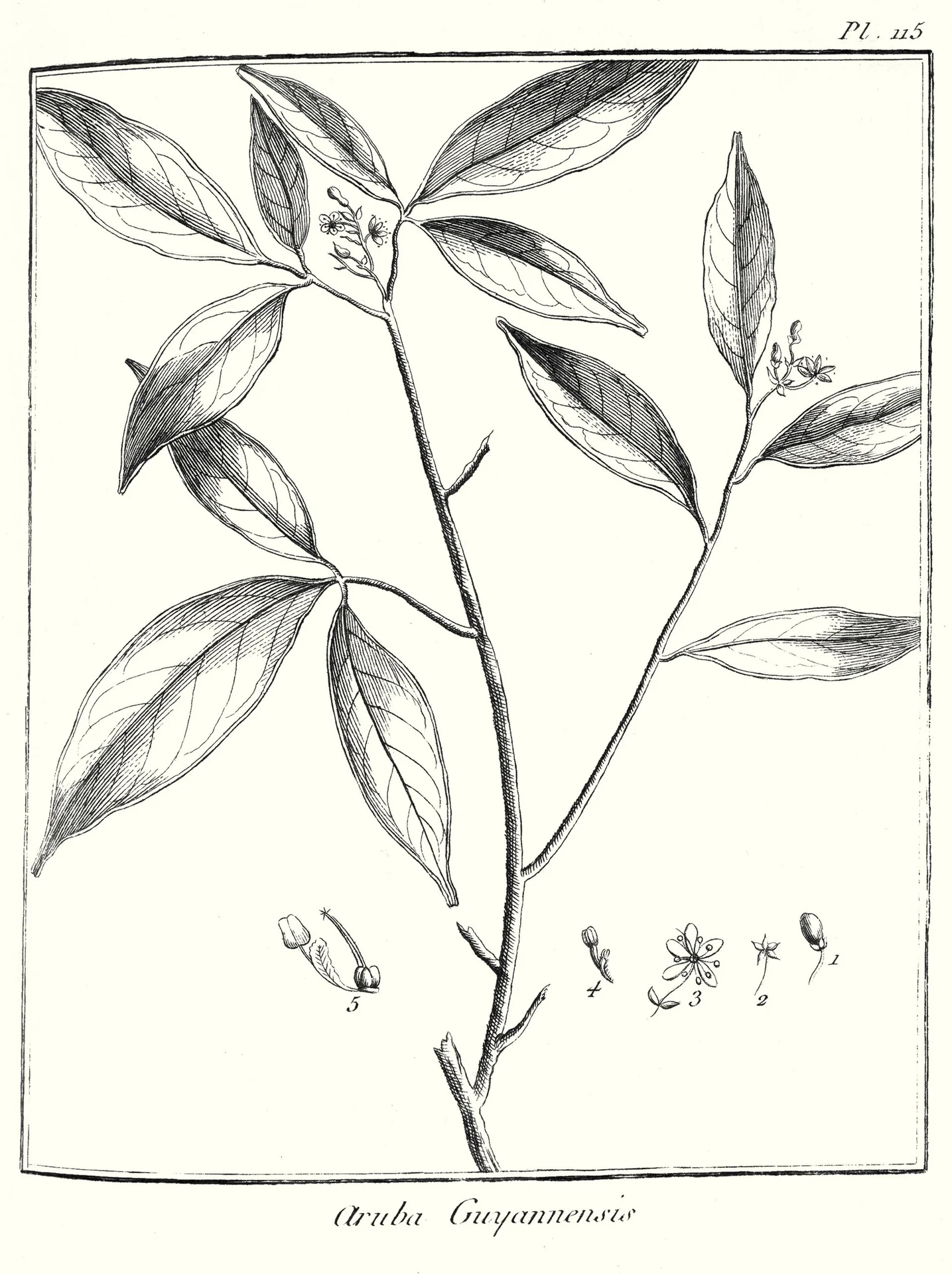
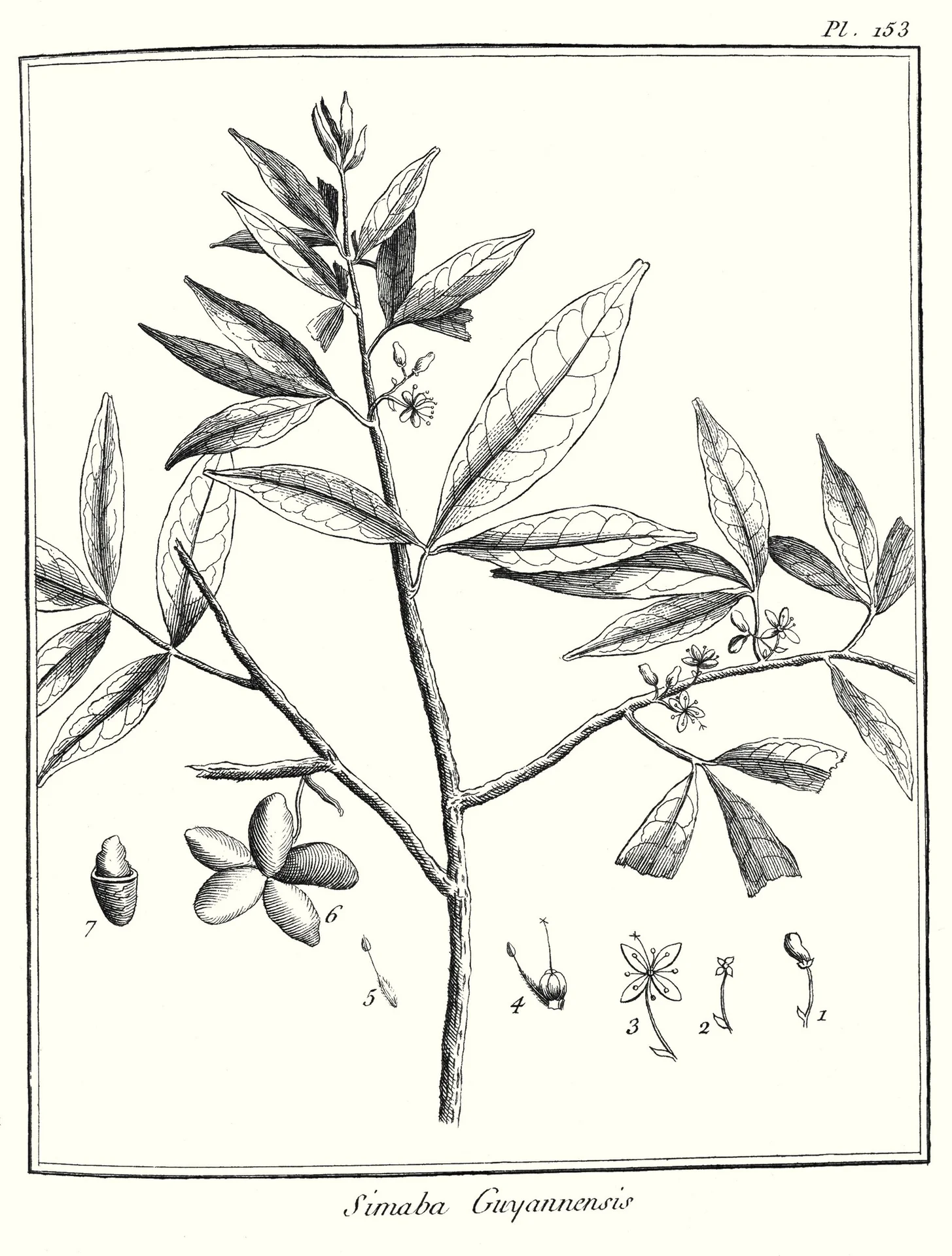
Simaba guianensis: Botanical Profile, Subspecies, and Toxicity
Inhabiting the lowlands and savannas of the Neotropics, Simaba guianensis stands as a fascinating woody species of the Simaroubaceae family. It displays a wide range of growth forms, spanning from low subshrubs to tall canopy trees. The species is highly valued in botanical research for its complex chemistry and ecological interactions.
This species is widely distributed across northern South America, including Brazil, Venezuela, and the Guianas. It serves as an important host for specialized frugivorous insects and is dispersed by local avian wildlife.
The vegetative and reproductive morphology of Simaba guianensis is highly variable, which has historically complicated its taxonomic resolution. It typically features alternate, compound, imparipinnate leaves with 3 to 7 leaflets (rarely unifoliolate), supported by a petiole ranging from 2 to 25 cm. The leaflets are distinctly non-glandular and range from subcoriaceous to strongly coriaceous with occasionally revolute margins.
Its reproductive features include:
Inflorescences: Typically small and sparsely branched terminal clusters, distinguishing it from related species like Simaba polyphylla.
Flowers: Composed of 5 puberulent sepals and 5 petals that vary in color from cream, yellow, orange-yellow, to white. The stamens possess filaments with apical teeth and prominent staminal appendages.
Fruits: Formed of drupaceous, ellipsoid, and lenticular monocarps that turn yellow to orange or dark bordeaux upon maturity.
Three main subspecies are recognized, showing distinct morphological differences:
Subsp. guianensis: A shrub or small understory tree up to 7 meters tall, featuring leaflets with attenuate to cuneate bases and caudate apices.
Subsp. ecaudata: A large forest tree reaching 6 to 30 meters in height, with white to greenish-red petals and smooth or rough drupes.
Subsp. huberi: A dwarf shrub or subshrub growing up to 1 meter, characterized by coriaceous leaves with strongly revolute margins and dark red fruits.
Flowering season
Flowering occurs in summer, primarily from June to August.
Jan
Feb
Mar
Apr
May
Jun
Jul
Aug
Sep
Oct
Name
Dec
Applications
Due to its high toxicity, Simaba guianensis is not cultivated for domestic or agricultural use. The indigenous Wayãpi people of French Guiana historically recognize this plant as an extremely potent poison, grouping it with other highly toxic species. In scientific research, the species is studied for its chemical compounds, which have shown promising bioactivity.
Interesting facts
Research has revealed several remarkable aspects of Simaba guianensis and its role in the ecosystem:
Chemical Defense: The plant contains unique quassinoids, including 6-alpha-tigloyloxychaparrine and simalikalactone D, which demonstrate significant in vitro antimalarial and anti-leukemic activities.
Seed Dispersal: In French Guiana, the seeds of this species are primarily disseminated by the brightly colored Guianan cock-of-the-rock (Rupicola rupicola).
Insect Hosts: The plant acts as a host to various fruit-eating flies belonging to the families Tephritidae and Lonchaeidae.