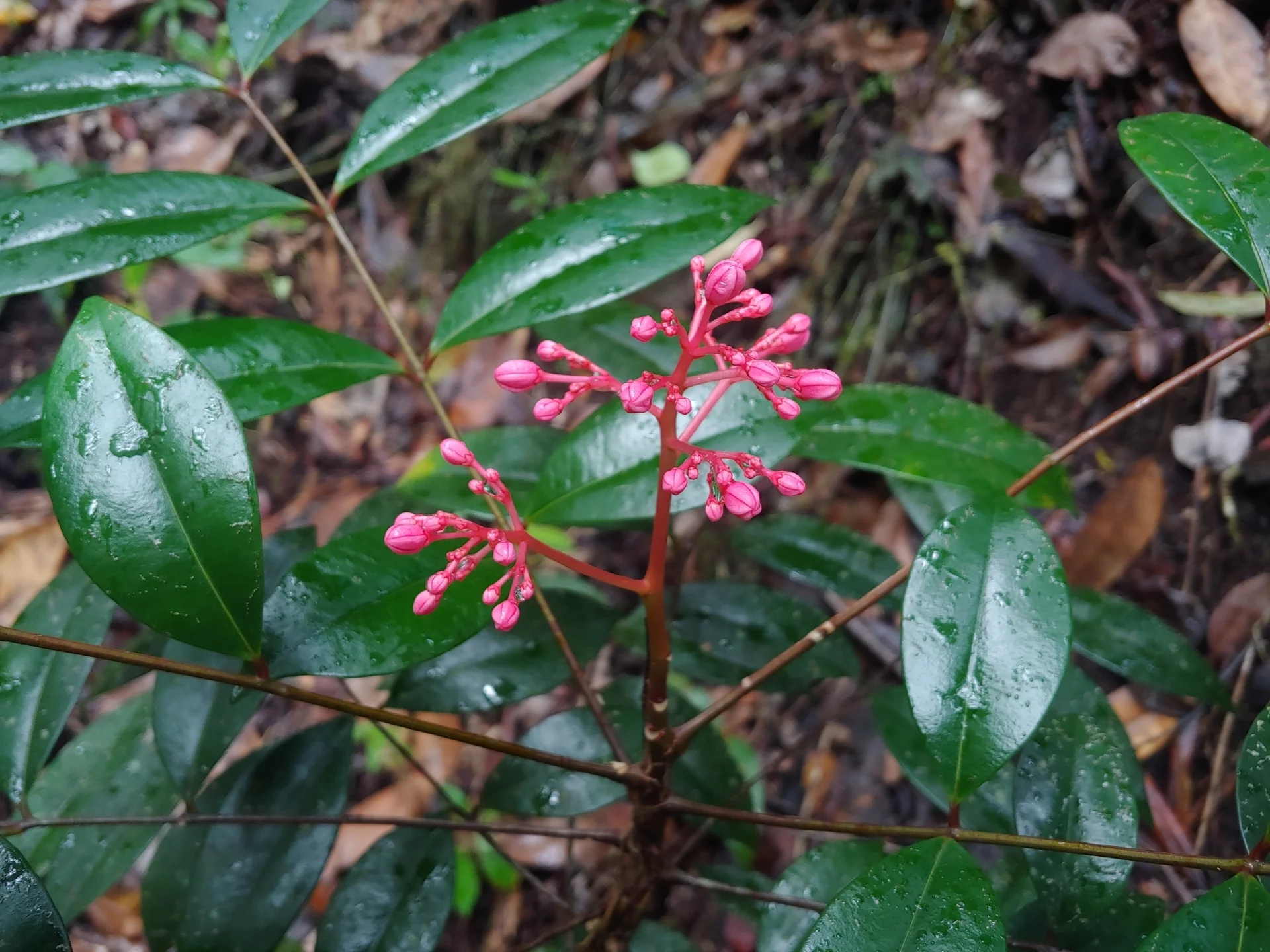
Simarouba tulae - Aceitillo Falso: Morphology and Habitat
The evergreen tree Simarouba tulae populates the humid mountainous regions of Puerto Rico. Local populations often recognize it by the Spanish name aceitillo falso, referencing its resemblance to other oil-yielding trees.
This species thrives in wet forest ecosystems, contributing to the canopy diversity of its native habitats. It remains a key component of the island's unique botanical heritage.
This medium-sized tree features alternate, pinnately compound leaves with shiny leaflets that showcase a deep green coloration on their upper surfaces. The arrangement of the leaves allows for optimal light interception in dense forest canopies.
The reproductive structures consist of small, reddish to orange-red flowers arranged in terminal panicles. These blossoms develop into small, fleshy drupes that change color from green to red and eventually turn black when fully mature, attracting various avian seed dispersers.
Applications
Due to its relatively small size and limited distribution, the tree does not support large-scale commercial logging operations. However, its durable wood is occasionally utilized for local construction and crafting purposes in rural areas.
Ecologically, the species plays a vital role in soil stabilization along mountain slopes and provides food for native wildlife, particularly forest birds feeding on its drupes.
Interesting facts
The common name aceitillo falso translates to "false little oil tree," highlighting its historical confusion with other timber and oil species.
Its endemic nature means that it can only be found in the wild within the boundaries of Puerto Rico.