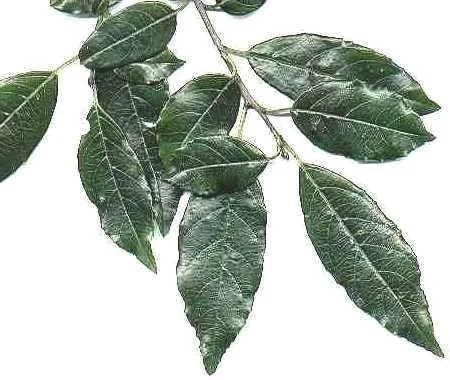
Rhamnus prinoides (Gesho / Shiny-leaf buckthorn): botany and uses
Rhamnus prinoides, widely known as the shiny-leaf buckthorn or by its Ethiopian name gesho, is a lush evergreen shrub or small tree native to the highland forests and stream banks of eastern and southern Africa as well as Yemen. It catches the eye with its dark, mirror-bright foliage and clusters of jewel-like berries, while its specific epithet prinoides refers to how its neatly serrated leaves resemble those of certain evergreen oaks.
A member of the buckthorn family (Rhamnaceae), this species was formally described in 1789 by the French botanist Charles Louis L'Héritier de Brutelle in his illustrated work Sertum Anglicum. Across its wide range, it remains both an ecological anchor along mountain waterways and one of Africa's most culturally significant fermentation plants.
Depending on altitude and moisture, Rhamnus prinoides grows as a dense, multi-stemmed shrub or a graceful small tree reaching 4 to 9 meters in height, occasionally scrambling into neighboring canopies. Its trunk, which can reach 15 to 25 centimeters in diameter, is dressed in smooth brown bark that weathers to a mottled gray-brown as it ages.
Glossy foliage
The simple, leathery leaves are arranged alternately along the twigs and measure 2.5 to 10 centimeters long. Their upper surface is coated in a thick, reflective cuticle (a waxy outer layer that seals in moisture and creates a dark green shine), while the paler underside is dull and features tiny pockets (domatia) where the secondary veins meet the midrib.
Leaf margins: The upper two-thirds of each blade are edged with fine, rounded to glandular teeth (serrulate margins).
Drip tip: The leaf narrows into a sharp or slightly drawn-out tip that helps shed heavy highland mist and rain.
Flowers and berries
Small, greenish-yellow, star-shaped flowers with five pointed calyx lobes appear in modest clusters of two to ten tucked into the leaf axils, often lacking true petals. They mature into pea-sized, fleshy drupes (stone fruits about 5 to 6 millimeters across) that transition from glossy crimson to deep purplish-black as their three enclosed seeds ripen.
Flowering season
Main flowering occurs from October to December in southern Africa, and sporadically throughout the year following rainy seasons in eastern Africa.
Jan
Feb
Mar
Apr
May
Jun
Jul
Aug
Sep
Oct
Name
Dec
Care parameters
Light
Thrives in full sun to partial shade along woodland margins.
Watering
Prefers regular, even moisture and well-drained soil; tolerates brief dry spells once established.
Temperature
Adapted to cool tropical and subtropical highlands; hardy to light frosts down to about -5 °C (USDA zones 9–11).
Humidity
Grows best in moderate to high atmospheric humidity typical of montane and riparian habitats.
Toxicity
Fruits are edible when ripe, and leaves and stems are safely used in traditional brewing; roots and bark contain strong purgative compounds.
Applications
Traditional brewing of tej and tella
In Ethiopia and Eritrea, where the plant is cultivated on a large scale as gesho, its leaves and woody stems fulfill the exact role that hops play in European brewing. Boiled stem extracts and sun-dried, pounded leaves are added to honey water to ferment tej (traditional Ethiopian mead) and mixed with malted barley or finger millet to brew tella, imparting a balanced bitter finish and guiding the fermentation flora.
Medicine, agroforestry, and gardens
Across eastern and southern Africa, decocted bark, roots, and leaves are used in traditional medicine to soothe sore throats, aid digestion, and treat skin infections. Because of its deep root system, glossy evergreen canopy, and bee-friendly flowers, Rhamnus prinoides is also planted by farmers to stabilize stream banks, shelter crops from wind, and brighten ornamental gardens.
Interesting facts
The biochemical conductor of highland fermentation
When Ethiopian brewers add gesho to honey or grain mash, the plant does much more than contribute a pleasant, hop-like bitterness. Its leaves and bark synthesize specialized anthraquinones, flavonoids, and phenolic glycosides (such as geshoidin) that selectively inhibit spoilage bacteria while allowing beneficial wild yeasts and lactic acid bacteria to flourish cleanly.
Built for sun-drenched, misty mountains
Growing between 1,400 and 3,200 meters above sea level requires a precise balance of solar protection and cold tolerance.
Natural sunglasses: The mirror-like waxy cuticle on the upper leaf surface reflects excess ultraviolet radiation at high altitudes while preventing drying mountain winds from drawing water out of the leaf cells.
Two-tone visual signaling: As the fruits ripen, they shift from bright red to nearly black, creating a high-contrast two-tone display against the dark foliage that alerts fruit-eating birds from afar that a ripe crop is ready.
Geography of distribution
Angola
Botswana
Burundi
Cameroon
Democratic Republic of the Congo
Eritrea
Eswatini
Ethiopia
Kenya
Lesotho
Malawi
Mozambique
Rwanda
South Africa
South Sudan
Sudan
Tanzania
Uganda
Yemen
Zambia
Zimbabwe
Sources
Plants of the World Online (POWO). Royal Botanic Gardens, Kew: Rhamnus prinoides L'Hér.
World Flora Online (WFO): Rhamnus prinoides L'Hér.
South African National Biodiversity Institute (SANBI), PlantZAfrica: Rhamnus prinoides L'Hér.
Global Biodiversity Information Facility (GBIF): Rhamnus prinoides L'Hér.