Thriving in the dry, sun-baked soils of the Mediterranean basin and parts of East Africa, Silybum eburneum commands attention with its striking architectural form. This robust herbaceous plant is well-adapted to arid environments and serves as an important ecological component in its native range.
Botanists and nature enthusiasts value this species for its distinctive ivory-colored spines and ecological resilience. It frequently populates pastures, roadsides, and disturbed ground, showcasing its ability to colonize challenging habitats.
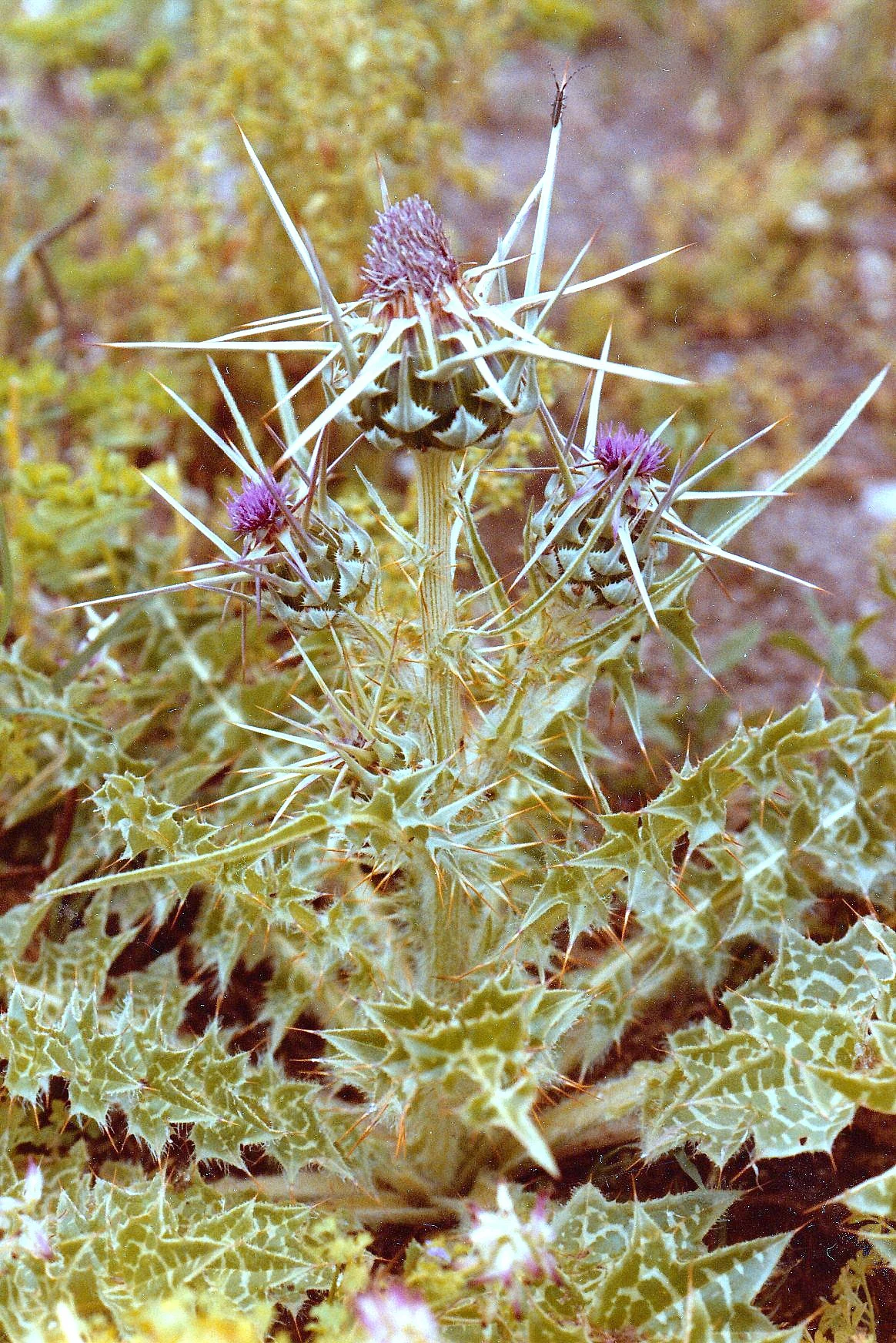
The vegetative structure of this thistle features a rosette of large, deeply lobed leaves characterized by prominent white veins and mottled patterns. These leaves are armed with sharp, rigid marginal spines that deter herbivores.
During the flowering season, the plant produces erect, branching stems topped by large, globose flower heads. The most defining feature of Silybum eburneum is its involucral bracts, which terminate in long, stout spines of an ivory-white color.
The florets are typically purple or magenta, attracting a wide variety of insect pollinators. Underneath the flowers, the plant develops hard achenes equipped with a pappus designed for wind dispersal.
Flowering season
Late spring to summer
Jan
Feb
Mar
Apr
May
Jun
Jul
Aug
Sep
Oct
Name
Dec
Applications
While less prominent than its close relative Silybum marianum, this species has been studied for its potential medicinal properties. The seeds contain flavonolignans, which are of interest in biochemical research for their antioxidant activities.
In traditional contexts, it has seen limited use in folk medicine. Additionally, the young shoots and leaves were historically consumed in some regions after removing the sharp spines.
Ecologically, the plant plays a crucial role in supporting local biodiversity. The nectar-rich flowers are highly attractive to bees, butterflies, and other beneficial pollinators, while the seeds provide food for wild birds.
Interesting facts
The specific epithet eburneum is derived from the Latin word for ivory, directly referencing the pale, bone-like appearance of its bract spines. This striking color contrast makes it easily distinguishable from other wild thistles.
It is known to naturally hybridize with the common milk thistle, resulting in the hybrid taxon designated as Silybum × gonzaloi. This hybridization showcases the genetic closeness and overlapping habitats of the two species.