Milk thistle (Silybum)

milk-thistle milkthistle
#5E7432
#A3B76A
#83994A
#213119
#C1D584

Silybum (Milk Thistle) Genus: Botanical Characteristics and Uses

Thriving primarily in the Mediterranean basin, the genus Silybum stands out due to its distinctive spiny foliage and potent medicinal properties. These herbaceous plants have been utilized for centuries in traditional European medicine, particularly for supporting hepatic health. Over time, their distribution has expanded as introduced species in various temperate regions globally.

Taxonomy

  • царство Plantae
  • division Tracheophytes (Vascular Plants)
  • subdivision Spermatophytes (Seed plants)
  • Angiosperms
  • mesangiosperms (Core angiosperms)
  • eudicots
  • asterids
  • order Asterales
  • family Asteraceae
  • genus Silybum (Milk thistle)

Living Pulse

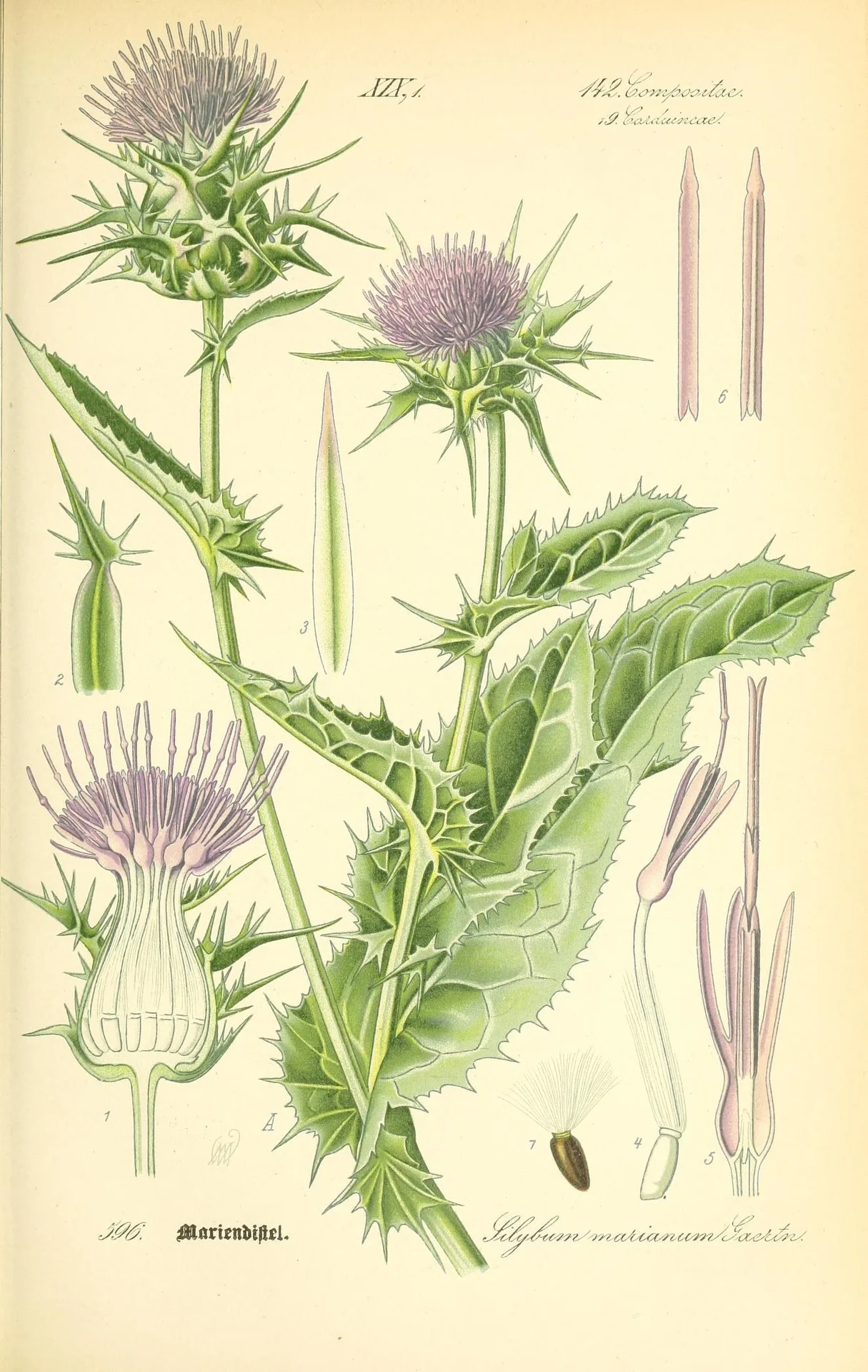
Botanical illustration

Botanical illustration
Фото: BioDivLibrary / Лицензия: Public Domain Mark

Morphology

The members of this group exhibit a set of distinct vegetative and reproductive characteristics.

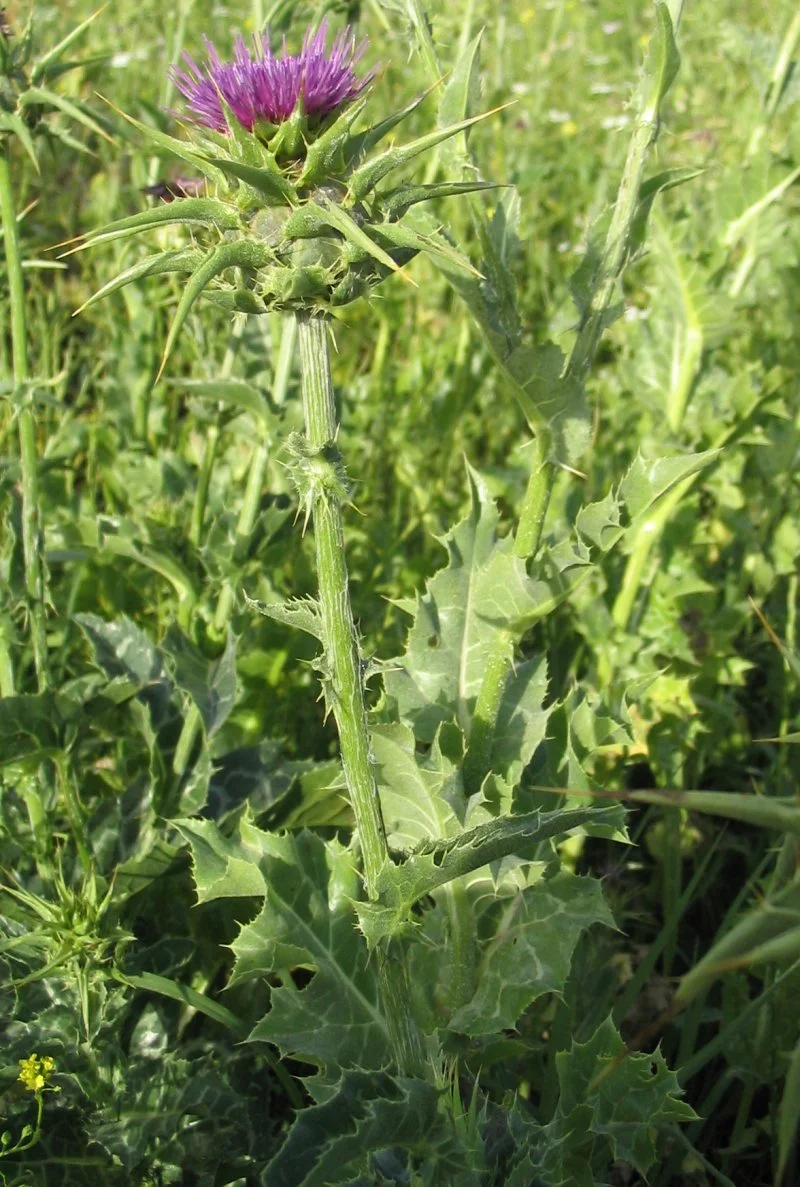
  • Variegated foliage features prominent milky white veins that follow the leaf margins.
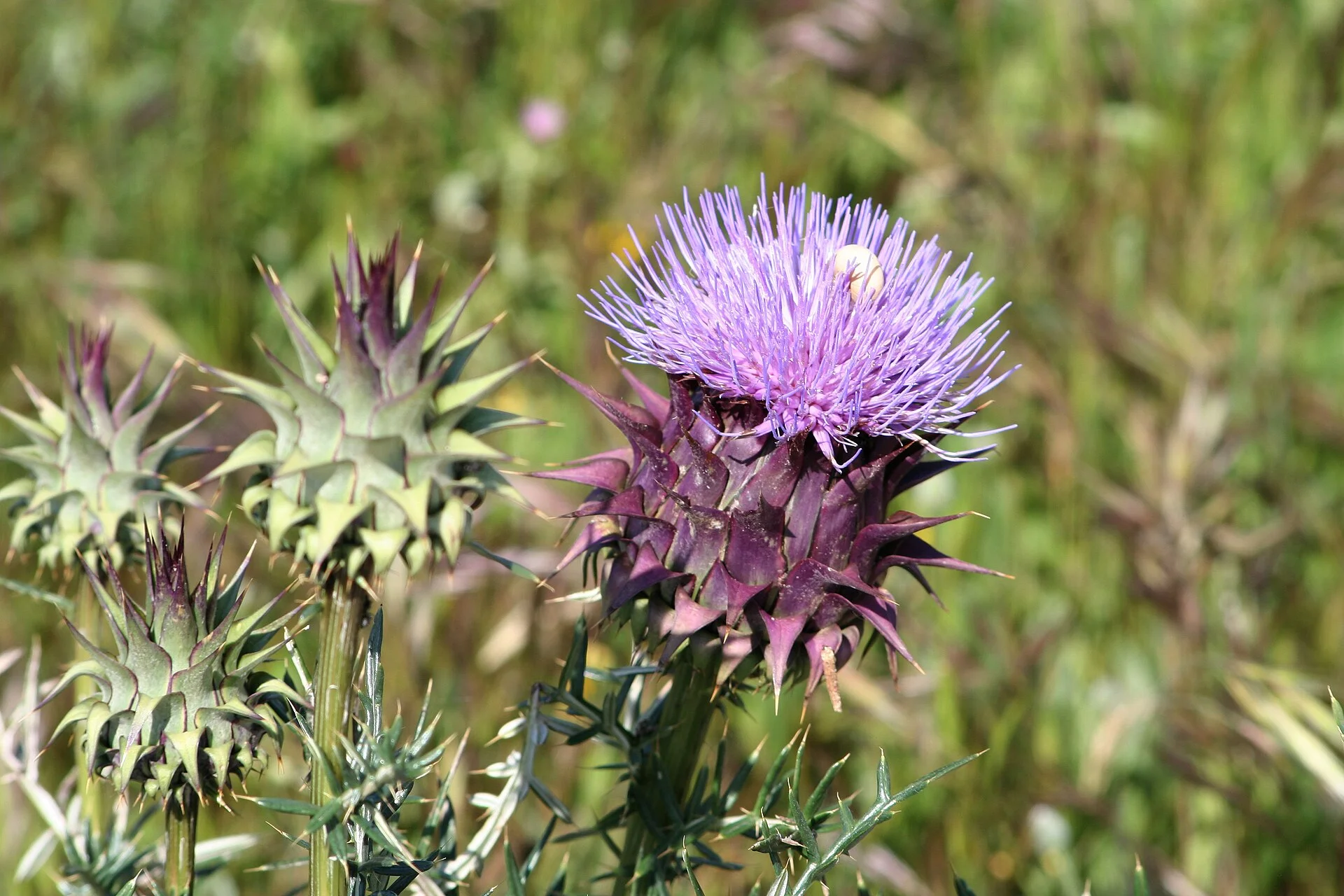
  • Solitary flower heads contain numerous tubulate florets, usually purple or lavender.
  • Spiny bracts form a protective involucre around the flower head.
  • Cypsela fruits are capped with a persistent deciduous pappus of feathered bristles.

These plants are annual or biennial herbs that can reach heights of up to two meters under favorable conditions.

Flowering season

Late spring to summer, typically from May to August

Jan
Feb
Mar
Apr
May
Jun
Jul
Aug
Sep
Oct
Name
Dec

Applications

The primary use of these plants centers around their medicinal properties. Silymarin, a complex of flavonolignans extracted from the seeds, serves as a key active ingredient in liver support formulations. In some cultures, the young stems and leaves are consumed as vegetable substitutes after removing the sharp spines.

Interesting facts

The common name "milk thistle" is tied to a Christian legend suggesting that the white veins on the leaves were caused by a drop of the Virgin Mary's milk. Additionally, the plants are highly resilient and can rapidly colonize disturbed soils, sometimes becoming invasive weeds in agricultural fields.

Geography of distribution

  • Mediterranean Basin
  • Southern Europe
  • North Africa
  • Western Asia

Natural varieties

Sources

Technical Information

External Databases: GBIF, POWO, Tropicos

See also

True Araucarias

True Araucarias

Araucaria sect. Araucaria

Araucaria sect. Araucaria is a botanical section of evergreen conifers native to South America. It …