
Cacao Tree
Theobroma cacao
Theobroma cacao, commonly known as the cacao or cocoa tree, is a tropical evergreen species …
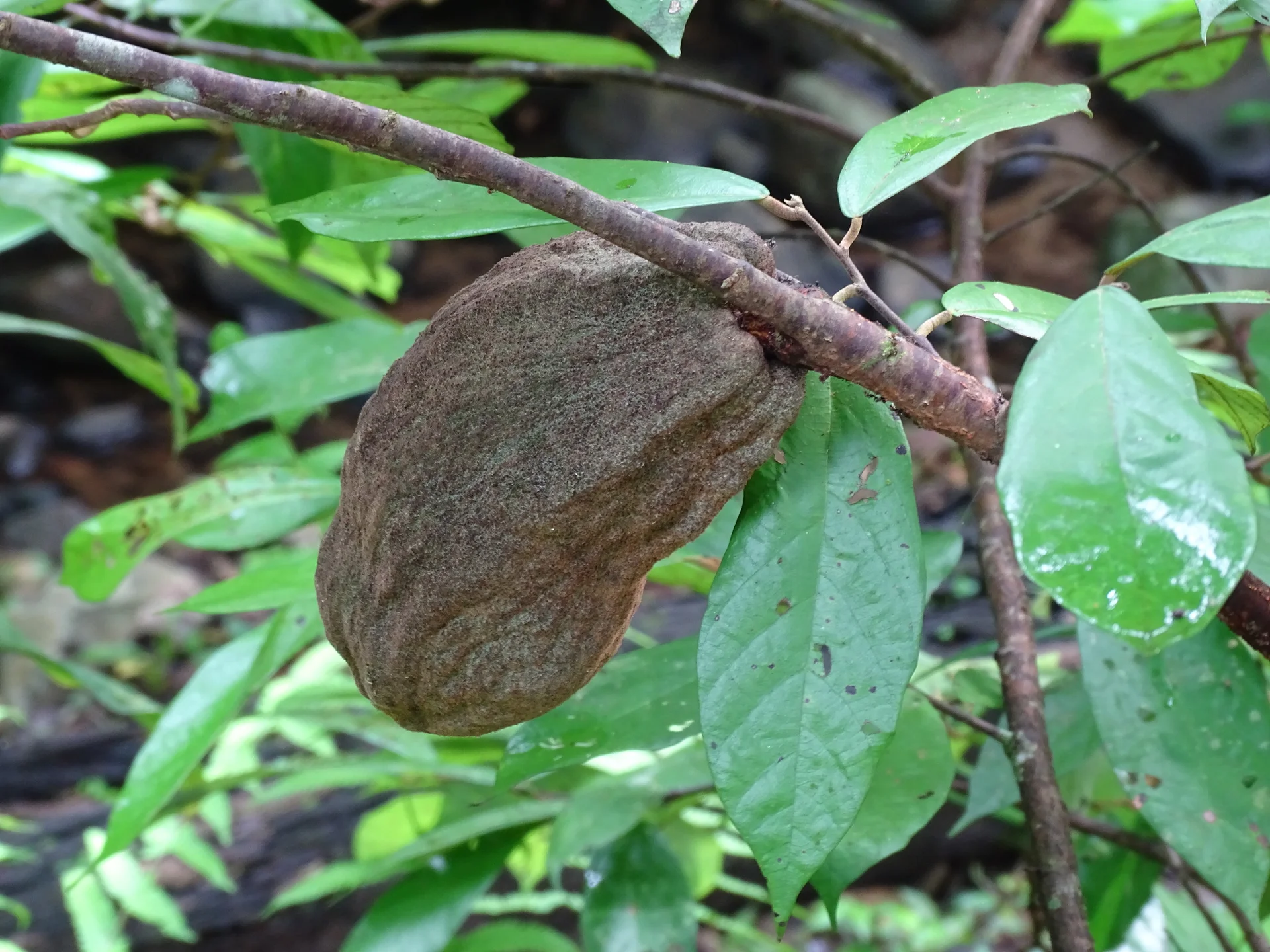
Deep within the humid rain forests of Central America, a close relative of the chocolate tree produces golden-yellow flowers and aromatic, ribbed fruits. This species has long played a companion role in regional chocolate cultures, valued for its unique properties. Botanists and locals alike prize it under the genus Theobroma, highlighting its deep connection to the ancient history of cacao cultivation.
Known commonly as monkey cacao or cushta, this tree thrives in the shaded understory of tropical forests. Its scientific name, Theobroma angustifolium, translates to the narrow-leaved food of the gods, reflecting its elegant foliage and botanical lineage. While less famous than its commercial sibling, it remains an integral part of Mesoamerican forest ecosystems.
Theobroma angustifolium is a medium to tall tree, reaching heights of 8 to 26 meters. Its distinctive leaves are oblong-lanceolate, measuring 14 to 21 centimeters in length and 5 to 6.5 centimeters in width. The leaf base is slightly asymmetrical, ending in an abruptly acuminate tip with a 1 to 2-centimeter point.
The foliage displays a striking texture, featuring a completely smooth, glabrous upper surface and a complex hairy underside. The lower surface is covered in ash-colored trichomes, while the primary and secondary veins are marked by scattered, yellowish hairs. This heterotrichous leaf surface helps distinguish the species from its relatives.
Its axillary inflorescences are pauciflorous, typically bearing only two yellow flowers. The flowers contain fifteen stamens grouped into five bundles, alongside erect, obovate staminodes. The resulting fruit is an oblong-ellipsoidal or ovoid-ellipsoidal berry, 10 to 18 centimeters long, featuring five distinct ribs at its base and a bumpy, tuberculate surface.
The primary use of Theobroma angustifolium is in traditional cocoa production. Its seeds resemble those of commercial cacao and are sometimes harvested to serve as a substitute or companion ingredient. During processing, these seeds are mixed with true cacao beans during the fermentation phase to alter or stretch the final product.
In regions like Guatemala and El Salvador, the tree is also cultivated on a small scale for its edible pulp and seeds. Locally known as cushta, the pulp surrounding the seeds is consumed fresh. The seeds can also be roasted and ground to make local chocolate-like beverages, often blended with other wild forest species like Theobroma bicolor.
This wild cacao relative carries deep linguistic and cultural roots in Central America. Here are several notable aspects of its history and characteristics:
Theobroma cacao
Theobroma cacao, commonly known as the cacao or cocoa tree, is a tropical evergreen species …

Theobroma grandiflorum
A tropical rainforest tree related to cacao, native to the Amazon basin. It is widely …

Theobroma bicolor
Theobroma bicolor, commonly known as the mocambo or jaguar tree, is a wild and cultivated …

Theobroma mammosum
A tall tropical forest tree from Central America known for its unique cylindrical-oblong fruits with …