
Cacao Tree
Theobroma cacao
Theobroma cacao, commonly known as the cacao or cocoa tree, is a tropical evergreen species …
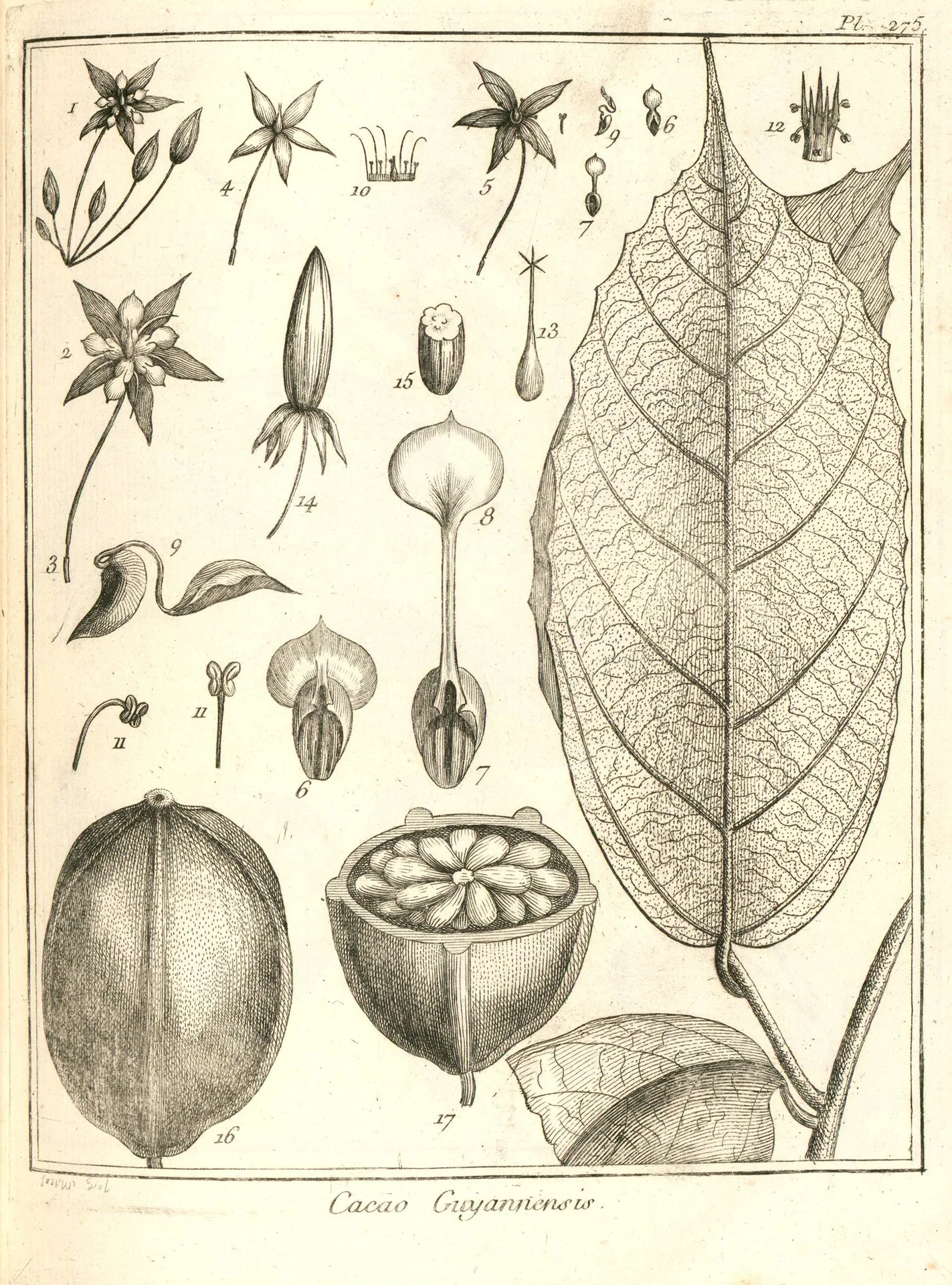
Sparsely distributed throughout the pristine rainforests of northeastern South America, Theobroma guianense thrives as an understory tree in the Guianas and northern Brazil. First documented by botanists in the 18th century, it continues to serve as an important component of the local forest ecology. The species grows primarily in well-drained soils along river basins and forested slopes.
It receives minimal human intervention and remains largely wild. Its presence in the humid tropical regions contributes to the overall biodiversity of the Amazonian and Guianan floras.
The species grows as a small evergreen tree, typically reaching heights between 4 and 8 meters. It features simple, alternate, elliptic-lanceolate leaves with a smooth upper surface and finely pubescent undersides.
Small flowers develop along the older branches in ramiflorous clusters, featuring reddish-brown petals and detailed floral structures. These blossoms are adapted for pollination by tiny dipterans and other forest insects.
The fruit consists of an oblong, woody pod covered with a dense layer of fine, brownish velvety hairs. Inside the capsule, the seeds are surrounded by a thin layer of mucilaginous pulp.
Forest wildlife consumes the fruit pulp, aiding in seed disposal throughout the ecosystem. The tree also serves as a valuable subject for evolutionary studies comparing wild Theobroma genomes with domestic cacao.
Although the wood is occasionally used for minor local crafts, the plant holds little commercial agricultural value due to its small fruits and low seed yield.
French botanist Jean Baptiste Christophore Fusée Aublet first described this species in 1775 under the name Cacao guianensis in his pioneering work on the flora of French Guiana. It was later moved to the genus Theobroma to align with modern taxonomic classification.
The dense velvety coating on the fruit pod helps protect the developing seeds from moisture loss and insect predation in the humid forest environment.
Taxon Synonyms: Cacao guianensis, Theobroma spruceanum, Theobroma martii, Theobroma subincanum
Theobroma cacao
Theobroma cacao, commonly known as the cacao or cocoa tree, is a tropical evergreen species …

Theobroma grandiflorum
A tropical rainforest tree related to cacao, native to the Amazon basin. It is widely …

Theobroma bicolor
Theobroma bicolor, commonly known as the mocambo or jaguar tree, is a wild and cultivated …

Theobroma mammosum
A tall tropical forest tree from Central America known for its unique cylindrical-oblong fruits with …