
Cacao Tree
Theobroma cacao
Theobroma cacao, commonly known as the cacao or cocoa tree, is a tropical evergreen species …
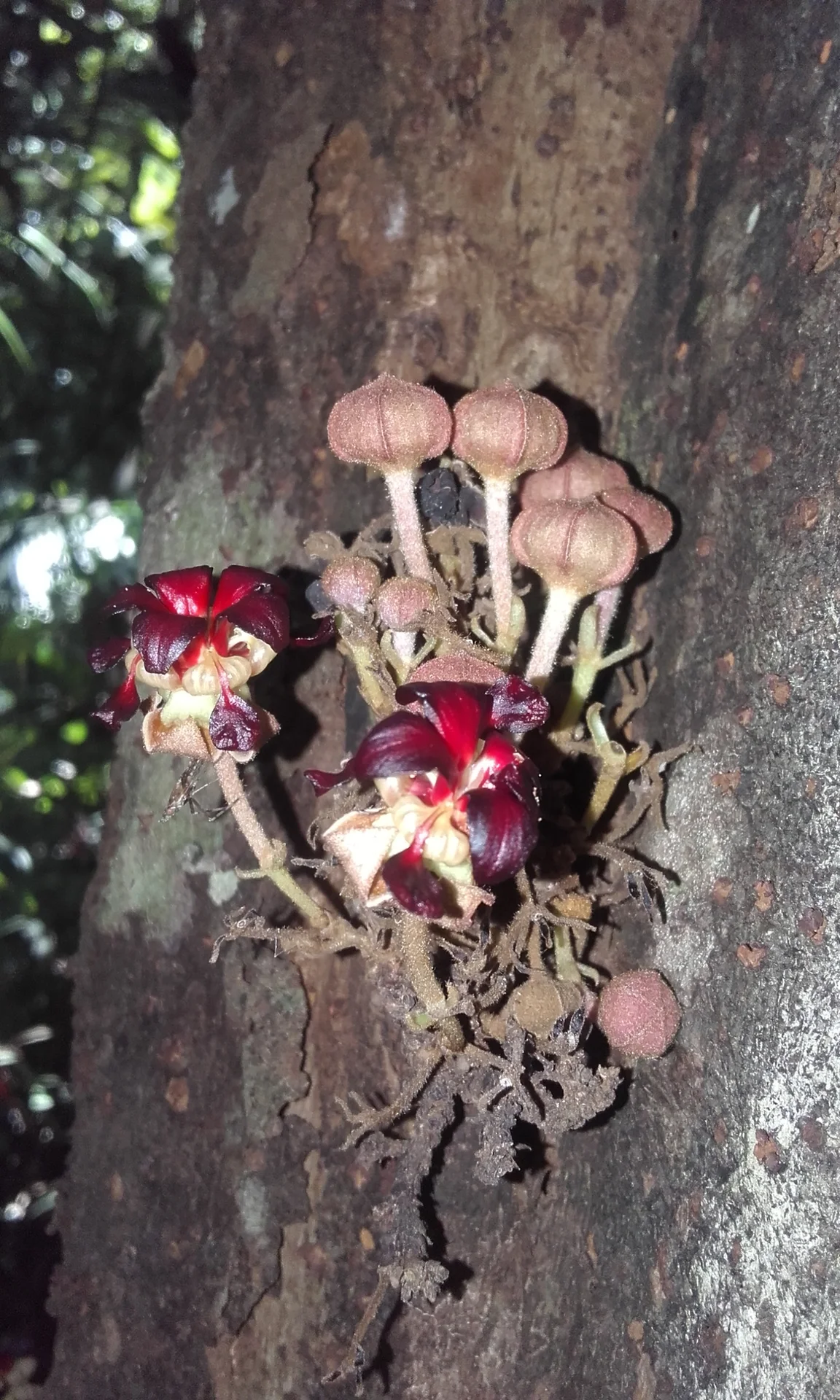
Native to the dense tropical rainforests of Central and South America, Theobroma simiarum plays a vital ecological role as a food source for local wildlife. This large canopy-reaching tree is frequently encountered in the humid lowlands from Nicaragua to Colombia. Its common name, monkey cacao, highlights the relationship between its sweet fruit pulp and native primates.
This impressive forest tree can reach heights of up to 30 meters, featuring a straight trunk with relatively smooth bark. The leaves are large, simple, oblong, and leathery, arranged alternately along the branches. Flowering occurs along the trunk and older branches, producing small, reddish-purple blooms.
Its fruits are elongated, smooth, and green to yellowish-green when mature. Inside the woody pod, numerous seeds are enveloped in a sweet, edible pulp that attracts various animals.
Local communities occasionally harvest the sweet, mucilaginous pulp surrounding the seeds for fresh consumption. Additionally, the species serves as a valuable genetic reservoir for the improvement of commercial cacao crops. The wood is sometimes used locally for light construction, though it is not commercially traded.
Taxon Synonyms: Theobroma stipulatum, Theobroma chocoense
Theobroma cacao
Theobroma cacao, commonly known as the cacao or cocoa tree, is a tropical evergreen species …

Theobroma grandiflorum
A tropical rainforest tree related to cacao, native to the Amazon basin. It is widely …

Theobroma bicolor
Theobroma bicolor, commonly known as the mocambo or jaguar tree, is a wild and cultivated …

Theobroma mammosum
A tall tropical forest tree from Central America known for its unique cylindrical-oblong fruits with …