
Cacao Tree
Theobroma cacao
Theobroma cacao, commonly known as the cacao or cocoa tree, is a tropical evergreen species …
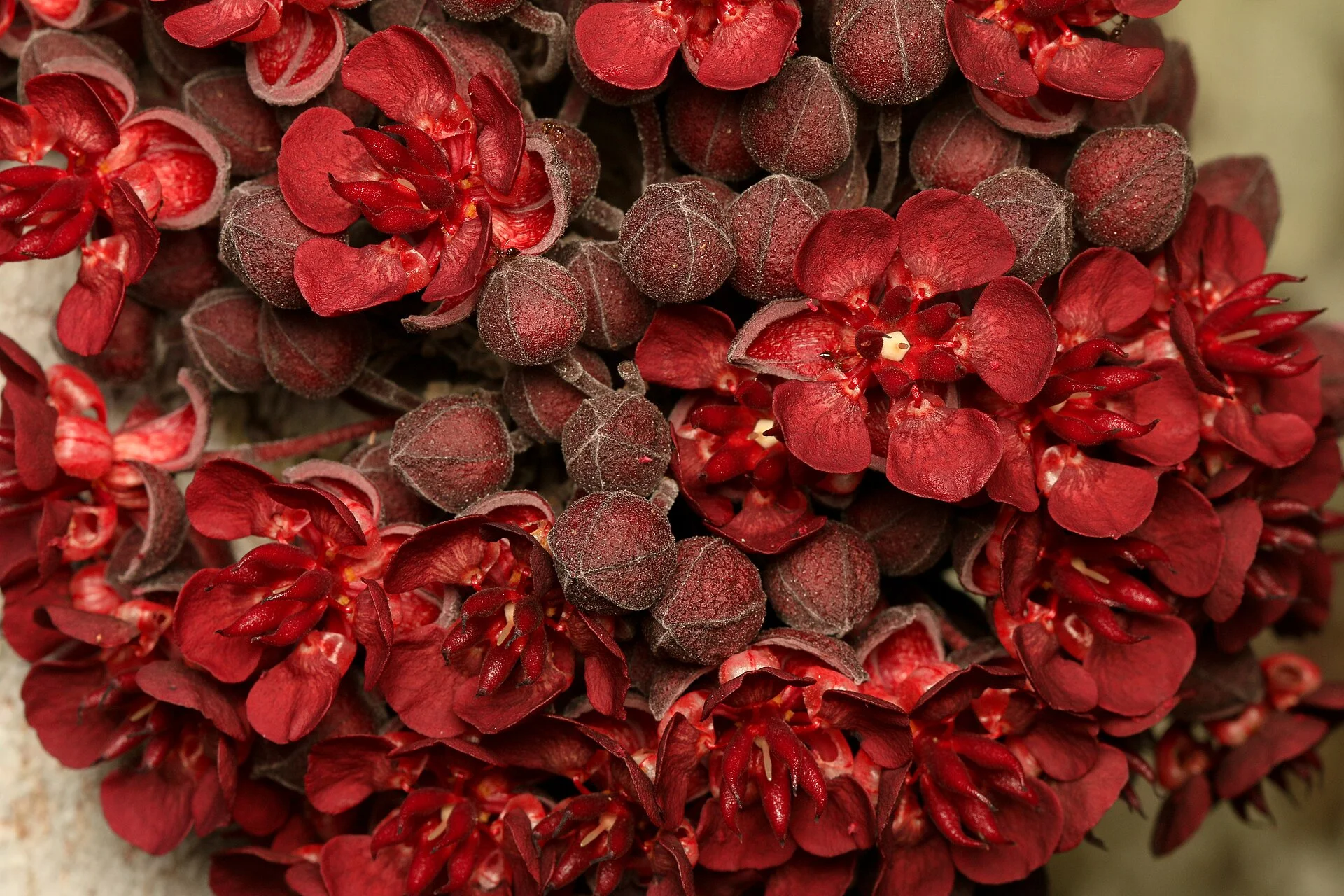
Deep within the humid, shaded understory of the Amazon basin, a captivating relative of the common chocolate tree commands attention with its striking crimson blossoms growing directly from its woody trunk. This wild species, widely known as cacau-chouriço, plays a vital role in its native rainforest ecosystems by supporting local biodiversity.
While it remains lesser-known than its famous sibling, Theobroma speciosa offers unique ecological and botanical insights into the diverse genus of cacao relatives. Its sweet fruit pulp has long been gathered by indigenous communities and forest wildlife alike.
This medium-sized evergreen tree typically grows to a height of 5 to 15 meters in the wild forest understory. Its large, simple leaves are oblong-elliptic in shape, with a coriaceous texture and prominent venation running across the underside.
The reproductive features of Theobroma speciosa are highly distinctive. The flowers and fruits exhibit specialized adaptations to their tropical environment.
Blooms primarily during the dry and early wet season, showing flowers from August to December.
The sweet, white mucilaginous pulp surrounding the seeds is edible and occasionally harvested by local inhabitants for fresh consumption. Because of its pleasant, aromatic flavor, this pulp is sometimes processed into regional beverages and traditional sweets.
Although the seeds contain natural fats similar to cocoa butter, they are not utilized in industrial chocolate production due to processing differences. Instead, the tree serves primarily as a valuable genetic resource for crop improvement and agricultural research.
In addition to human use, the species has significant ecological applications within its native habitat. It provides key food sources for native wildlife and helps maintain ecosystem balance.
The common name cacau-de-macaco (monkey cacao) arose because various monkey species are known to crack open the tough pods to feast on the sweet pulp inside. By doing so, these animals act as primary seed dispersers throughout the tropical forest.
Unlike the standard cacao tree which often has yellow or green flowers, this species produces deep red blossoms. This vibrant coloration is an adaptation to attract specific pollinators in the dark rainforest understory.
The tree exhibits several fascinating biological adaptations that help it survive in competitive ecosystems.
Theobroma cacao
Theobroma cacao, commonly known as the cacao or cocoa tree, is a tropical evergreen species …

Theobroma grandiflorum
A tropical rainforest tree related to cacao, native to the Amazon basin. It is widely …

Theobroma bicolor
Theobroma bicolor, commonly known as the mocambo or jaguar tree, is a wild and cultivated …

Theobroma mammosum
A tall tropical forest tree from Central America known for its unique cylindrical-oblong fruits with …