
Cacao Tree
Theobroma cacao
Theobroma cacao, commonly known as the cacao or cocoa tree, is a tropical evergreen species …
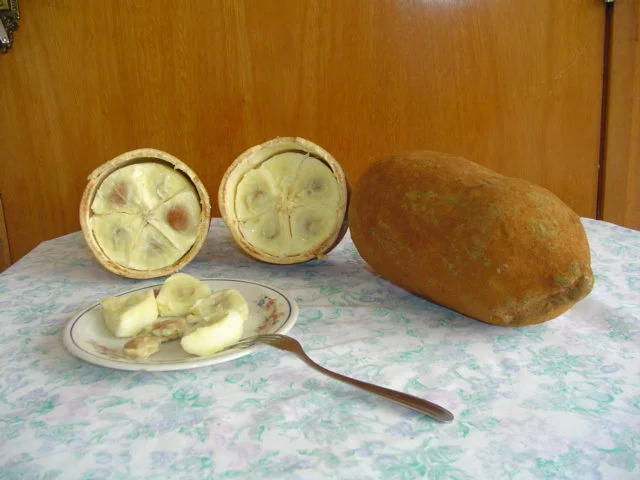
Growing in the deep shade of the Amazon rainforest, Theobroma subincanum thrives as a key understory species. This wild relative of cacao is prized by local communities for its sweet, aromatic fruit pulp.
Known by many indigenous and regional names such as cupuí and cacao de monte, it plays a vital ecological role. Its fruits serve as a major food source for various arboreal animals, especially monkeys.
This medium-sized evergreen tree typically reaches a height of 12 to 20 meters. Its straight trunk measures between 20 and 30 centimeters in diameter, covered in a smooth, greyish-brown bark.
The large, coriaceous leaves are oblong-elliptic, measuring up to 30 to 40 centimeters long. The upper surface appears green and lustrous, while the underside features a dense layer of reddish tomentum.
Small axillary inflorescences produce flowers with five distinct red or pale yellow petals. The resulting ellipsoid fruits measure 7 to 11.5 centimeters in length, showcasing a hard, brittle orange-brown shell when ripe.
August to October
The sweet and subacid yellowish pulp surrounding the seeds is commonly eaten fresh or processed into refreshing juices. Within the Amazon region, these fruits are frequently gathered and sold in local markets.
The seeds contain high amounts of lipids and vitamin E, allowing them to serve as a substitute for traditional cacao in homemade chocolate production. Additionally, the heavy, durable wood finds occasional use in light civil construction.
Genetic studies suggest that the widely cultivated cupuaçu is actually a domesticated form of Theobroma subincanum. Ancient indigenous populations likely selected sweeter and larger-fruited wild cupuí specimens over generations.
Unusual ecological interactions include certain orchid bees, such as Euglossa species, which have been observed nesting inside the hollowed-out fallen husks of these fruits.
Theobroma cacao
Theobroma cacao, commonly known as the cacao or cocoa tree, is a tropical evergreen species …

Theobroma grandiflorum
A tropical rainforest tree related to cacao, native to the Amazon basin. It is widely …

Theobroma bicolor
Theobroma bicolor, commonly known as the mocambo or jaguar tree, is a wild and cultivated …

Theobroma mammosum
A tall tropical forest tree from Central America known for its unique cylindrical-oblong fruits with …