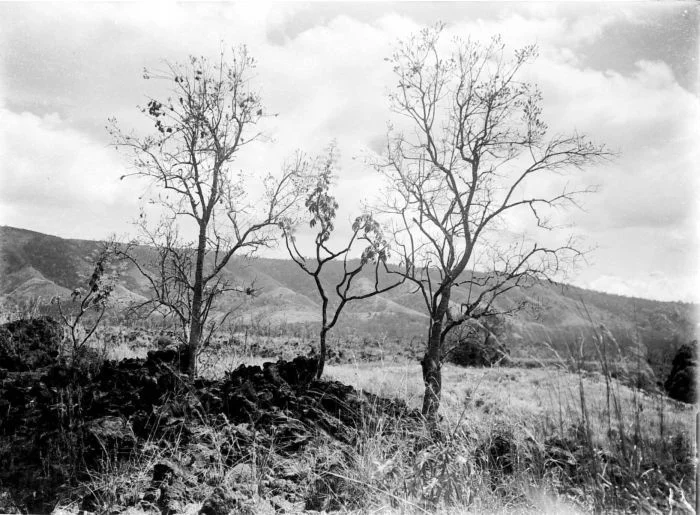
Growing as trees or scrambling hemiepiphytic pseudo-vines, Wightia displays one of the most unusual growth habits among woody plants in South and Southeast Asia. These deciduous or evergreen plants frequently begin their life cycle on host trees before establishing contact with the ground. Their striking pink to orange two-lipped flowers bloom on bare branches or alongside young leaves, creating a dramatic visual display in their native forest habitats.
This small genus comprises only two accepted species distributed from the eastern Himalayas to Western Malesia. They are typically found in montane forests, valleys, and forest margins at altitudes below 2,500 meters. The unique evolutionary history of these plants has made them a subject of intense interest for plant systematists.
The morphology of Wightia reflects its adaptation to diverse forest niches, showing distinct traits across its vegetative and reproductive parts:
Growth Forms: Plants can develop as deciduous trees, scrambling pseudo-vines, or hemiepiphytic shrubs that climb host trees using aerial roots.
Stems and Shoots: Stems are cylindrical and young shoots are typically covered in a dense, protective coat of stellate hairs.
Leaves: Opposite, simple leaves with leathery (coriaceous) blades, entire margins, and sometimes glandular patches in the vein axils.
Flowers: Zygomorphic flowers arranged in lateral thyrses or racemes, featuring a campanulate calyx and a pink or orange, two-lipped corolla covered in stellate pubescence.
Stamens: Four didynamous stamens that project out of the corolla tube, with oblong-sagittate, basifixed anthers.
Fruits and Seeds: Oblong, septicidal capsules containing numerous linear, winged seeds that are easily dispersed by the wind.
Flowering season
Typically during the dry season or early spring before new leaves emerge
Jan
Feb
Mar
Apr
May
Jun
Jul
Aug
Sep
Oct
Name
Dec
Applications
Due to its dramatic clusters of pinkish-purple or orange flowers, Wightia is occasionally planted as an ornamental tree in tropical and subtropical gardens. It serves as an excellent feature plant in botanical gardens specializing in Southeast Asian flora.
In their native habitats, these plants play an important ecological role by providing nesting sites and shelter for birds and epiphytic organisms. The wood is sometimes used locally for light construction or fuel, though it is not of major commercial importance.
Interesting facts
The hemiepiphytic habit of Wightia means it often germinates high in the canopy of a host tree, sending long aerial roots downward to tap into the forest soil. Over time, it can grow large enough to structurally support itself or enclose the host.
Its flowers are heavily visited by birds, which act as the primary pollinators, attracted by the bright colors and copious nectar.
The evolutionary relationships of this genus have puzzled botanists for decades, leading to proposals for a dedicated taxonomic family due to its unique genetic makeup.