Noble Wollemi Pine (Wollemia nobilis)

Wollemi Pine Wollemi-pine Dinosaur tree
IUCN: В опасности
#CBD6E8
#362F15
#6A623B
#534B1A
#E0DFD9

Wollemi Pine (Wollemia nobilis): A Living Fossil Guide

Hidden for millennia within the deep, remote sandstone gorges of Australia's Blue Mountains, a botanical miracle awaited discovery until the final years of the twentieth century. The ancient Wollemia nobilis survived against all odds, preserving a genetic lineage that dates back to the era of dinosaurs.

Often celebrated as a living fossil, this remarkable conifer represents one of the most significant botanical finds in modern history. The tree captivated scientists worldwide, as it belongs to a family previously thought to have vanished millions of years ago.

Today, immense conservation efforts safeguard the exact wild locations of the Wollemi Pine from public access to prevent accidental pathogen introduction. Simultaneously, global propagation initiatives have successfully distributed specimens to gardens worldwide, ensuring the survival of this extraordinary species.

Taxonomy

  • ∟ царство Plantae
  • ∟ division Tracheophytes (Vascular Plants)
  • ∟ subdivision Spermatophytes (Seed plants)
  • ∟ superclass Gymnospermae (Gymnosperms)
  • ∟ division Pinophyta (Conifers)
  • ∟ subclass Cupressidae
  • ∟ order Araucariales (Southern pines and monkey-puzzles)
  • ∟ family Araucariaceae (Araucaria family)
  • ∟ genus Wollemia (Wollemi pine)
  • ∟ species Wollemia nobilis (Noble Wollemi Pine)

Living Pulse

Morphology

The Wollemi Pine is a striking evergreen conifer that reaches heights of 25 to 40 meters in its natural habitat. Its distinct structure and foliage set it apart from other modern trees, exhibiting characteristics closer to ancient fossil records.

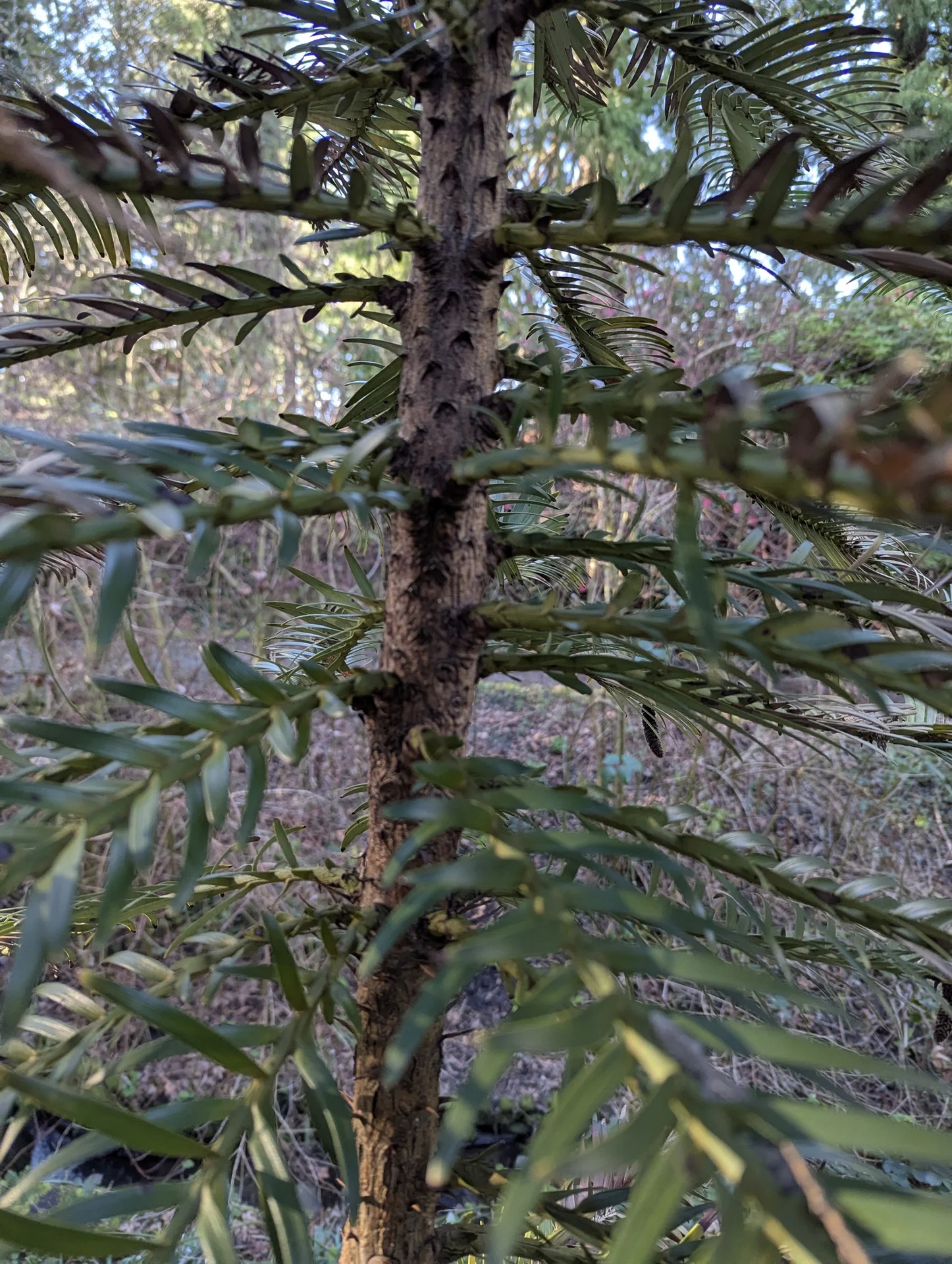
  • Bark: The trunk features a highly unusual, dark brown, and knobbly bark, often compared to the texture of bubbly chocolate cereal.
  • Growth Habit: Trees readily coppice, frequently forming multi-trunked clusters with up to 100 stems of varying sizes originating from ancient root systems.
  • Branching: The lateral branches are unique because they rarely branch further; they either terminate in a reproductive cone or cease growing and eventually die.
  • Foliage: The flat, linear leaves measure 3 to 8 centimeters in length and 2 to 5 millimeters in width, arranged spirally but twisted at the base to appear in flattened ranks.
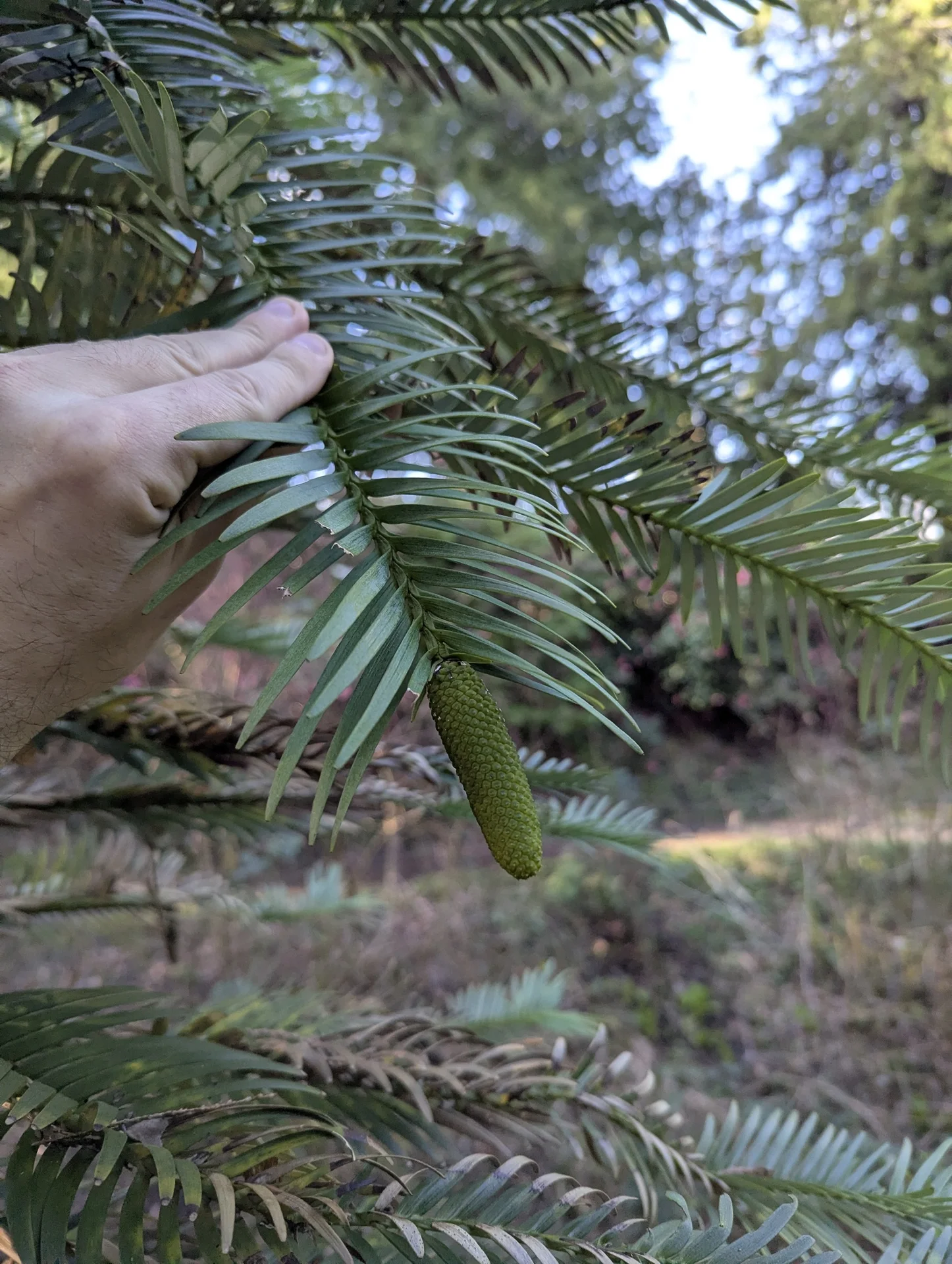
  • Cones: Female seed cones are green and reach up to 12 centimeters in length, while the reddish-brown male pollen cones are slender and typically positioned lower on the tree.

Applications

While originally a highly restricted and critically endangered wild plant, widespread propagation has opened new avenues for its use, primarily in ornamental horticulture.

  • Ornamental Cultivation: Following a successful global propagation program launched in 2006, the plant is now widely cultivated in botanical gardens, parks, and private collections.
  • Container Planting: Its slow, controlled growth and adaptability make it an excellent choice for patio planters and even as a decorative indoor plant.
  • Holiday Decor: In Australia and other regions, potted specimens have been popularised and sold as unique, living Christmas trees.
  • Conservation Research: Distributing the tree commercially serves as an innovative strategy to reduce illegal poaching pressures on the fragile wild populations.

Interesting facts

The history and survival of this ancient conifer are surrounded by fascinating details that highlight its incredible resilience and importance.

  • Accidental Discovery: The species was discovered purely by chance in September 1994 by David Noble, a national park ranger who was exploring remote canyons for new hiking routes.
  • Living Fossil: The genus was previously known only from fossil records dating back approximately 200 million years, making its modern discovery a monumental scientific event.
  • Genetic Bottleneck: Genetic testing has revealed that all wild specimens are essentially genetically indistinguishable, suggesting the population once shrank to perhaps just one or two individuals.
  • Top Secret Location: To protect the surviving wild trees from water mold diseases like Phytophthora cinnamomi, their exact coordinates in the Wollemi National Park remain a closely guarded government secret.
  • Fire Survival: During the catastrophic 2019–2020 Australian bushfires, specialized firefighting teams executed a covert mission, deploying irrigation systems and fire retardants to save the last wild grove from destruction.

Geography of distribution

  • Australia

Technical Information

External Databases: GBIF, POWO, Tropicos
See also