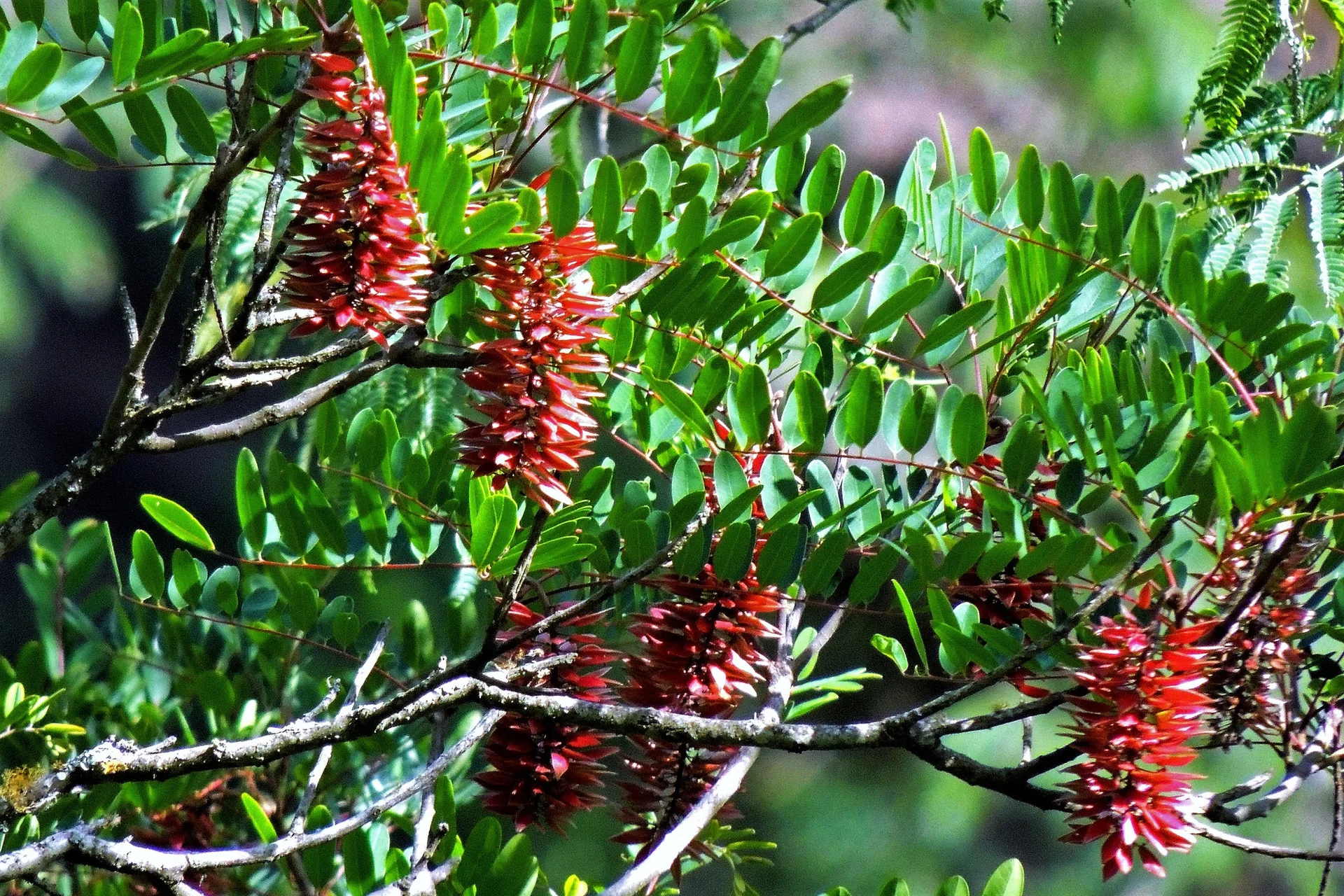
Subovate alvaradoa (Alvaradoa subovata)

pichi blanco pichi-pichi
Silhouette: T. Michael Keesey / License

Alvaradoa subovata: Morphology, Habitats, and Facts

Commonly referred to as pichi blanco or pichi-pichi, Alvaradoa subovata grows in the montane forest regions of South America. It thrives primarily in the Yungas phytogeographical province, occupying altitudes between 1000 and 1600 meters. This perennial woody species contributes to the structural diversity of the Andean forest canopy.

Its range extends across Bolivia and northwestern Argentina. The tree is recognized for its pale bark and pinnate foliage.

Taxonomy

  • царство Plantae
  • division Tracheophytes
  • subdivision Spermatophytes (Seed plants)
  • Angiosperms
  • mesangiosperms
  • eudicots
  • Superrosids
  • rosids
  • malvids
  • family Picramniaceae
  • genus Alvaradoa (Mexican Wingnut)
  • species Alvaradoa subovata (Subovate alvaradoa)

Living Pulse

Morphology

This dioecious tree reaches a height of 4 to 6 meters with a trunk diameter of up to 25 centimeters. The alternate leaves measure up to 25 centimeters long and carry up to 24 leaflets. These leaflets are dark green on the upper surface and lighter beneath, with an emarginate apex.

  • Male Inflorescence: Hanging male racemes up to 18 centimeters long, bearing small flowers with 5 long stamens.
  • Female Inflorescence: Pendant female racemes up to 15 centimeters long, containing yellowish, laterally flattened ovaries.
  • Fruit: Elliptic-lanceolate capsules, about 15 millimeters long, featuring long ochraceous hairs along the edges.
  • Seeds: Elongated seeds measuring approximately 6 millimeters in length.

Applications

The light-colored wood is sometimes utilized in local woodworking and construction. In addition, traditional communities in the Andes have used infusions of its leaves and bark in local folk remedies.

Interesting facts

Its common name, pichi blanco, directly references the pale appearance of its wood and bark. The species displays distinct sexual dimorphism, with male trees producing longer, more flowery racemes compared to the female counterparts.

Geography of distribution

  • Bolivia
  • Argentina

Natural varieties

Sources

  • Plants of the World Online (POWO)
  • Global Biodiversity Information Facility (GBIF)
  • World Flora Online (WFO)

Technical Information

External Databases: GBIF, POWO, Tropicos