Anisomeria coriacea: Botanical Profile, Taxonomy and Distribution
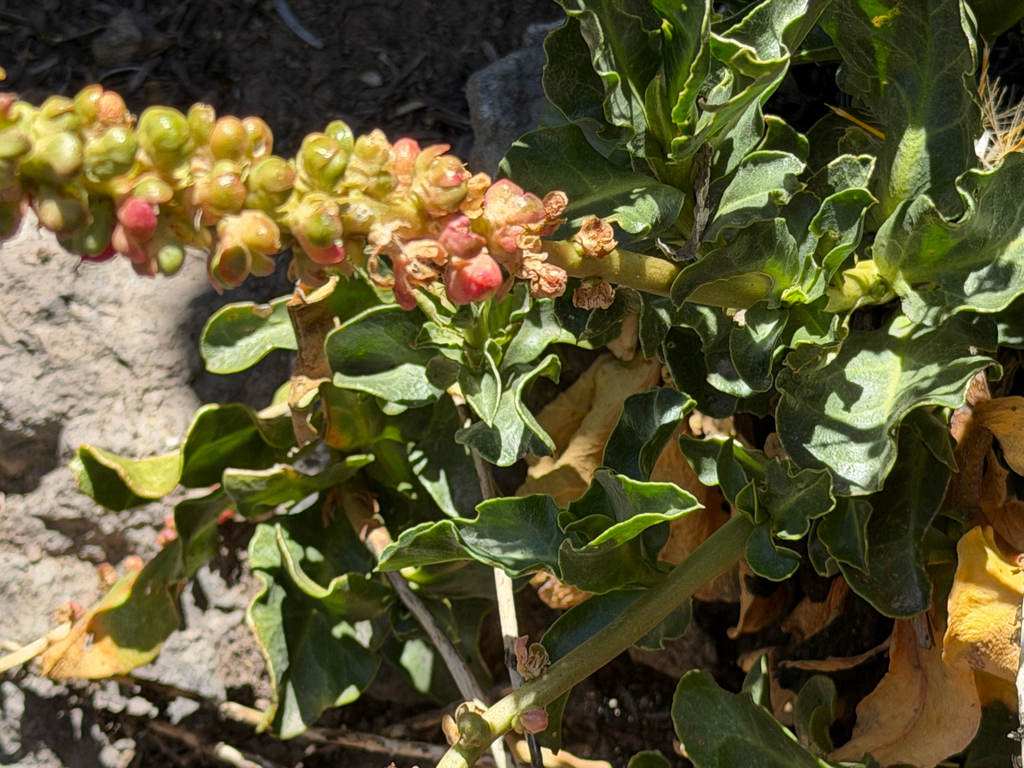
Endemic to the central Mediterranean-climate zones of Chile, Anisomeria coriacea flourishes as a distinctive member of the Phytolaccaceae family. The Scottish botanist David Don first formally described this resilient flowering plant in 1832. Its specific scientific epithet, coriacea, directly translates to 'leathery', perfectly describing the incredibly tough texture of its foliage.
The species naturally populates regional ecosystems within Coquimbo, O'Higgins, and Maule. Taxonomists currently recognize at least one distinct morphological variation, officially classified as the botanical subspecies Anisomeria coriacea var. lanceolata.
The prominent, leathery leaves of Anisomeria coriacea act as a powerful evolutionary defense mechanism against excessive cellular water loss. This unusually thick dermal layer helps the plant endure prolonged dry spells typical of its native Chilean habitat. The vegetative growth primarily forms a dense, shrub-like habit capable of withstanding local environmental and climatic stressors.
During its specific blooming period, it develops compact inflorescences that share structural affinities with other species in the Phytolaccaceae family. Beautifully detailed historical botanical illustrations from the 19th-century text Nova genera ac species plantarum capture the exact morphological proportions of its reproductive organs.
Interesting facts
Before its current taxonomic placement was completely finalized, the scientific community classified this plant under several different botanical synonyms, including Pircunia drastica and Phytolacca drastica. The original type specimens were physically gathered during comprehensive European botanical surveys of the challenging Chilean landscape.
David Don's original 1832 publication in the Edinburgh New Philosophical Journal remains a critical piece of scientific literature for the study of Peruvian and Chilean flora. The plant continues to grow exclusively in the wild, remaining entirely untouched by the commercial horticulture industry.