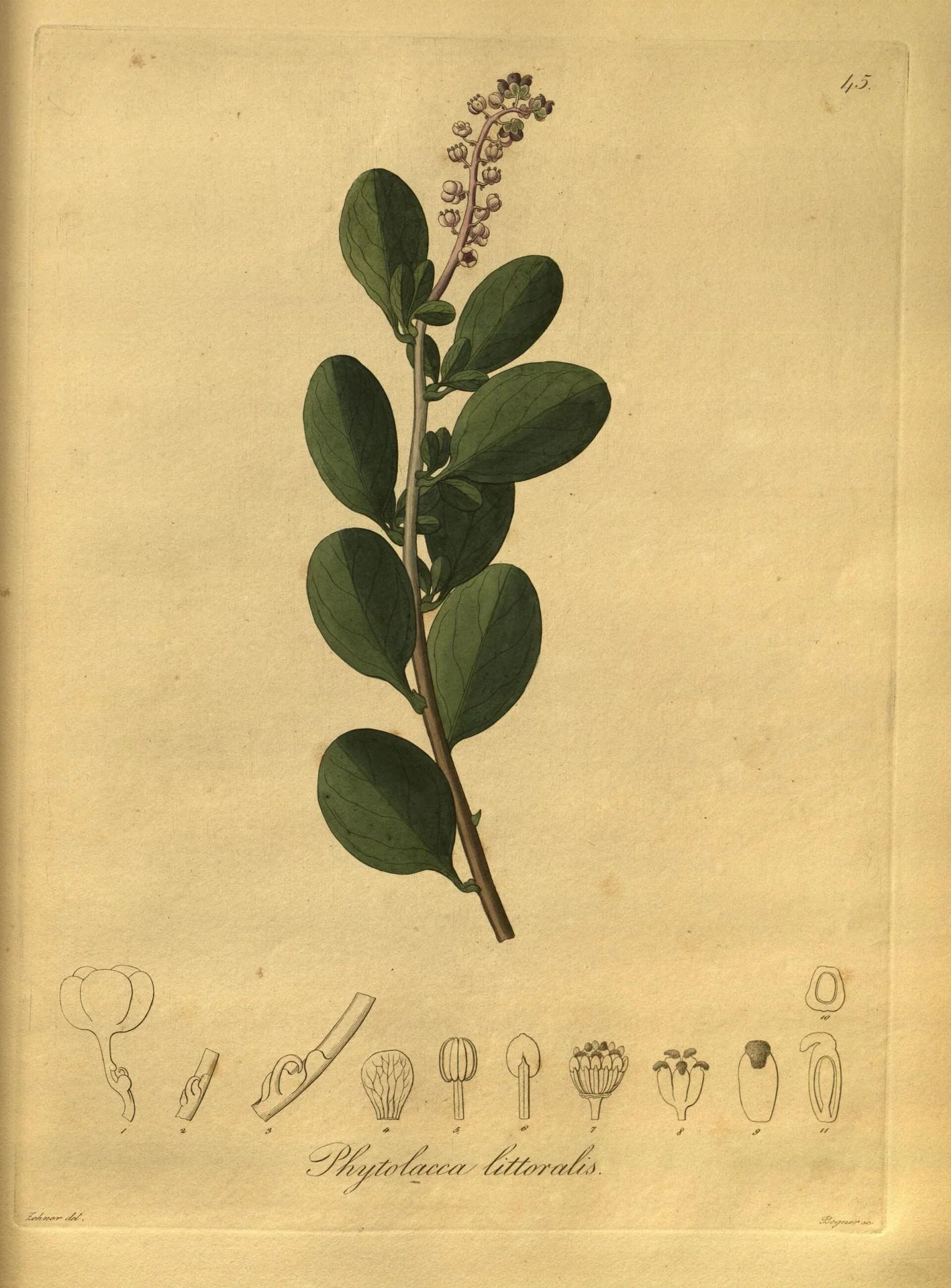
Anisomeria littoralis: Habitat, Ecology, and Characteristics
Thriving along the specific ecological corridors of coastal Chile, Anisomeria littoralis has developed remarkable resilience to maritime environmental pressures. This species anchors itself in littoral zones, where its presence helps to stabilize challenging substrates and support local biodiversity.
The plant's distinctive physiological traits provide valuable insights into coastal botanical adaptations within South American ecosystems.
In order to thrive in an open environment constantly swept by oceanic winds, this plant most often adopts a relatively low, bushy, or prostrate habit. Its simple, alternate leaves feature a texture adapted to the meticulous conservation of water, a vital physiological necessity to counter the strongly drying effect of sea salt and sun exposure.
During its reproductive cycle, it produces small, delicate flowers grouped in discreet racemes. Like other species of this specific botanical genus, the floral structures display a remarkable asymmetrical arrangement. The small resulting fruits are designed to effectively ensure seed dispersal within this highly specific maritime biotope.
Interesting facts
Accurate representations of the wild habit of this plant are immortalized in classic botanical records from the 19th-century imperial period, confirming the early relevance of these coastal specimens in initial European academic circles.
The application of the Latin descriptor littoralis serves as an irrefutable and permanent testament to its biological place of origin, perfectly outlining its ecological separation from other congeners of higher plateaus.