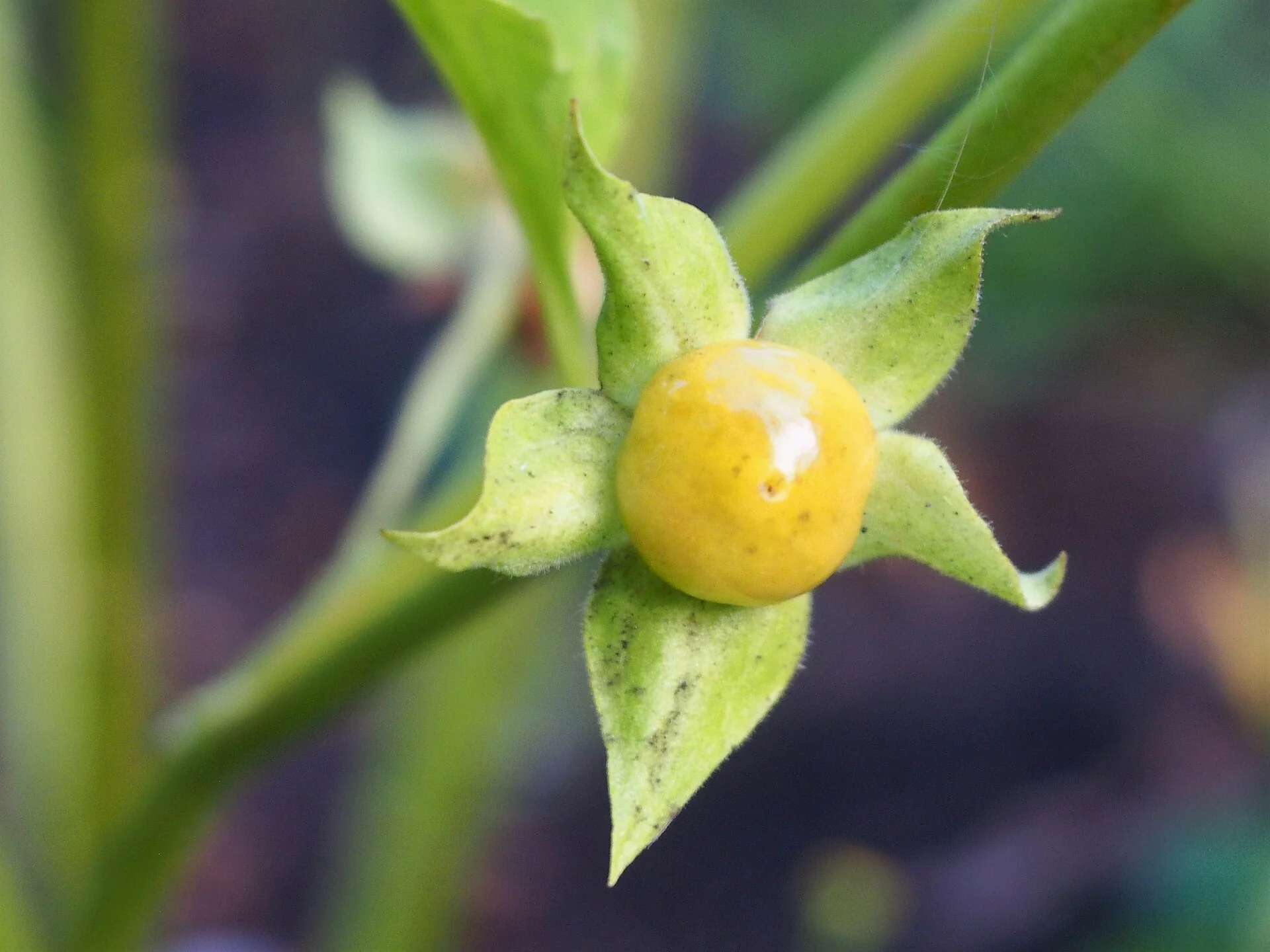
Yellow Belladonna (Atropa belladonna ʽLutea’)

Yellow deadly nightshade
#616C37
#2C2B3D
#4A694B
#8C9C3D
#A7B26B

Atropa belladonna 'Lutea' (Yellow Belladonna Cultivar) | Encyclopedia

Cultivated primarily for its unusual golden-yellow fruits and pale yellow blossoms, this cultivar serves as a notable selection of the classic deadly nightshade. Atropa belladonna 'Lutea' is grown in specialized botanical collections and medicinal gardens.

Like the wild species, this cultivar contains high concentrations of toxic alkaloids. It is kept primarily for educational displays, historical collections, and research purposes.

Taxonomy

  • царство Plantae
  • division Tracheophytes (Vascular Plants)
  • subdivision Spermatophytes (Seed plants)
  • Angiosperms
  • mesangiosperms (Core angiosperms)
  • eudicots
  • asterids
  • order Solanales
  • family Solanaceae
  • subfamily Solanoideae
  • tribe Hyoscyameae
  • genus Atropa (Belladonna)
  • species Atropa bella-donna (Deadly Nightshade)
  • cultivar Atropa belladonna ʽLutea’ (Yellow Belladonna)

Living Pulse

Morphology

This cultivar retains the growth habit of the wild species but shows distinct color mutations. The morphological features include:

  • Flowers: Pale yellow corollas, bell-shaped, nodding, appearing in the leaf axils.
  • Fruit: Glossy, spherical berries that mature to a bright yellow or golden-amber hue.
  • Leaves: Broadly ovate, light green, with a smooth margin and acute tips.

Flowering season

June to August

Jan
Feb
Mar
Apr
May
Jun
Jul
Aug
Sep
Oct
Name
Dec

Applications

This cultivar is restricted to specialized uses due to its extreme toxicity. It plays a role in education and biochemical study.

  • Educational Displays: Grown in instructional gardens to demonstrate variation within the nightshade family.
  • Phytochemical Study: Used to analyze alkaloid concentration variations between wild forms and selected cultivars.

Interesting facts

Despite its ornamental appeal, this cultivar is extremely dangerous. Every part of the plant, including the roots, leaves, and berries, is toxic.

  • Name Origin: The name 'Lutea' refers directly to the yellow coloration of its flowers and berries.
  • Wildlife Interaction: Certain birds can consume the yellow berries without harm, though they remain highly toxic to humans and mammals.

Geography of distribution

  • Europa

Sources

  • GBIF Secretariat (2025). Atropa belladonna 'Lutea'.
  • Royal Horticultural Society (RHS) Plant Finder. Atropa belladonna 'Lutea'.

See also

True Araucarias

True Araucarias

Araucaria sect. Araucaria

Araucaria sect. Araucaria is a botanical section of evergreen conifers native to South America. It …