Sentang (Azadirachta excelsa)

Neem Tree

Sentang (Azadirachta excelsa) - Botanical Overview

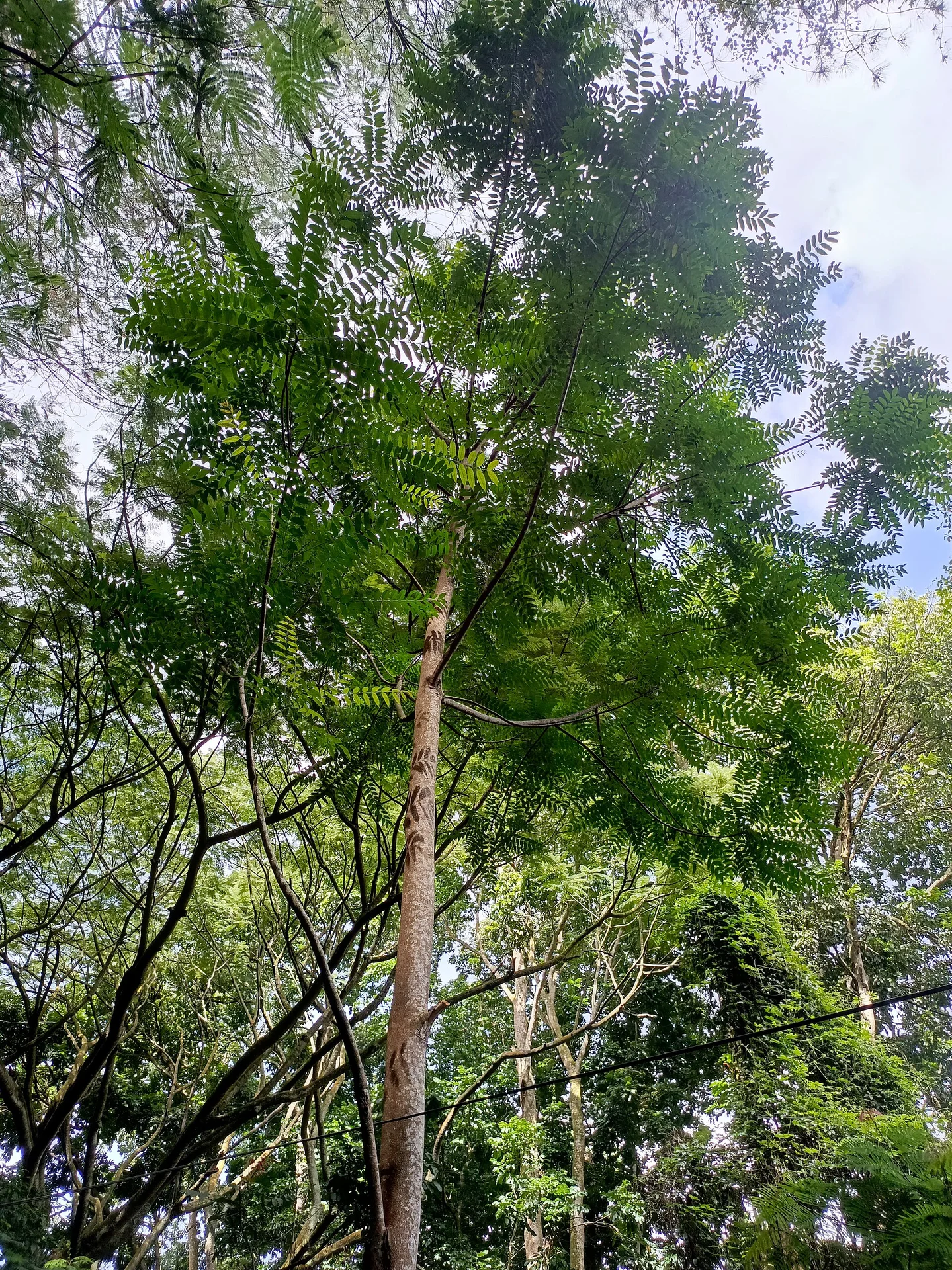
Growing up to 50 meters tall in the tropical rainforests of Southeast Asia, Azadirachta excelsa stands out as a majestic and fast-growing canopy tree. Commonly known as sentang, it is a member of the mahogany family, Meliaceae.

This tree plays an important ecological role in monsoon and primary rainforests, providing food for local wildlife such as birds and bats. Beyond its ecological value, it is cultivated for its durable reddish-brown wood and medicinal properties.

Taxonomy

  • царство Plantae
  • division Tracheophytes (Vascular Plants)
  • subdivision Spermatophytes (Seed plants)
  • Angiosperms
  • mesangiosperms (Core angiosperms)
  • eudicots
  • Superrosids
  • rosids
  • malvids
  • order Sapindales
  • family Meliaceae
  • genus Azadirachta (Neem)
  • species Azadirachta excelsa (Sentang)

Living Pulse

Morphology

The physical structure of Azadirachta excelsa is characterized by its impressive height and distinctive bark. Key morphological features include:

  • Trunk and Bark: The straight trunk reaches a diameter of up to 120 centimeters and typically lacks buttresses. Its bark ranges from pinkish-grey to pinkish-brown, transitioning from smooth to vertically fissured and scaly in mature specimens, exposing an orange-red inner bark.
  • Foliage: The alternate, pinnately compound leaves are clustered at branch tips and can measure up to 90 centimeters in length. They feature 7 to 11 pairs of asymmetric leaflets with entire margins, which emerge pink and turn yellow before shedding.
  • Flowers: Small, fragrant, creamy-white flowers are arranged in large axillary panicles up to 70 centimeters long. Each flower has five oblong-spatulate petals and a cylindrical staminal tube containing 8 to 10 anthers.
  • Fruit and Seeds: The fruit is an ellipsoidal drupe, 2.4 to 3.2 centimeters long, which turns yellow when ripe. It contains a sticky, milky pulp and a single seed that emits a strong garlic odor when bruised.

Applications

This versatile species serves several important commercial and traditional purposes in its native range:

  • Timber Production: The reddish-brown hardwood is highly valued for interior construction, furniture, flooring, and decorative veneer. It is relatively easy to process but is best suited for indoor use due to moderate durability against outdoor weathering.
  • Culinary Uses: In Malaysia and Thailand, the young shoots, leaves, and flowers are consumed raw as a salad or cooked as a vegetable, providing a slightly bitter flavor.
  • Natural Insecticides: The seeds contain active limonoids like azadirachtin, which are extracted and formulated into organic pest-control agents.
  • Traditional Medicine: Decocts of the bark and young shoots are used in local folk medicine to treat intestinal ailments, diarrhea, and respiratory congestion.
  • Industrial Materials: Oil extracted from the seeds is utilized in the production of soaps and other cosmetic products.

Interesting facts

  • Garlic Aroma: When the seeds of this tree are bruised or broken, they release a pungent odor that closely resembles garlic.
  • Serrated Differences: Unlike its close relative the common neem tree, this species features leaflets with completely smooth margins rather than serrated edges.
  • Regional Symbol: The tree has official cultural significance in Thailand, where it serves as the symbolic provincial tree of Songkhla.
  • Seasonal Leaf Drop: Despite growing in tropical environments, it drops its leaves entirely for up to three months each year.

Geography of distribution

  • Malaysia
  • Indonesia
  • Philippines
  • Vietnam
  • Brunei

Technical Information

Taxon Synonyms: Azedarach excelsa, Melia excelsa, Azadirachta integrifoliola

External Databases: GBIF, POWO, Tropicos

See also

Neem Tree

Neem Tree

Azadirachta indica

Azadirachta indica, commonly known as neem, is a fast-growing tropical evergreen tree famous for its …
True Araucarias

True Araucarias

Araucaria sect. Araucaria

Araucaria sect. Araucaria is a botanical section of evergreen conifers native to South America. It …