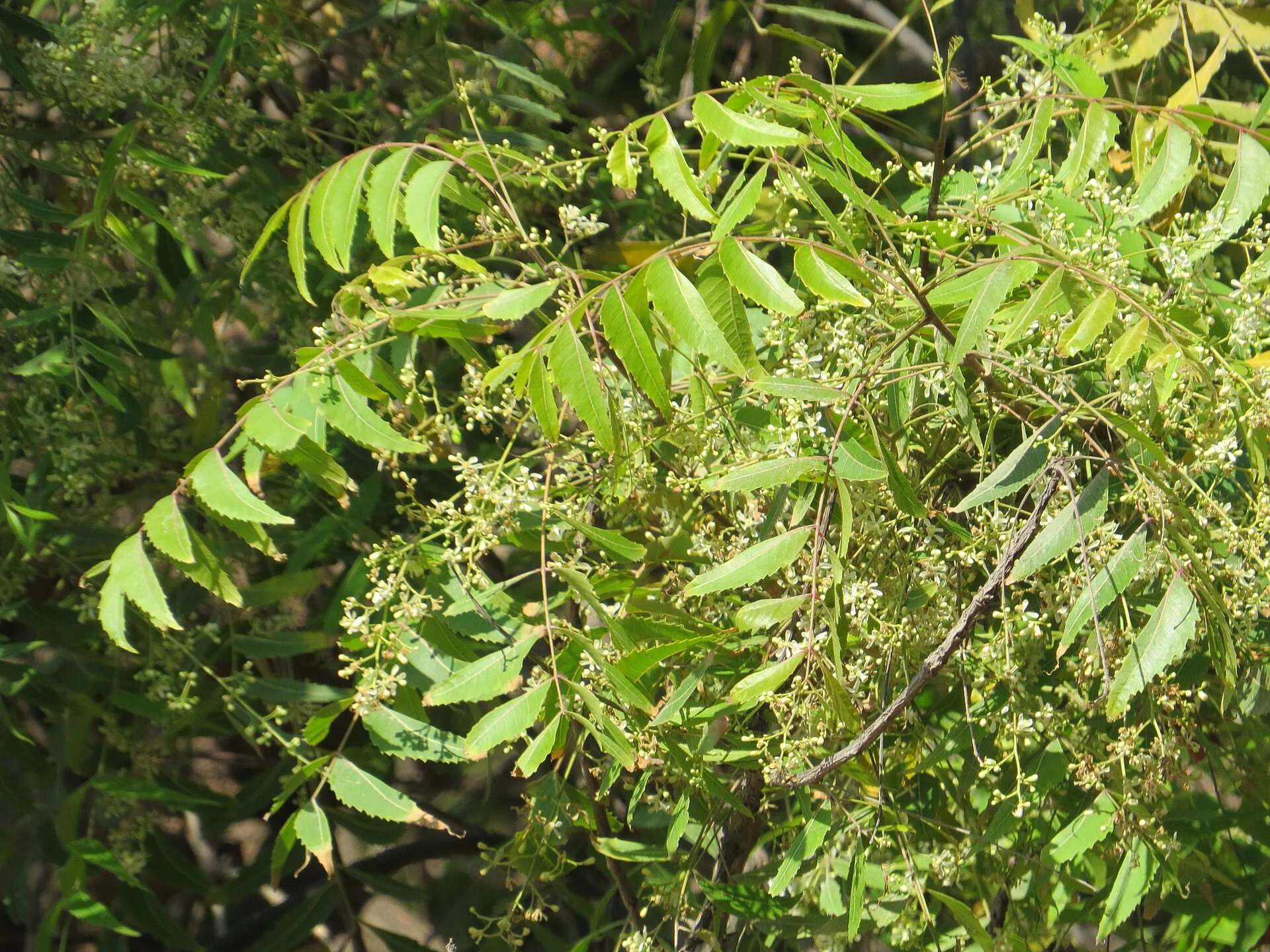
Neem Tree (Azadirachta indica)

Neem Indian Lilac Margosa Indian-lilac
IUCN: Вызывает наименьшие опасения
#696B34
#4A5116
#31340C
#8E8E50
#ADA871

Neem Tree (Azadirachta indica) - The Village Pharmacy

For thousands of years, the rural communities of South Asia have revered the shade of the neem tree as a sanctuary of health and natural protection. Known as the "village pharmacy," this resilient species plays a central role in both traditional Ayurvedic medicine and modern organic agriculture.

With its deep roots and wide canopy, Azadirachta indica thrives in arid environments where other vegetation struggles to survive. The tree remains green throughout most of the year, providing crucial shelter and resources in dry tropical regions.

Taxonomy

  • царство Plantae
  • division Tracheophytes (Vascular Plants)
  • subdivision Spermatophytes (Seed plants)
  • Angiosperms
  • mesangiosperms (Core angiosperms)
  • eudicots
  • Superrosids
  • rosids
  • malvids
  • order Sapindales
  • family Meliaceae
  • genus Azadirachta (Neem)
  • species Azadirachta indica (Neem Tree)

Living Pulse

Morphology

The physical structure of Azadirachta indica reflects its adaptation to tropical environments. It features a robust trunk with deeply fissured greyish bark and a vast lateral root system that secures the tree in sandy soils.

Its foliage and reproductive organs show the following distinctive features:

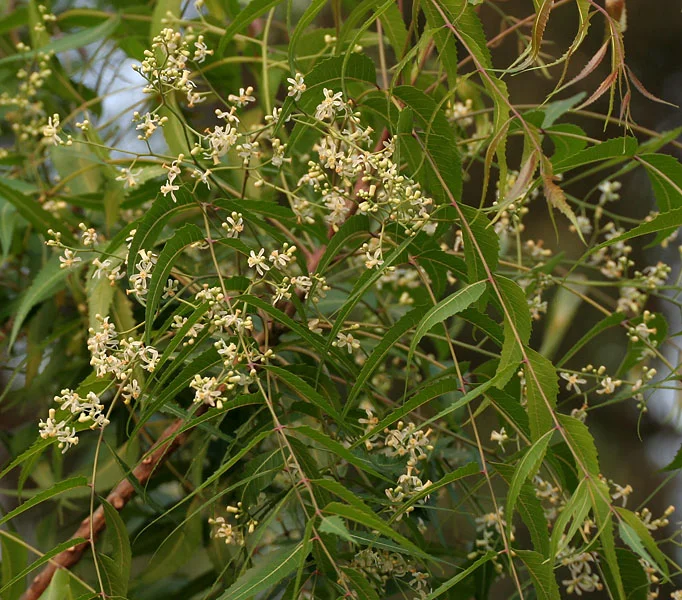
  • Leaves: Pinnately compound, measuring 20 to 40 centimeters in length, with lanceolate, asymmetric leaflets characterized by deeply serrated margins.
  • Inflorescences: Drooping axillary panicles containing up to 250 small, white, highly fragrant flowers that attract numerous insect pollinators.
  • Fruits: Oval drupes resembling olives, which transition from green to yellow upon maturity and contain a single oil-rich seed embedded in fibrous pulp.

Flowering season

Typically blooms during the spring months of March and April in its native region, though it can flower year-round in humid tropical climates.

Jan
Feb
Mar
Apr
May
Jun
Jul
Aug
Sep
Oct
Name
Dec

Applications

Every part of Azadirachta indica serves a practical purpose, making it one of the most useful trees in the tropics. Its seeds, leaves, and bark contain bioactive compounds that are widely exploited in various industries.

  • Agriculture: The active compound azadirachtin acts as a powerful organic pesticide, disrupting the life cycles of over 200 insect species without harming beneficial soil organisms.
  • Medicine and Hygiene: Neem twigs are traditionally chewed as natural toothbrushes, while leaf extracts are utilized in Ayurvedic medicine to treat skin disorders and manage blood glucose levels.
  • Cosmetics: The seed oil is rich in fatty acids and is a primary ingredient in soaps, shampoos, skin creams, and toothpastes.

Interesting facts

The cultural footprint of this species is deeply woven into the daily lives and folklore of tropical regions. Various societies have recognized its unique properties through names, cuisine, and legal battles.

  • The Tree of Forty: In Swahili-speaking parts of East Africa, the tree is known as Mwarobaini, which translates directly to the tree of forty, reflecting its reputation for curing forty different ailments.
  • Traditional Culinary Uses: In West Bengal, tender neem leaves are fried with eggplant to create the appetizer nim begun, while the flowers are used in southern India to prepare festive dishes like Ugadi pachhadi.
  • The Patent Victory: A decade-long legal battle ensued after multinational corporations attempted to patent neem extracts in 1995. The European Patent Office revoked the patent in 2005, preserving neem as a public domain resource.

Geography of distribution

  • India
  • Bangladesh
  • Myanmar
  • Pakistan
  • Sri Lanka
  • Thailand
  • Vietnam
  • Sudan

Natural varieties

Technical Information

Taxon Synonyms: Melia parviflora, Melia pinnata, Melia azadirachta, Melia hasskarlii, Antelaea javanica

External Databases: GBIF, POWO, Tropicos
See also

Sentang

Sentang

Azadirachta excelsa

A tall, fast-growing tropical tree of the mahogany family, native to Southeast Asia and valued …

True Araucarias

True Araucarias

Araucaria sect. Araucaria

Araucaria sect. Araucaria is a botanical section of evergreen conifers native to South America. It …