Baiera Fossil Genus: History, Leaf Morphology and Ginkgophytes
Fossil remains of the prehistoric gymsomperm genus Baiera provide critical insights into the evolutionary history of the Ginkgoales lineage. These ancient plants flourished from the Permian period through the Cretaceous, leaving behind well-preserved foliage across global geological formations.
First described in the 19th century, the taxon represents one of the most widespread groups of fossil ginkgophytes. Paleobotanists utilize these specimens to reconstruct ancient climates and map the distribution of Mesozoic vegetation.
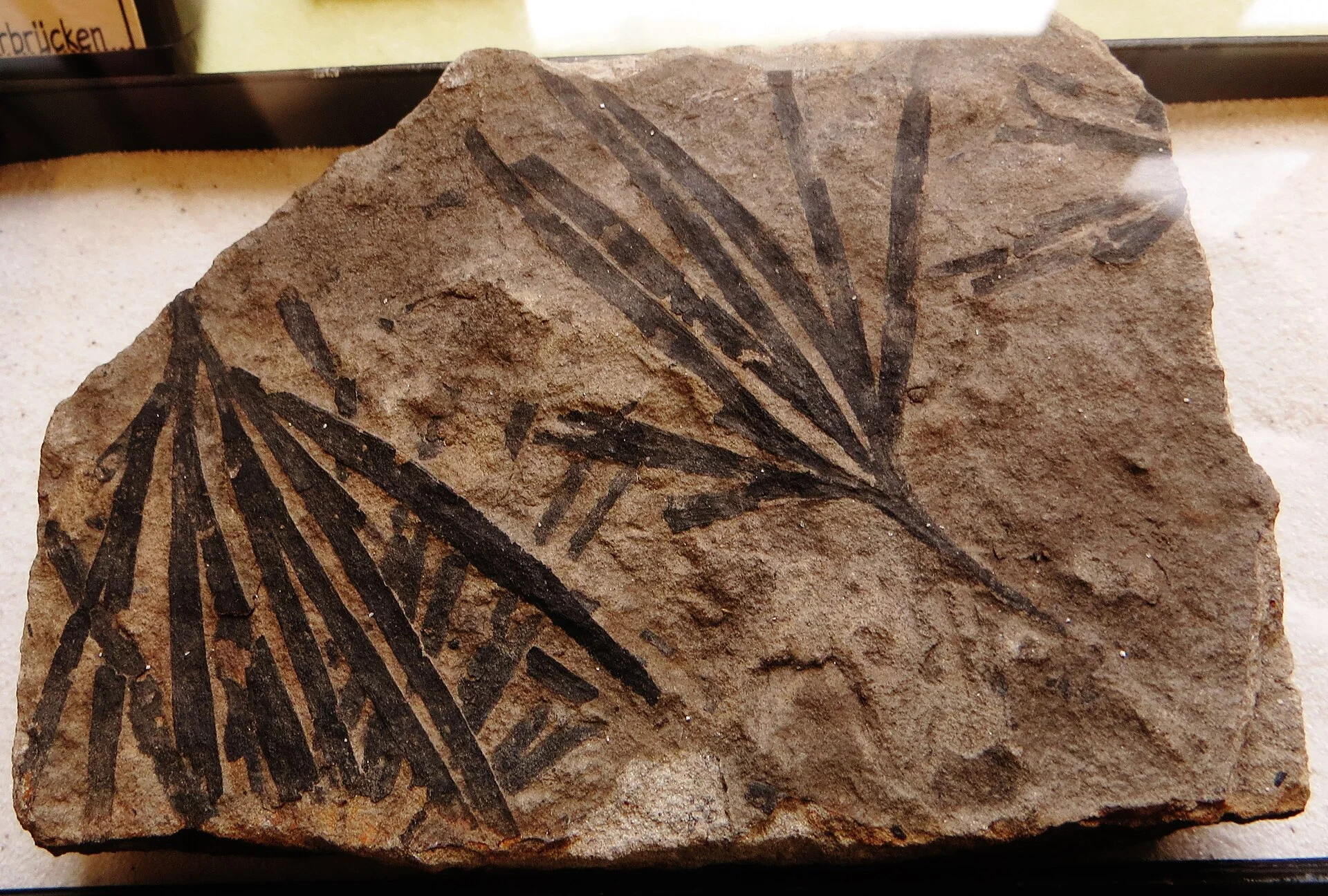
Leaves of Baiera exhibit a distinctive fan-shaped geometry characterized by deep division into multiple slender segments. The blade is typically incised into four major lobes, which further branch dichotomously into narrow, parallel-veined linear subdivisions.
A critical anatomical feature distinguishing this genus from the closely related Sphenobaiera is the presence of a distinct, well-defined petiole. Epidermal studies reveal uniform cells with straight walls on the upper leaf surface, while the lower surface contains numerous stomata surrounded by specialized subsidiary cells.
Interesting facts
German Origins: The genus was established in 1843 by Karl Friedrich Wilhelm Braun to describe ginkgophyte fossils discovered in Germany.
Global Distribution: Fossil specimens have been uncovered in diverse regions including Uzbekistan's Fergana Valley, Sweden, China, Japan, and South Africa.
Anatomical Variation: While foliage fossils are abundant and well-documented, the reproductive organs of these ancient gymnosperms remain largely unknown to science.
Baiera ikorfatensis is an extinct species of prehistoric ginkgophytes, known from fossilized leaf impressions discovered in Cretaceous rock formations of …