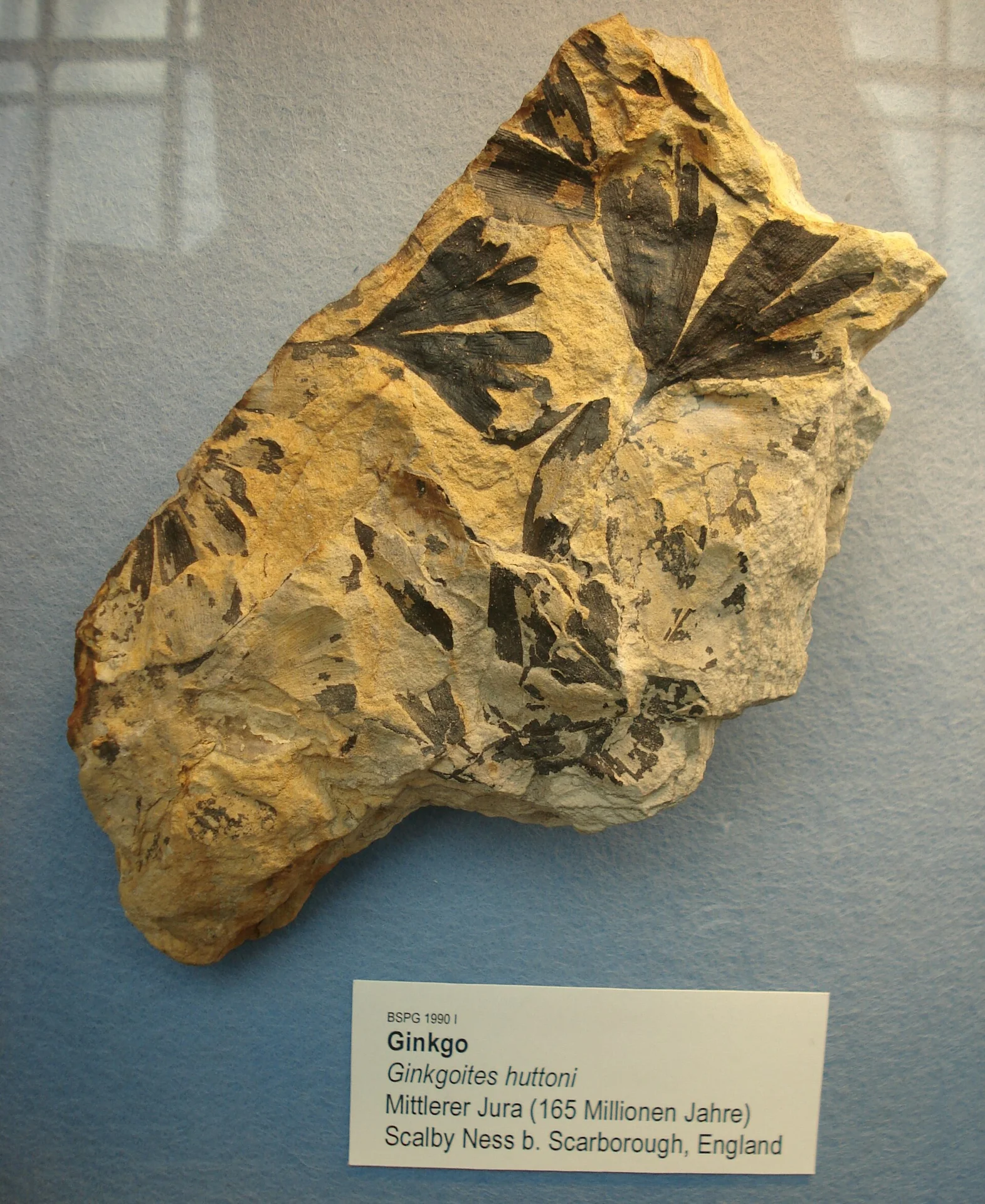
Spanning a vast geological range from the Triassic to the Paleogene period, the extinct genus Ginkgoites occupies a central place in the history of gymnosperm evolution. Established as a form genus to categorize fossil leaves structurally similar to modern ginkgos, this taxon has been discovered on nearly every continent. Its widespread fossil record serves as a testament to the global dominance of the Ginkgoales during the Mesozoic era.
Prominent paleobotanist Albert Seward first proposed the name in 1919 to classify foliage that could not be definitively assigned to the living genus Ginkgo. These ancient plants played a crucial role in temperate forest ecosystems for millions of years.
Displaying characteristics typical of the family Ginkgoaceae, the leaves of Ginkgoites featured a relatively long petiole and a semicircular, flabellate leaf blade. Most species exhibited deeply lobed leaves with dichotomous venation, branching repeatedly from the base to the margin.
Anatomical studies reveal an exceptionally thick cuticle on both the upper and lower surfaces, with stomata distributed on both sides. The stomatal complexes were typically surrounded by four to seven specialized subsidiary cells, which helped regulate water loss in prehistoric climates.
Interesting facts
A closer examination of the fossil record reveals several fascinating details about these prehistoric trees:
Nomenclature Origins: The genus name was coined by Albert Seward in his seminal 1919 work on fossil plants, aiming to group leaves allied to the modern maidenhair tree.
Global Footprint: Fossilized leaves have been recovered from major basins worldwide, including the Paleorrota geopark in Brazil and the Porcupine Hills Formation in Alberta, Canada.
Taxonomic Diversity: Key species within this genus include the widespread Ginkgoites sibirica, Ginkgoites digitata, and the well-preserved Ginkgoites huttoni.
Distinction from Baiera: Morphologically, Ginkgoites is closely related to the fossil genus Baiera, but is generally distinguished by having a more distinct petiole and less deeply divided leaf lobes.