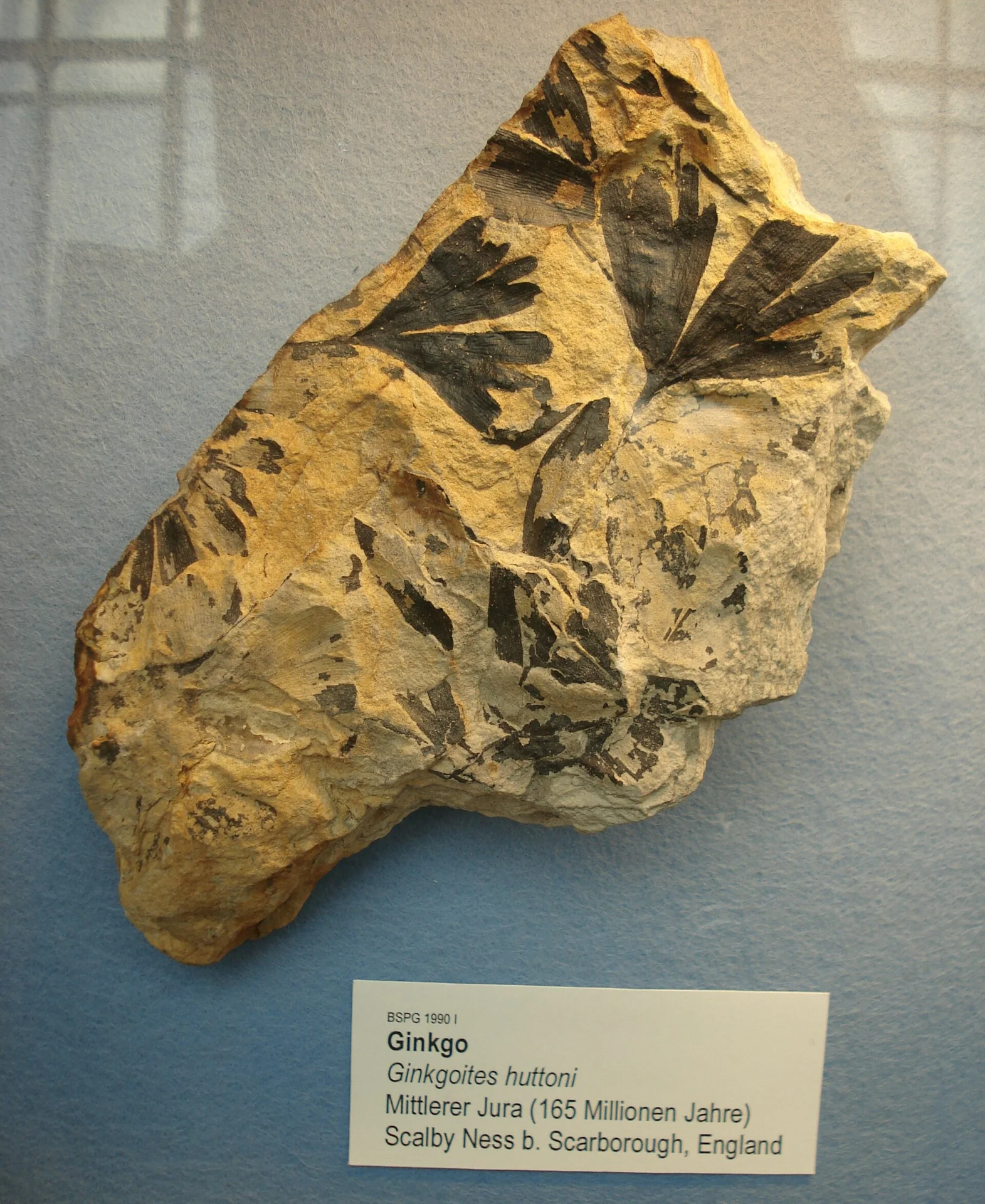
Ginkgoites huttoni - Jurassic Ginkgo Fossil from Yorkshire
Abundant leaf prints of Ginkgoites huttoni preserved in the Jurassic rocks of Yorkshire have provided key insights into prehistoric gymnosperms. These fossils represent one of the most thoroughly studied species within the extinct genus. They help scientists trace the evolutionary path leading to the modern ginkgo tree.
The leaves of this species are deeply divided into multiple narrow, linear segments or lobes. Each lobe features parallel dichotomous veins that extend from the base to the apex of the lamina. A distinct petiole connects the fan-like blade to the ancient stems.
Its cuticle is exceptionally thick, which allowed for remarkable preservation in sedimentary rocks. Microscopic studies show that the stomata are mostly restricted to the lower epidermal surface, a condition known as hypostomatic, which helped conserve moisture.
Interesting facts
Specimens of this species are frequently discovered in the plant-bearing beds of the Cloughton Formation along the Yorkshire coast.
The scientific name honors the early geologist and fossil collector William Hutton.
Due to the excellent preservation of its cuticle, researchers have been able to isolate organic compounds and examine cell structures that are millions of years old.
Geography of distribution
UK
Sources
Wikispecies contributors (2026). Taxonavigation for Ginkgoites huttoni.
British Geological Survey fossil collection records.