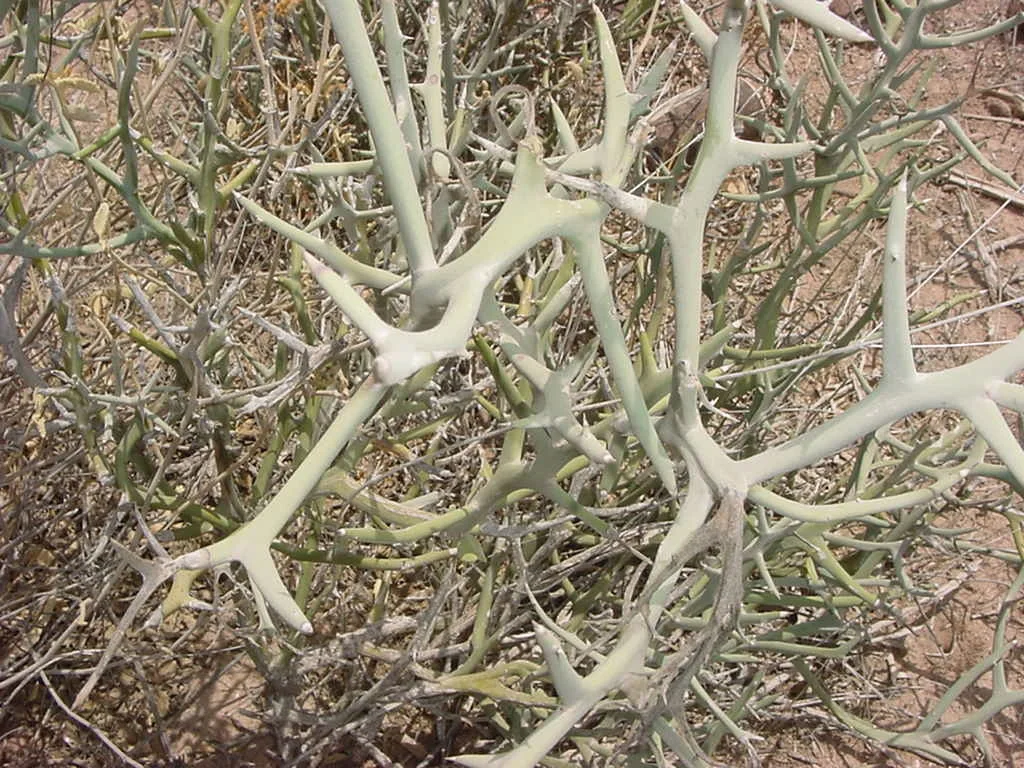
Castela polyandra - Baja Crucifixion Thorn Info & Distribution
Endemic to the extremely arid environments of northwestern Mexico, this resilient woody shrub showcases remarkable adaptations to desert life. Belonging to the family Simaroubaceae, it plays a vital ecological role in stabilizing soil and providing cover for desert fauna.
This species is characterized by its highly branched, rigid woody structure protected by sharp lateral spines. The leaves are small, alternate, and coriaceous, which minimizes water loss in its native arid habitats.
The reproductive organs consist of small, unisexual or bisexual flowers that feature a high number of stamens. The resulting fruits are prominent, small, reddish drupes containing a single seed.
Applications
Members of this genus typically contain bitter compounds known as quassinoids, which have been studied for their potential medicinal properties. Indigenous groups in regional deserts have historically prepared bitter infusions from the bark to treat digestive ailments.
Interesting facts
The species name polyandra refers to the numerous stamens found in its small flowers. This desert survivor plays an important role in soil conservation within the fragile ecosystems of the Baja California peninsula.