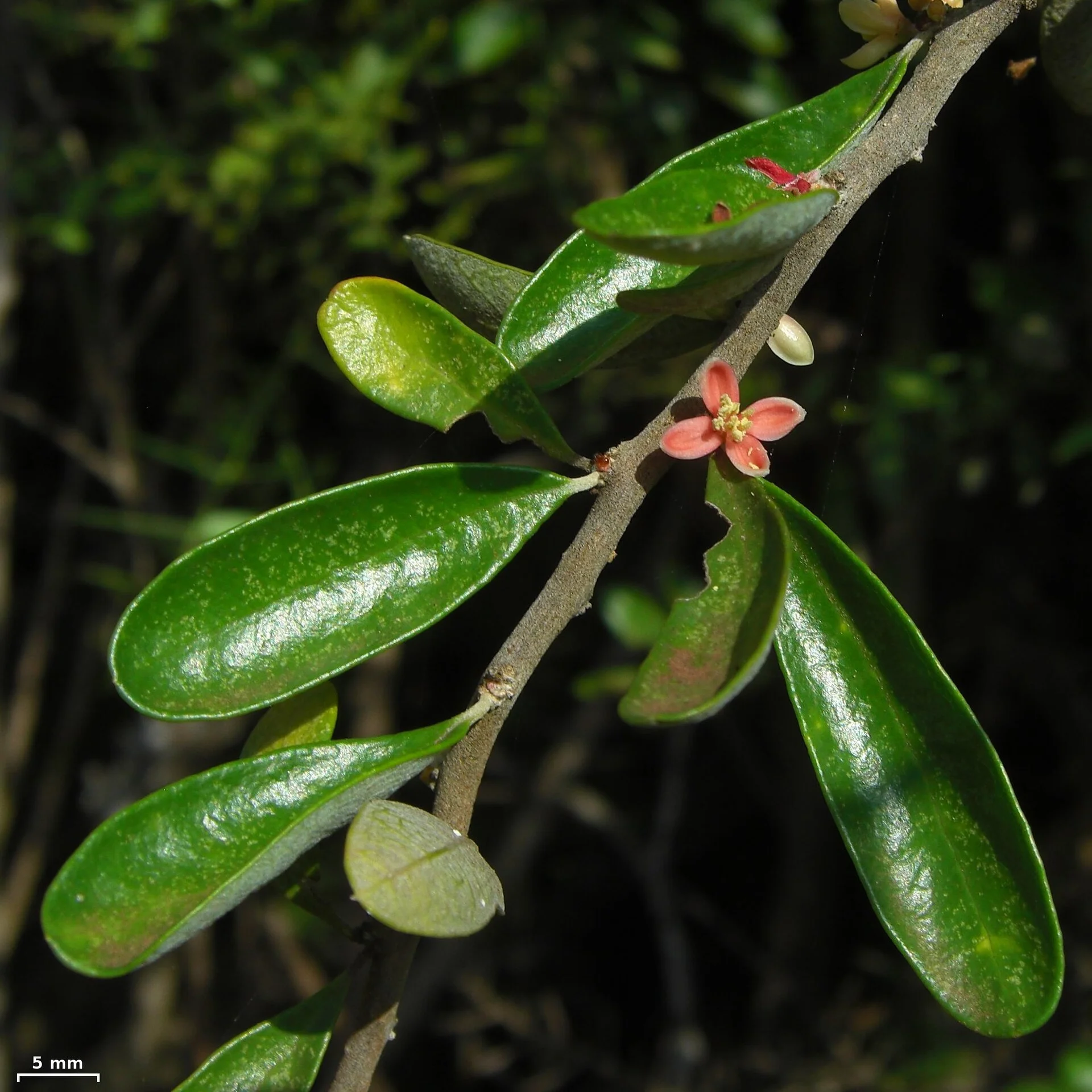
Growing in the harsh, arid environments of the Galápagos Archipelago, Castela galapageia stands as a remarkably resilient, spiny shrub. This species has adapted to thrive in dry, rocky soils where few other woody plants can survive.
Known locally as the Galapagos bitterbush, it plays a vital role in the coastal ecosystem. It provides shelter and sustenance to unique island wildlife, including native finches and iguanas.
This species exhibits a dense, intricately branched growth habit, reaching heights of one to three meters. The stiff, greyish-brown branches terminate in sharp, formidable spines that deter herbivores.
Its leaves are small, simple, and arranged alternately along the stems. They possess a thick, leathery texture and revolute margins, adaptations that significantly reduce water loss through transpiration.
The botanical characteristics of its reproductive structures include several key features:
Flowers: Small, solitary or clustered in leaf axils, typically exhibiting a yellow-green or reddish hue.
Fruit: Fleshy, bright red drupes that darken as they mature, containing a single seed.
Flowering season
Flowering occurs sporadically throughout the year, peaking during the wet season from January to May.
Jan
Feb
Mar
Apr
May
Jun
Jul
Aug
Sep
Oct
Name
Dec
Applications
Due to the presence of active quassinoids, the tissues of this shrub are exceptionally bitter. Historically, local inhabitants of the Galápagos Islands have used bark infusions in traditional medicine to treat fevers and digestive issues.
Modern pharmaceutical research has investigated similar species in the genus for potential anti-parasitic and anti-inflammatory properties. However, its primary value remains ecological rather than commercial.
Interesting facts
The extreme bitterness of the plant is an evolutionary defense mechanism against herbivorous tortoises and iguanas. Interestingly, Galapagos finches are known to feed on the fleshy red drupes despite their bitter taste.
Specimens of this species were first collected by Joseph Dalton Hooker during his historic botanical studies of the archipelago. It remains a classic example of island adaptation and speciation.