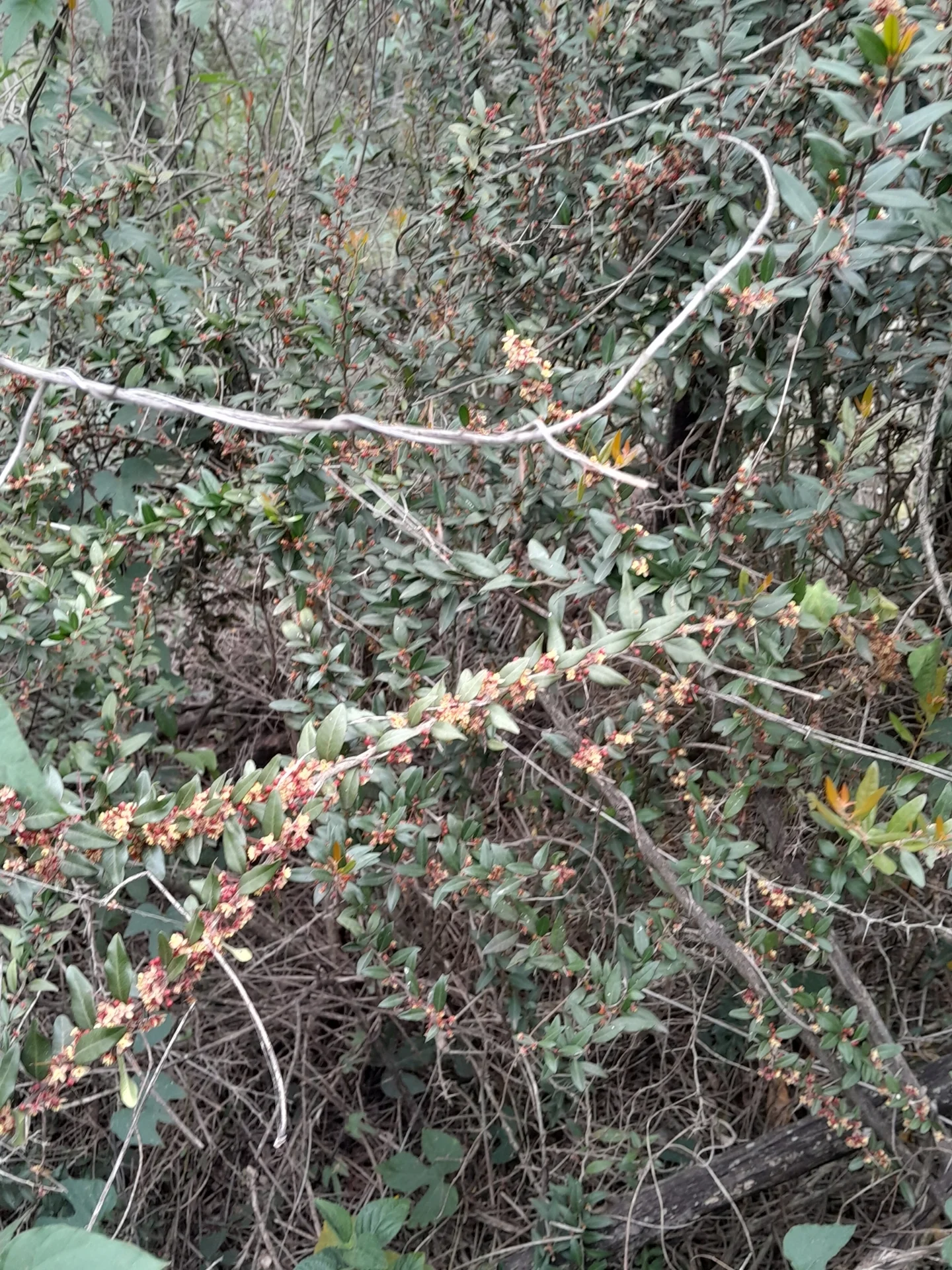
Castela tweediei - South American Bitterwood Shrub
Inhabiting the dry scrublands and temperate forests of southern South America, this spiny shrub is a tough representative of the Simaroubaceae family. It is native to regions spanning Argentina, southern Brazil, Paraguay, and Uruguay, thriving in rocky and sandy soils.
This species exhibits a dense, intricate branching pattern with stems heavily armed with strong, sharp spines. The bark is typically grayish-brown and slightly textured.
Its leaves are small, oblong to lanceolate, and display a dark green color on the upper surface with a lighter underside. The small flowers are reddish or purplish, yielding small, rounded drupes as they mature.
Applications
Like many members of the bitterwood family, this species contains quassinoids, which impart an extremely bitter taste. Local communities in South America have historically utilized bark extracts in folk medicine to treat gastrointestinal disturbances and fevers.
Interesting facts
The species name honors John Tweedie, a Scottish botanist and plant collector who explored South America in the 19th century. Its dense, thorny structure makes it an excellent natural barrier and nesting site for native birds.