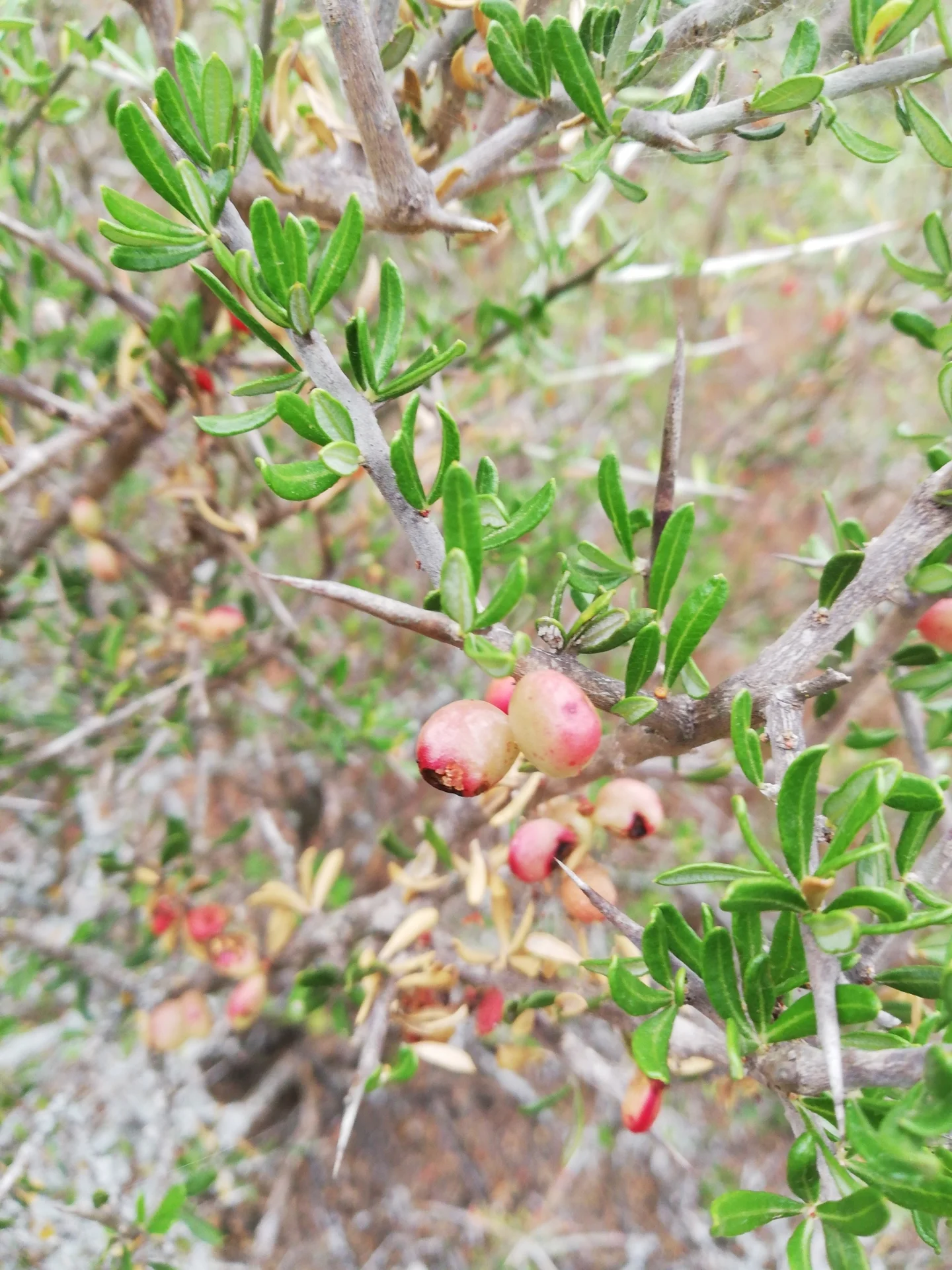
Native to the dry brushlands of Texas and northern Mexico, Castela texana exhibits exceptional tolerance to extreme desert heat. This tough, spiny shrub thrives in rocky, well-drained soils where many other plants fail to survive. It is a classic component of the Tamaulipan thornscrub ecosystem.
This woody plant grows as a multi-branched, spreading shrub reaching up to two meters in height. The branches are light grey or greenish and armed with robust, sharp thorns that deter herbivores. Its leaves are small, oblong, and covered in fine hairs, while its small flowers are yellow to reddish and develop into glossy, bright red drupes.
Flowering season
Flowering occurs in spring and early summer, typically from March to June.
Jan
Feb
Mar
Apr
May
Jun
Jul
Aug
Sep
Oct
Name
Dec
Applications
The bark and roots contain amargosin, an intensely bitter compound historically used in folk medicine to treat intestinal ailments. In ecological landscapes, Castela texana provides vital cover for desert rodents, quail, and other wildlife. Its deep root system helps bind loose sandy and gravelly soils in arid habitats.
Interesting facts
The Spanish name amargoso translates directly to 'bitter,' highlighting the plant's intense flavor.
Its bright red fruits are highly attractive to birds, which eat them and subsequently disperse the seeds.
It can survive long periods of drought by dropping its leaves and photosynthesizing through its green stems.
Geography of distribution
United States (Texas)
Mexico
Sources
Plants of the World Online (POWO): Royal Botanic Gardens, Kew
Global Biodiversity Information Facility (GBIF): Species occurrence and taxonomy