Castela tortuosa - Chaparro Amargo and Texas Goatbush
Commonly known as chaparro amargo, Castela tortuosa thrives in the arid brushlands of northern Mexico and southern Texas. This highly resilient shrub belongs to the bitterwood family, Simaroubaceae, and was scientifically described by Danish botanist Frederick Michael Liebmann in 1854.
It is widely recognized for its intense bitterness and has a long history of utilization in traditional regional medicine. The plant plays a significant role in the desert scrub ecosystems of North America.
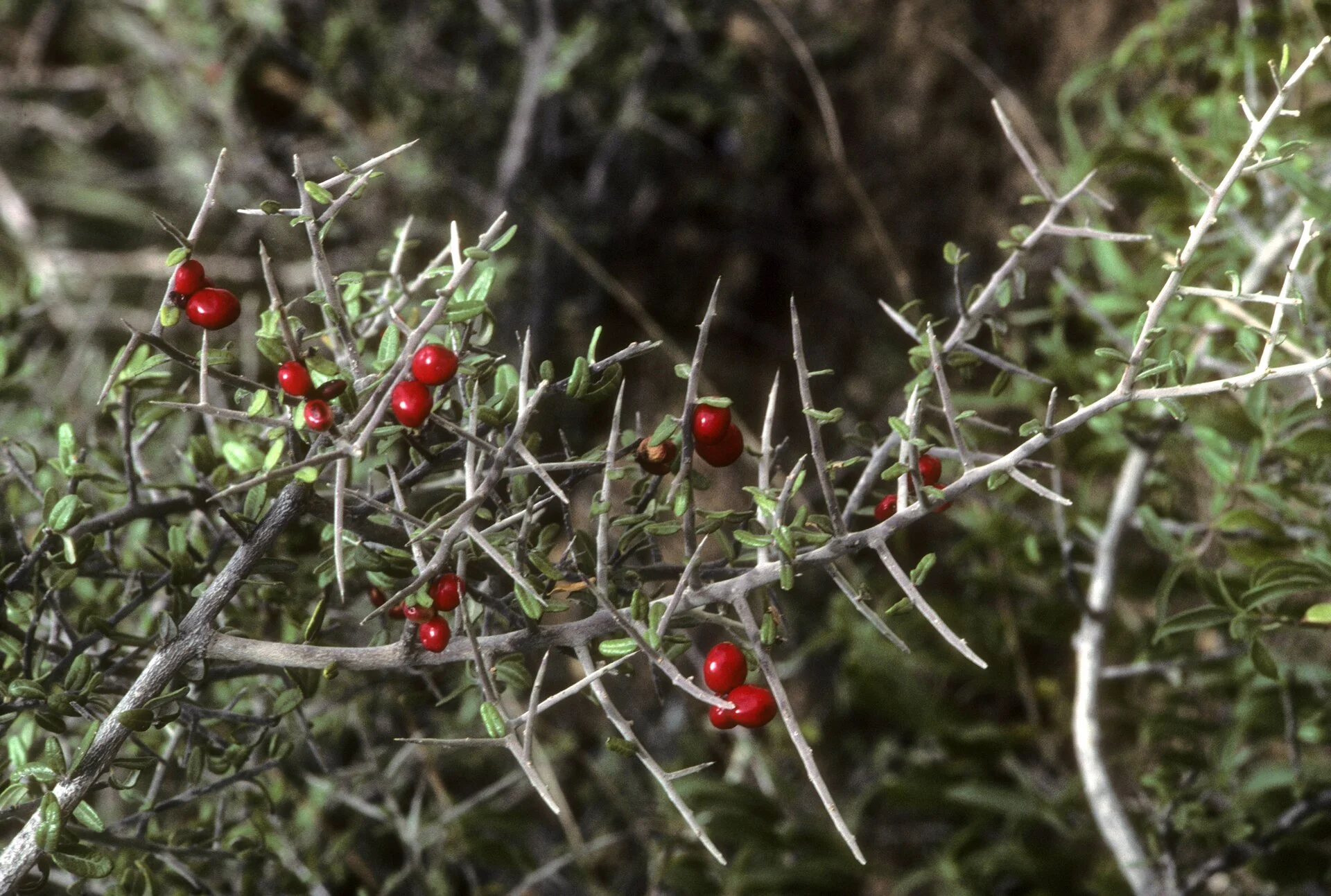
The structural layout of Castela tortuosa features intricately twisted, stiff branches that are densely armed with sharp spines. Its leaves are small, grayish-green, and covered with a fine puberulence that reflects sunlight and reduces water loss.
Bright red or orange-red flowers emerge along the thorny stems, providing a striking contrast to the dusty foliage. These blooms develop into small, glossy red drupes that attract desert birds and small mammals.
Flowering season
March to July
Jan
Feb
Mar
Apr
May
Jun
Jul
Aug
Sep
Oct
Name
Dec
Applications
Traditional herbalists in Mexico and Texas utilize decoctions of this species to treat intestinal parasites, amoebic dysentery, and severe diarrhea. Scientific studies have confirmed its efficacy against pathogens such as Salmonella typhimurium.
Research also highlights the insecticidal properties of its chemical extracts, which show promise in controlling certain lepidopteran pests. The plant is occasionally studied for its potential in producing natural agricultural pest control agents.
Interesting facts
The Latin epithet tortuosa translates to "twisted" or "winding," which perfectly describes the crooked, maze-like growth pattern of its branches. Its common name, chaparro amargo, refers to its extremely bitter taste, which is caused by a high concentration of medicinal quassinoids.