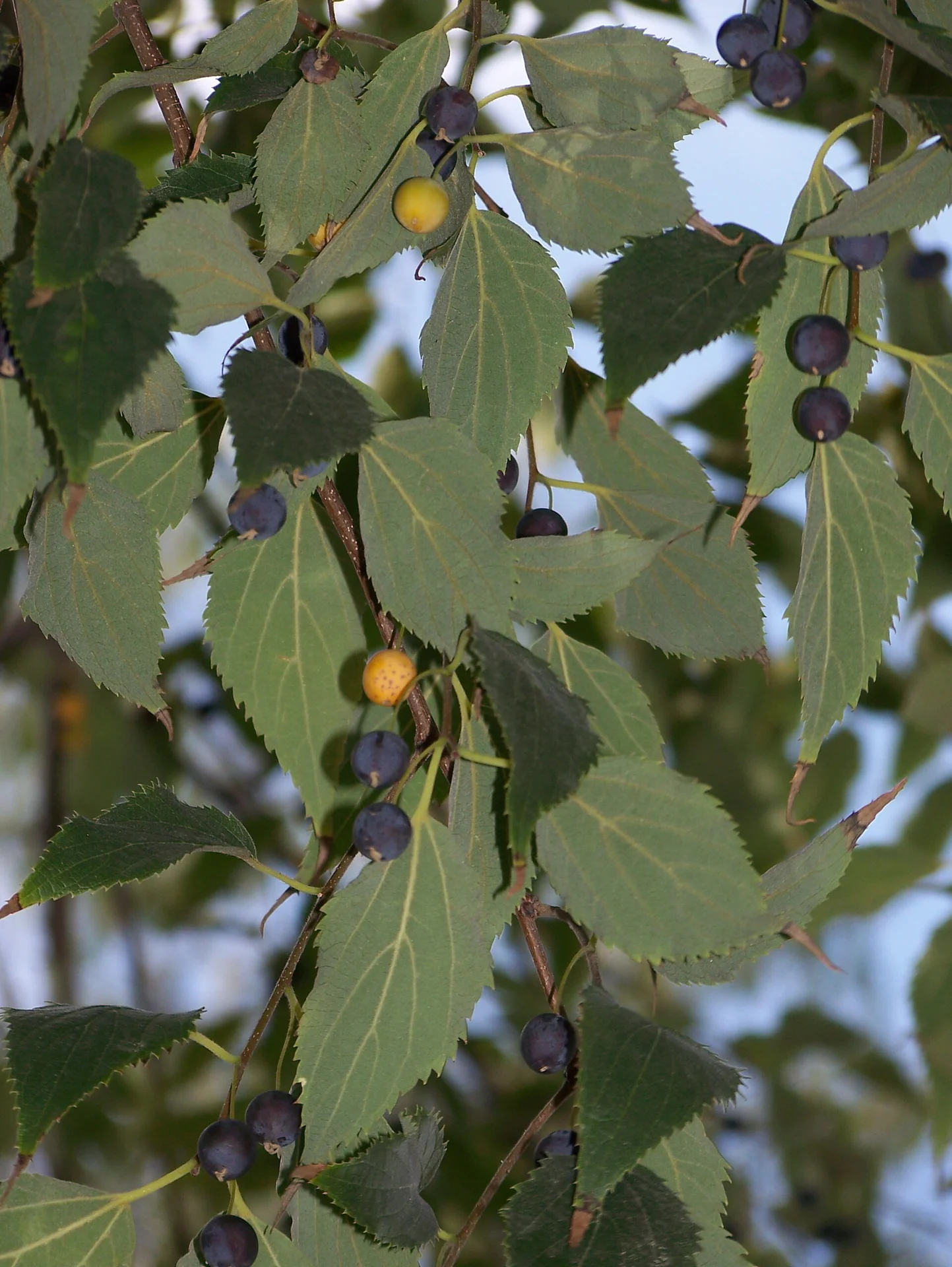
European Nettle Tree (Celtis australis)

European hackberry Mediterranean hackberry Lote tree Honeyberry
Вызывает наименьшие опасения
#626647
#56606B
#333322
#A7AC74
#899353

Celtis australis: European Hackberry Morphology & Uses

Reaching towards the Mediterranean sun with its characteristically smooth, elephantine bark, the European hackberry stands as a living monument of resilience. Celtis australis has graced the landscapes of Southern Europe and North Africa for millennia, offering deep shade and sweet fruits to weary travelers. This deciduous giant effortlessly blends ancient history with modern urban utility.

Unlike many delicate ornamentals, this tree thrives in challenging conditions, shrugging off drought and air pollution with ease. Its graceful, spreading canopy transforms city streets and parklands into verdant, cooling retreats. During autumn, the foliage stages a subtle but beautiful display, shifting from dark green to pale yellow before falling.

Taxonomy

  • царство Plantae
  • division Tracheophytes (Vascular Plants)
  • subdivision Spermatophytes (Seed plants)
  • Angiosperms
  • mesangiosperms
  • eudicots
  • Superrosids
  • rosids
  • order Rosales
  • family Cannabaceae (Hemp family)
  • genus Celtis (Hackberry)
  • species Celtis australis (European Nettle Tree)

Living Pulse

Morphology

The morphology of Celtis australis is defined by its robust architecture and distinctive foliage, allowing it to reach up to 25 meters in height. Key botanical characteristics include:

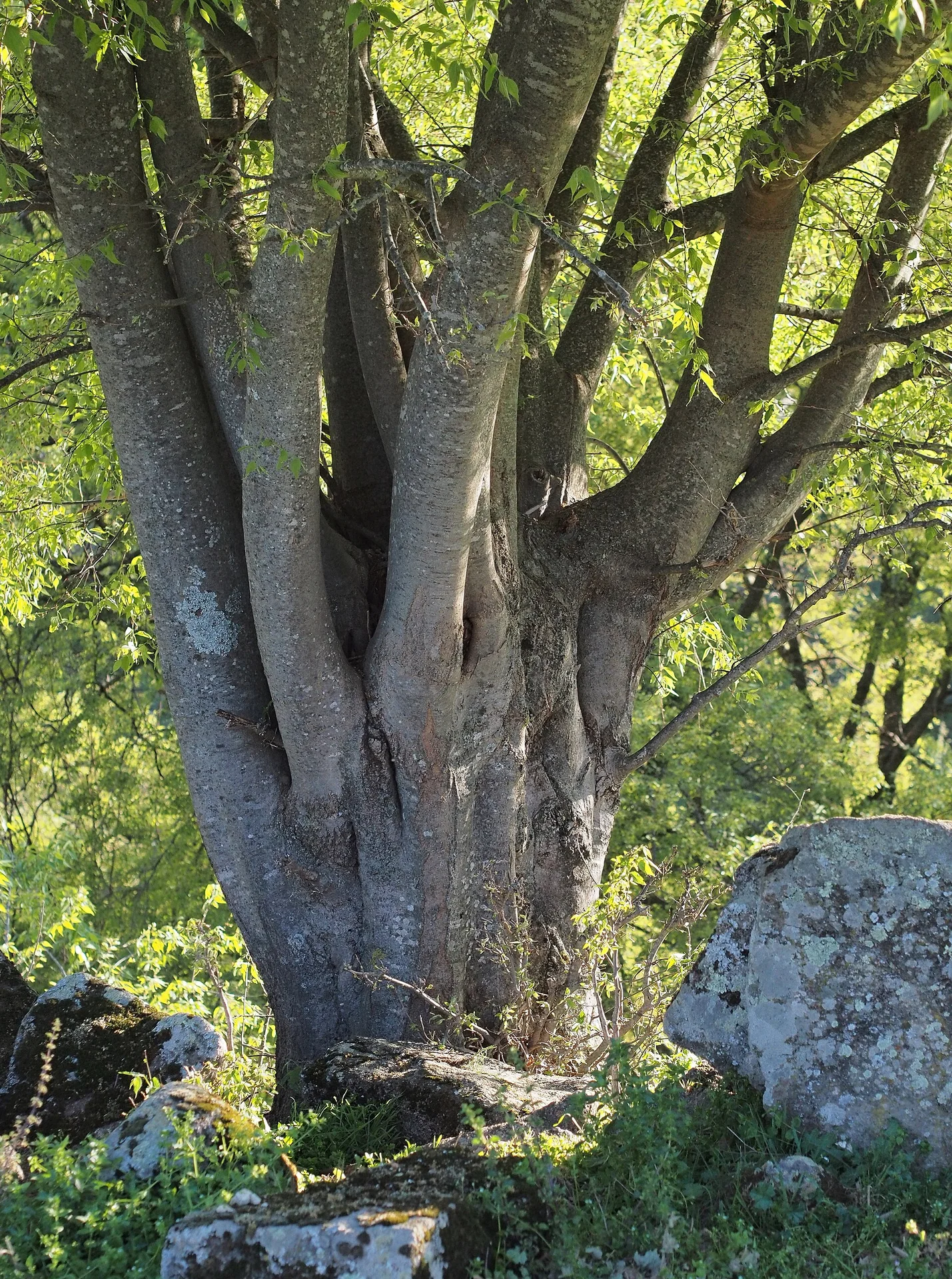
  • Trunk and Bark: Features a thick, straight trunk cloaked in smooth, grey bark that closely resembles elephant skin.
  • Leaves: The alternate, sharply toothed leaves are 5 to 15 centimeters long, with a rugose upper surface and a softly tomentose underside.
  • Flowers: Small, green, and apetalous blooms appear in spring, utilizing wind pollination and featuring both male and female organs.
  • Fruit: Inconspicuous flowers develop into small, berry-like drupes that turn dark purple upon maturity and hang in delicate clusters.

Flowering season

Blooms emerge in early to mid-spring, typically from March to May.

Jan
Feb
Mar
Apr
May
Jun
Jul
Aug
Sep
Oct
Name
Dec

Applications

Thanks to its resilience and versatile materials, Celtis australis serves numerous practical purposes across different industries. The tree is highly valued in both traditional crafts and modern urban planning:

  • Landscaping: Extensively planted as a shade tree in cities due to its exceptional longevity and resistance to air pollution.
  • Woodworking: The tough, pliable wood is favored by turners for crafting walking sticks, agricultural tools, and musical instruments.
  • Herbal Medicine: Decoctions from the astringent leaves and fruits are traditionally used to treat gastrointestinal issues and soothe peptic ulcers.
  • Culinary Uses: The sweet, dark-purple fruits can be enjoyed raw or cooked into regional jams and preserves.

Interesting facts

Steeped in ancient mythology and regional history, Celtis australis boasts a rich cultural heritage across the Mediterranean. This venerable tree is surrounded by fascinating lore and remarkable botanical records:

  • It is widely believed to be the legendary "Lotus" described by Homer in the Odyssey, whose fruits induced blissful forgetfulness among the Lotus-Eaters.
  • In Islamic traditions, the tree holds a sacred status, and amulets crafted from its wood are historically used to ward off evil spirits.
  • A monumental specimen planted around 1550 still survives in the French village of Fox-Amphoux, showcasing its immense longevity.
  • Some of the oldest known and revered hackberry trees currently flourish on the Temple Mount in Jerusalem.

Geography of distribution

  • Spain
  • Italy
  • France
  • Greece
  • Turkey
  • Morocco
  • Algeria
  • Tunisia
  • Portugal
  • Syria

Natural varieties

Technical Information

External Databases: GBIF, POWO, Tropicos
Смотрите также

Orange hackberry

Orange hackberry

Celtis aurantiaca

A deciduous tree species native to Korea, recognized by its large leaves with caudate-acuminate tips …