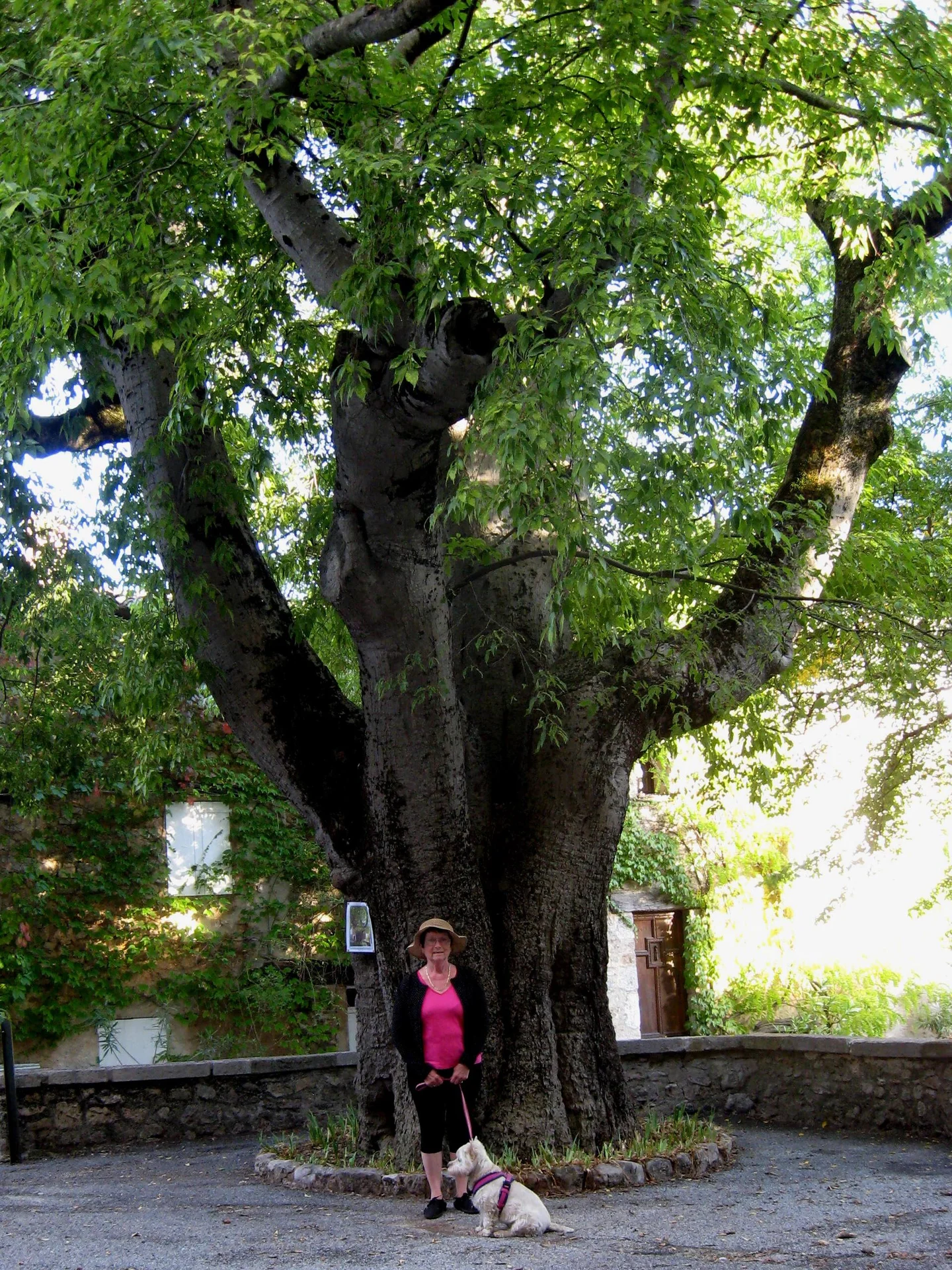
European hackberry typical
(Celtis australis subsp. australis)
Mediterranean nettle tree
European hackberry
Lote tree
Celtis australis subsp. australis: Mediterranean Nettle Tree
Celtis australis subsp. australis dominates many Mediterranean landscapes, stretching across Southern Europe, North Africa, and Western Asia. This deciduous tree is celebrated for its elegant silhouette, smooth beech-like bark, and exceptional longevity. It has played a significant role in regional history, offering both cooling shade and valuable resources since antiquity.
The subspecies thrives in hot, dry summers and can colonize rocky soils where other trees struggle. Its ecological value is high, providing food for birds and nesting sites for insects.
The structural profile of this tree includes a broad, spreading crown and smooth, dark gray bark that remains unwrinkled even in mature specimens. Leaves are ovate-lanceolate, measuring 5 to 15 centimeters long, with a long-tapered tip and sharply serrate margins. The upper leaf surface is dark green and rough, whereas the underside is grayish-green and softly pubescent.
In early spring, the tree produces small, petal-less green flowers that appear along with the new leaves. These flowers are wind-pollinated and quickly develop into fruits.
Flower arrangement: Solitary hermaphrodite flowers arise in the upper leaf axils, while male clusters form at the base.
Fruit characteristics: Globose drupes, about 1 centimeter in diameter, ripen to a dark purple or black color.
The sweet, thin flesh of the drupe surrounds a hard, pitted stone containing a single seed.
Flowering season
Spring
Jan
Feb
Mar
Apr
May
Jun
Jul
Aug
Sep
Oct
Name
Dec
Applications
The tough, flexible wood of this tree has been prized for centuries in the manufacture of carriage shafts, whips, and oars. Its elasticity and resistance to splitting make it ideal for bending and carving.
The sweet, edible drupes are consumed fresh or used to flavor local spirits. Furthermore, the tree is widely planted as a robust street and park tree throughout the Mediterranean region due to its dense shade and air-purifying qualities.
Interesting facts
Historic whips: The French town of Sauve is famous for manufacturing traditional whips from the flexible wood of this nettle tree.
Beech lookalike: The smooth, gray bark of mature specimens closely resembles that of the beech tree, earning it the nickname "stone beech" in some regions.
Ancient food: Archaeologists have found nettle tree seeds in prehistoric human settlements, indicating its long history of consumption.
Geography of distribution
Spain
France
Italy
Greece
Turkey
Morocco
Sources
POWO: Plants of the World Online (Royal Botanic Gardens, Kew)