
Sicilian Mount Etna hackberry
Celtis tournefortii subsp. aetnensis
A rare deciduous tree endemic to Sicily, growing on volcanic slopes and valued for its …
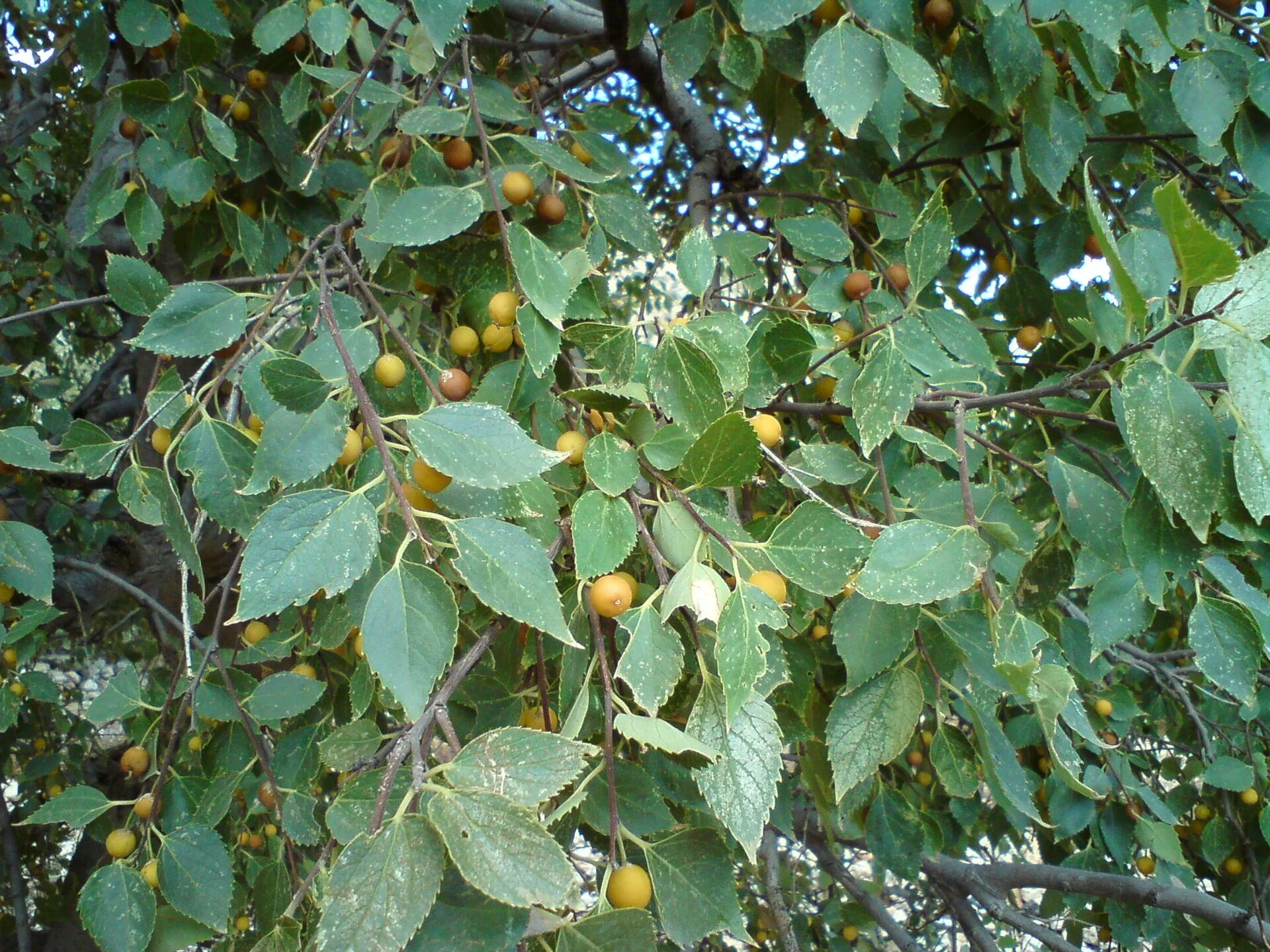
Clinging to sun-drenched limestone slopes and rugged terrains, the Oriental hackberry demonstrates remarkable resilience in challenging environments. As the autonymic subspecies of its taxonomic lineage, Celtis tournefortii subsp. tournefortii represents the foundational form of this hardy plant group.
Adapted to temperate and Mediterranean climates, this taxon plays a vital ecological role by providing sustenance and shelter for regional wildlife. The robust root system of Celtis tournefortii subsp. tournefortii aids in stabilizing soils, showcasing the evolutionary adaptability of the Cannabaceae family.
The physical structure of Celtis tournefortii subsp. tournefortii typically develops as a large deciduous shrub or a small to medium-sized tree with a well-branched canopy. Its bark is generally smooth and grayish, acquiring subtle textures as the specimen reaches maturity.
The foliage and reproductive elements exhibit several distinctive characteristics:
The taxonomic history of Celtis tournefortii subsp. tournefortii features several notable highlights in botanical literature.
Celtis tournefortii subsp. aetnensis
A rare deciduous tree endemic to Sicily, growing on volcanic slopes and valued for its …

Picrasma
A genus of deciduous trees and shrubs known for their extremely bitter bark and medicinal …

Araucaria humboldtensis
A small, critically endangered coniferous tree native strictly to the high-altitude mountain peaks of southern …

Araucaria sect. Araucaria
Araucaria sect. Araucaria is a botanical section of evergreen conifers native to South America. It …