Cephalotaxus hainanensis - Hainan Plum Yew Conservation & Profile
Endemic to the subtropical rainforests of southern China and neighboring regions, Cephalotaxus hainanensis is an endangered coniferous tree. It grows up to 21 meters tall and is highly valued for its medicinal properties. The species has faced significant population declines due to habitat loss and harvesting.
This conifer prefers moist, forested ravines and mixed mountain forests. While historically considered endemic to Hainan Island, recent taxonomic revisions indicate a broader distribution in mainland China and parts of northern Indochina.
The physical profile of Cephalotaxus hainanensis showcases its adaptation to warm, humid rainforests. The tree can reach heights of over 21 meters with a trunk diameter of up to 70 centimeters. Its thin, light brown to reddish-brown bark exfoliates in long, fibrous strips.
Key morphological features include:
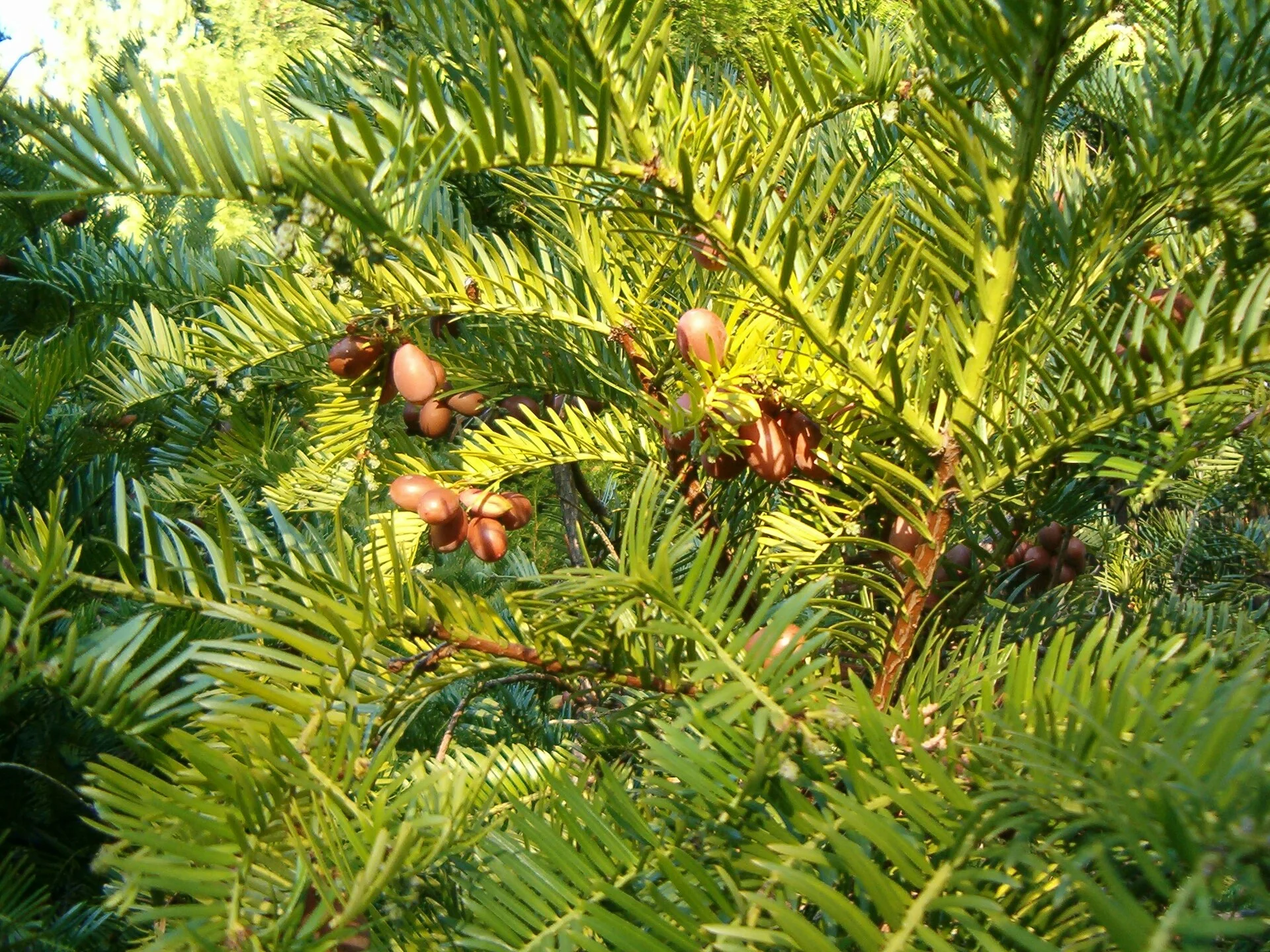
Foliage: The needles are straight or slightly sickle-shaped, measuring 2 to 4.5 centimeters long and about 3.5 to 4.5 millimeters wide. They feature a dark green upper surface and a pale underside marked by 19 to 26 white stomatal lines.
Cones: Small, globose male cones are clustered in groups of six to eight, while the female cones are borne singly on short, woody stalks.
Seeds: The seeds are elliptic-obovate, about 2.2 to 2.8 centimeters long, and are fully enveloped by a fleshy aril that turns from green to bright red upon ripening.
Flowering season
November to March
Jan
Feb
Mar
Apr
May
Jun
Jul
Aug
Sep
Oct
Name
Dec
Applications
The primary value of Cephalotaxus hainanensis lies in its chemical composition. The leaves and bark contain the alkaloids cephalotaxine and harringtonine, which exhibit strong antileukemia activity and are used in oncology treatments. Historically, its durable timber was also harvested for local woodworking and construction before strict conservation measures were implemented.
Interesting facts
This rare conifer is of great interest to both conservationists and pharmacologists:
Cancer Research: The harvesting of its bark for the extraction of harvesting-derived compounds (harringtonine) is a major reason for its protected status, as these compounds are crucial for certain chemotherapy drugs.
Government Protection: Because of the intense pressure from illegal harvesting, the Chinese government has instituted a strict ban on all logging and bark collection of this species.
Slow Growth: Like many related gymnosperms, it suffers from incredibly slow seed development and low natural regeneration, which hampers population recovery in the wild.