Cephalotaxus Genus: Guide to Plum-Yews and Cowtail-Pines
Nestled in the shaded understory of temperate and subtropical Asian mountain forests, the ancient conifers of the genus Cephalotaxus offer a striking resemblance to true yews. Commonly known as plum-yews or cowtail-pines, these slow-growing evergreen shrubs and trees have survived since the Mesozoic era, once covering vast regions of the Northern Hemisphere.
Beyond their horticultural appeal, these plants are renowned for their unique evolutionary lineage and distinct chemical profile. Their fleshy, plum-like seed cones and soft, non-spiny needles set them apart from closely related gymnosperms, making them a subject of intense botanical research.
Reaching heights of 1 to 10 meters, and occasionally up to 20 meters, these evergreen shrubs and small trees feature thin, smooth bark that peels in narrow, longitudinal strips. Their branching pattern is typically opposite or whorled, forming a dense, rounded crown.
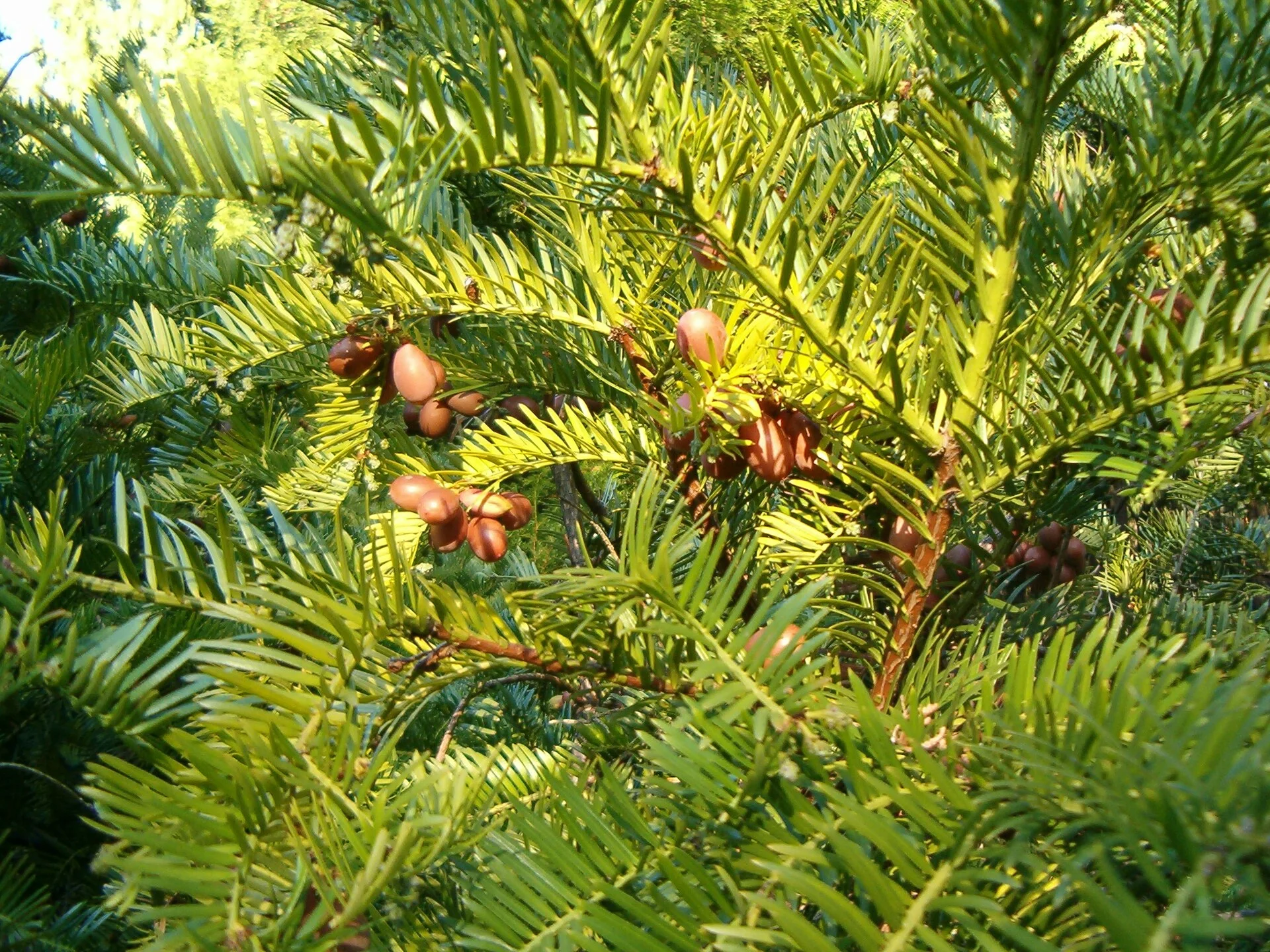
The linear, soft-textured needles exhibit a distinctive arrangement, spiraling around the main shoots while twisting at their bases to form two flat, comb-like ranks on lateral branches. Each needle displays a prominent midrib on the upper surface, while the underside features two striking, bright white stomatal bands composed of 11 to 24 rows of stomata.
Reproductive structures are typically dioecious, meaning male and female cones develop on separate plants:
Pollen cones: These globose structures are grouped in short-stalked heads along the underside of the previous year's twigs, releasing pollen for wind dispersal.
Seed cones: Borne on short stems, these structures mature over 18 months into plum-like, fleshy pseudodrupes that transition from green to purple-brown when ripe, enclosing a single large seed.
Flowering season
Pollen cones mature and release pollen in mid to late spring, with seeds ripening 18 months later in autumn.
Jan
Feb
Mar
Apr
May
Jun
Jul
Aug
Sep
Oct
Name
Dec
Applications
Valued for centuries in regional traditions, these conifers serve diverse roles ranging from traditional forestry to cutting-edge oncology. The fine-grained, durable wood is utilized locally in Asia for construction material, tools, and firewood.
Modern pharmacological interest in the genus is exceptionally high due to its unique phytochemistry:
Anticancer Compounds: Tissues of these plants contain rare alkaloids, including cephalotaxine and harringtonine, which have been developed into therapeutic agents to treat certain forms of leukemia.
Industrial Oils: The large seeds yield rich oils historically used in India and Japan for lamps, lubricating agents, and traditional medicinal applications.
Edible Arils: When fully mature, the sweet, fleshy covering (aril) surrounding the seed is edible and consumed raw in some regions, though the seed itself remains toxic.
Interesting facts
Fossil discoveries reveal that these conifers once enjoyed a vast, circumpolar distribution. Paleobotanists have uncovered fossilized twigs and seeds dating back to the Jurassic period in Greenland, as well as Miocene and Pliocene deposits across Europe and North America.
The propagation of the genus in the wild relies on a fascinating partnership with forest animals:
Animal Dispersal: Squirrels and other small rodents gather and bury the heavy, plum-like seed cones as winter food reserves, inadvertently planting new trees when caches are forgotten.
Extended Maturation: Unlike true yews which mature their seeds in a single season, these slow-growing conifers require a lengthy 18-month cycle to ripen their fleshy cones.
Basal Lineage: Genetic and molecular studies suggest that these plants diverged from other members of the taxad family during the late Triassic period, making them one of the most ancient surviving conifer lineages.
Elevate shaded garden spaces with top companion plants for Japanese plum yew. Discover professional pairing strategies for foliage contrast, soil health, and multi-season color.
Struggling to tell Cephalotaxus vs Taxus apart? Discover needle morphology, plum vs aril fruits, heat tolerance, and toxicity differences in this guide.