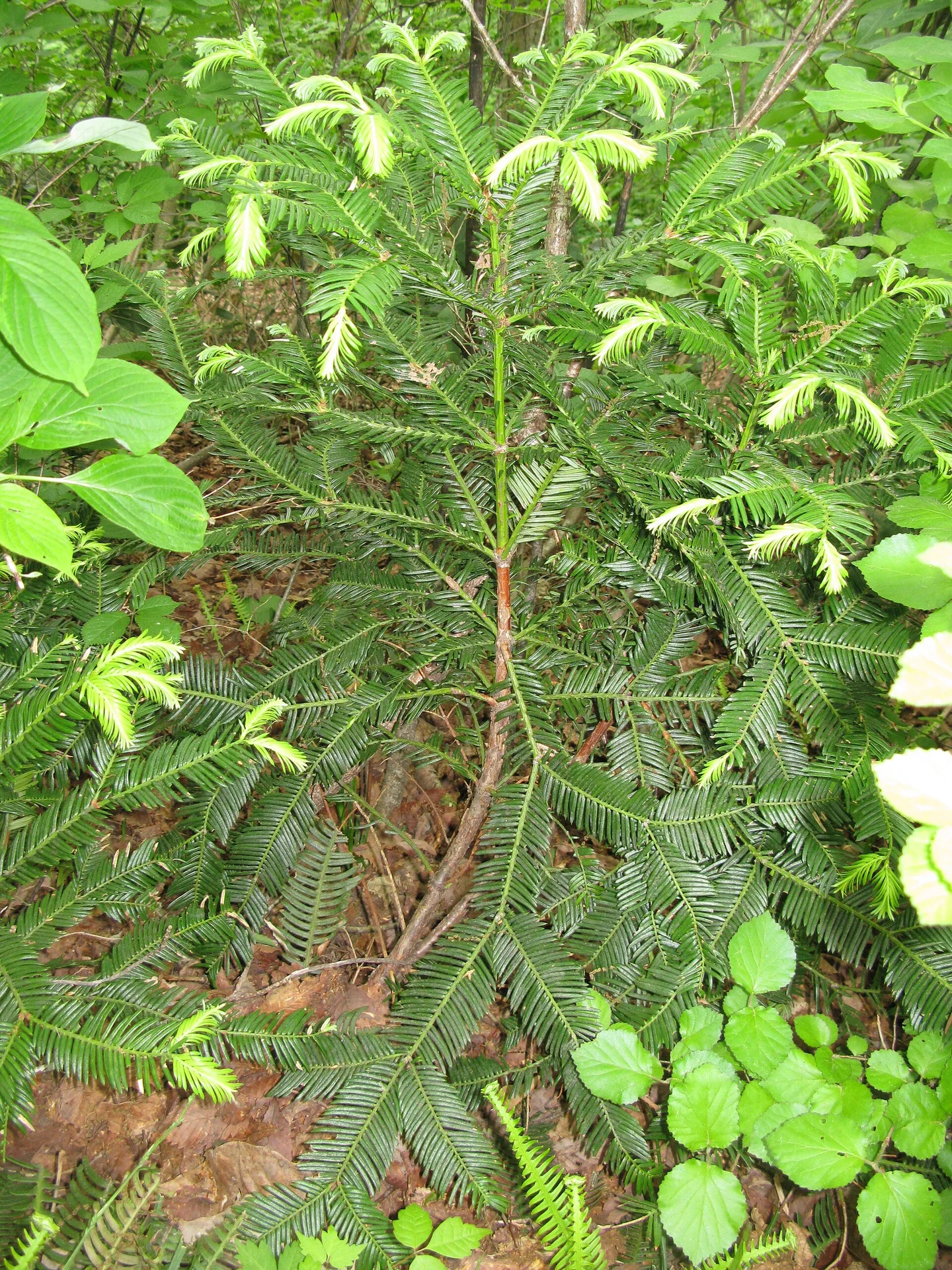
Dwarf Harrington's Plum Yew
(Cephalotaxus harringtonia var. nana)
Creeping plum yew
Hai-inugaya
Aizu-inugaya
Ezo-inugaya
#657639
#7C9949
#99B164
#B5E074
#557938
Plant palette
Cephalotaxus harringtonia var. nana: The Creeping Plum Yew
Inhabiting the snowy understories of Japanese forests, this creeping evergreen shrub is a remarkable ecological adaptation. It is found predominantly along the Sea of Japan side, spanning from southwest Hokkaido through Honshu to Shikoku.
As a specialized variety of Cephalotaxus harringtonia, it has evolved to withstand heavy winter snow cover. It coexists with other specialized low-growing evergreen species in beech forest communities.
The growth habit is heavily influenced by its snow-laden habitat, resulting in a prostrate form. The lower parts of the trunk creep along the ground, while the branches ascend to a height of 1 to 2 meters.
The linear needles and reproductive organs possess several distinguishing features:
Foliage: The glossy, dark green needles measure 25–35 mm in length and 2.5–3 mm in width, featuring pale white stomatal bands on the underside.
Needle Tips: Though the tips are pointed, they are soft to the touch and do not cause pain when handled.
Strobili: The variety is dioecious, producing yellow male strobili and green female strobili between May and June.
The seeds mature around October, developing a fleshy outer coat that ripens to a bright red color.
Applications
The fleshy red outer seed coat is known to be edible and is collected locally in its native range. However, the variety is primarily of ecological and botanical interest rather than commercial use.
Interesting facts
Its creeping habit is a survival strategy to prevent snow damage, allowing branches to remain protected under the snow blanket.
The Japanese name Hai-inugaya translates to creeping dog-yew, distinguishing it from the upright parent species.
It frequently grows alongside other snow-adapted evergreen plants, including Torreya nucifera var. radicans.