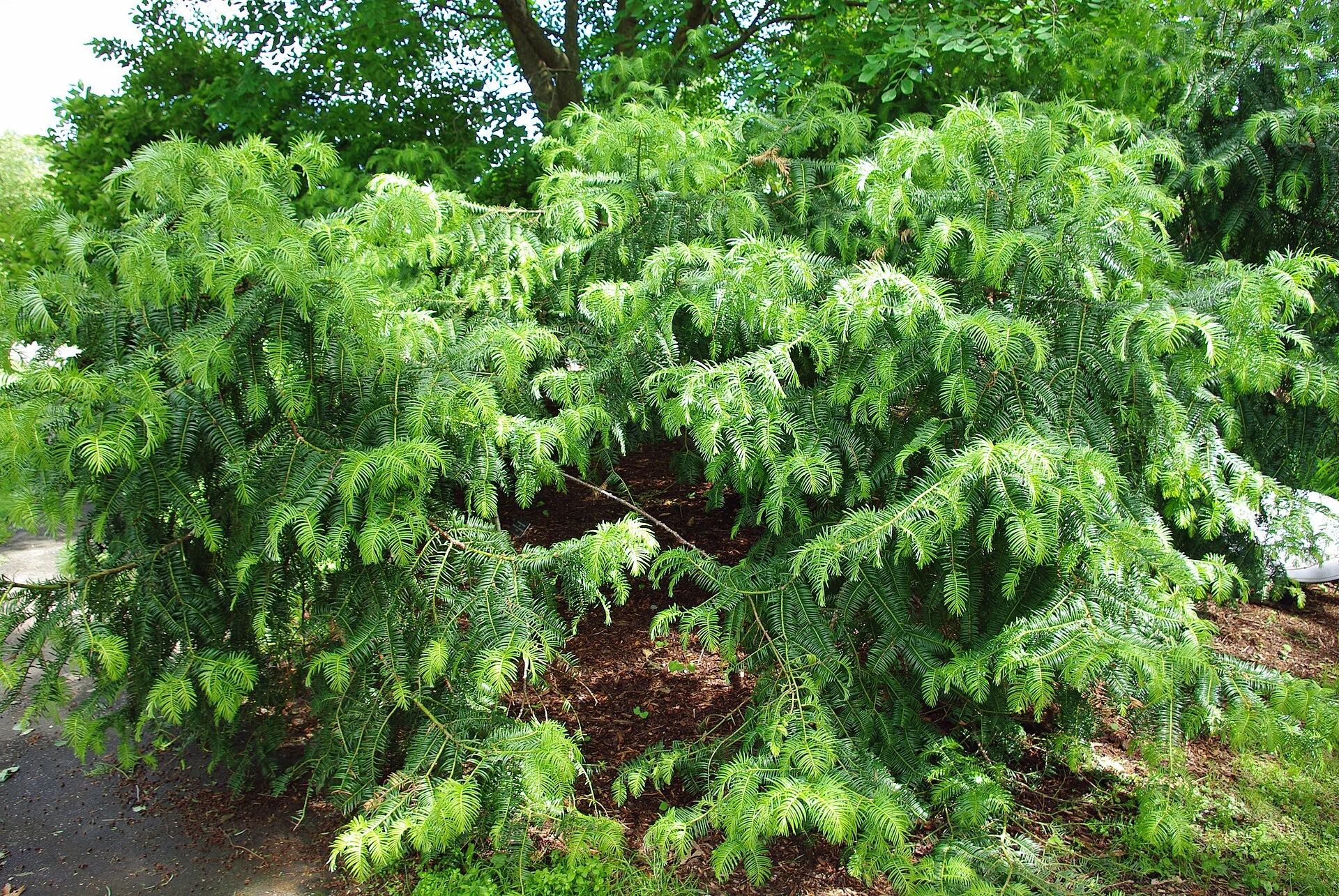
Cephalotaxus sinensis: Guide to the Chinese Plum Yew
Clinging to the moist, misty mountain slopes and forested ravines of central and southern China, a resilient evergreen conifer thrives in the deep shade of taller trees. This species, known as Cephalotaxus sinensis, stands out with its elegant, flattened branches and glossy needles.
Beneath its soft, dark green foliage, the plant produces striking purple-red seed coats that resemble small plums. Botanists and horticulturists value Cephalotaxus sinensis not only for its ornamental appeal but also for its fascinating chemical composition.
Growth habit of Cephalotaxus sinensis ranges from a sprawling shrub to a small tree reaching up to 15 meters in height. The trunk can grow to a diameter of 120 centimeters, covered in distinctive reddish, greyish, or reddish-brown bark that exfoliates in thin strips.
Its foliage is arranged in two flat rows along the twigs, creating a neat, comb-like appearance. The characteristics of its needles and reproductive structures include:
Needles: Linear or linear-lanceolate, measuring 1 to 7 centimeters in length, with a glossy dark green upper surface and two bright white stomatal bands underneath.
Male Pollen Cones: Spherical, pinkish-brown, 4 to 7 millimeters in diameter, clustered in groups of 6 to 7 in the leaf axils.
Female Seed Cones: Borne on short stalks, maturing into olive-like structures enclosed by a fleshy, purple-red aril that exhibits six longitudinal ridges.
Within the fleshy, gelatinous aril lies a single elliptical seed. This seed typically matures in the autumn of the year following pollination.
Flowering season
Pollination occurs from March to June, and the seeds mature from July to November of the following year.
Jan
Feb
Mar
Apr
May
Jun
Jul
Aug
Sep
Oct
Name
Dec
Applications
The wood of Cephalotaxus sinensis is highly valued locally for its fine grain and durability. It is frequently crafted into high-quality furniture, agricultural implements, and various utensils.
Beyond its structural utility, the plant plays a significant role in medical and traditional practices. Key applications include:
Alkaloid Extraction: Leaves, roots, and seeds contain specialized alkaloids used in research for treating leukemia and lymphomas.
Seed Oil: The fatty oil pressed from the seeds is traditionally burned in lamps and used in local manufacturing.
Edible Arils: The sweet, fleshy aril surrounding the seed is edible when fully ripe, though the seed itself is toxic.
Horticulture: Its extreme shade tolerance and resistance to deer browsing make it an excellent choice for ornamental landscaping and hedges.
Interesting facts
One of the most remarkable features of Cephalotaxus sinensis is its exceptional tolerance to environmental extremes. Unlike most other conifers, it thrives in high heat combined with high humidity, making it perfectly suited for warm, subtropical climates.
Historical and biological details reveal several intriguing aspects of this ancient conifer:
Gender Transition: Individual plants have been reported to change their sex over time, switching from male to female for reasons still unknown to science.
Seed Dispersal: Forest birds actively consume the sweet, ripe arils, helping to disperse the toxic seeds across mountains and valleys.
Introduction to Europe: Although native to East Asia, it was first brought to Europe around 1916 as a rare botanical specimen.
Leukemia Research: The harvesting of its medicinal alkaloids has spurred minor cultivation efforts, primarily within specialized botanical gardens.