
Spiked coral vine
Ercilla spicata
A climbing evergreen plant in the Phytolaccaceae family, recognized for its prominent spiked inflorescences.
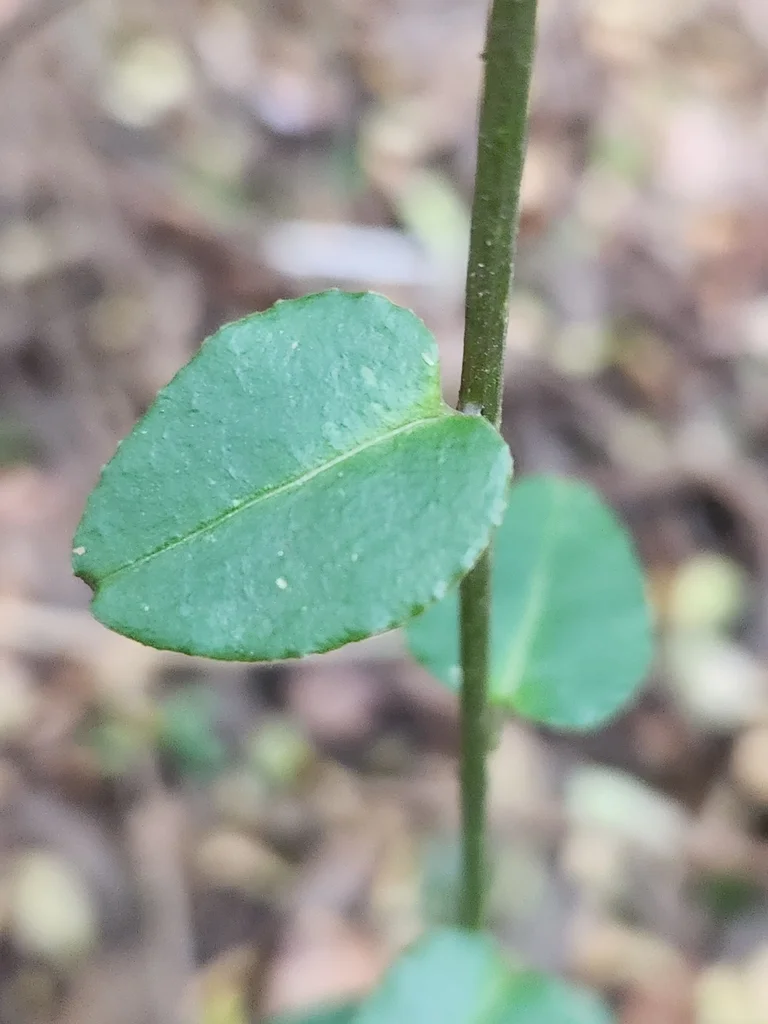
Endemic to the South American landscape, Ercilla syncarpellata thrives within the specific ecological niches of the Maule and Los Lagos regions. As a member of the Phytolaccaceae family, this species shares the climbing habit characteristic of its genus. It contributes to the complex undergrowth and canopy structures of regional temperate forests.
Botanical surveys frequently document this plant in localized habitats, indicating a specialized adaptation to the climatic conditions of central and southern Chile. Its growth patterns are deeply integrated with the surrounding endemic flora.
The morphological profile of Ercilla syncarpellata is typical of the Phytolaccaceae family's climbing taxa. The plant features tough, evergreen foliage arranged alternately along climbing woody stems. These robust vines utilize specialized structures to navigate the complex forest understory and reach available light.
Botanical records note its physical similarities to other species within the genus, differentiated primarily by specific floral and carpel structures.
There are several remarkable scientific and geographical facts surrounding this little-known climbing plant:
Ercilla spicata
A climbing evergreen plant in the Phytolaccaceae family, recognized for its prominent spiked inflorescences.

Ercilla volubilis
An evergreen climbing shrub native to South American temperate rainforests, known for its distinctive adhesive …

Picrasma
A genus of deciduous trees and shrubs known for their extremely bitter bark and medicinal …

Araucaria humboldtensis
A small, critically endangered coniferous tree native strictly to the high-altitude mountain peaks of southern …