
Syncarpous coral vine
Ercilla syncarpellata
A species of climbing plant in the Phytolaccaceae family, endemic to specific regions of Chile.
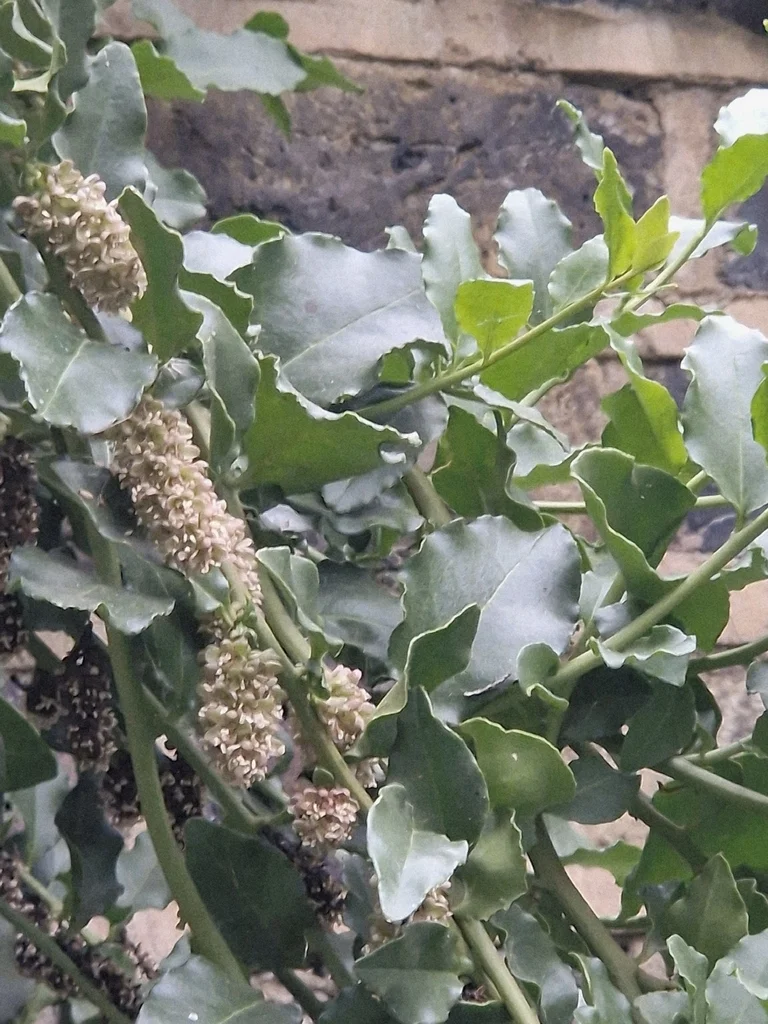
Native to the temperate rainforests of South America, Ercilla volubilis climbs vigorously using specialized adhesive rootlets that attach to tree trunks and rocky surfaces. This evergreen liana belongs to the Phytolaccaceae family and forms dense vegetative mats in its natural habitat. The foliage provides year-round cover in the understory and canopy of its native range.
The species relies on robust structural adaptations to reach sunlight in densely vegetated environments. Its distinct climbing mechanism allows it to scale vertical surfaces without twining around the host plant.
The vegetative structures of Ercilla volubilis exhibit several distinct adaptations for its climbing lifestyle. The stems are woody and equipped with specialized adhesive roots that allow the plant to scale vertical surfaces. Its foliage consists of alternate, leathery leaves with entire margins and a glossy dark green appearance.
Fruit development results in clusters of small, fleshy berries. The primary root system focuses on firm anchorage in the soil, supporting the extensive aerial growth.
Spring
While primarily a wild species, Ercilla volubilis has found niche applications in specific contexts. Its vigorous growth and evergreen nature make it valuable in certain horticultural settings.
The plant is relatively rare in mainstream commercial nurseries, typically requiring sourcing from specialist growers of South American flora.
Unlike many lianas that twine around their hosts, this species utilizes specialized aerial rootlets that function similarly to those found in ivy (Hedera). This morphological convergence demonstrates an evolutionary adaptation for climbing smooth surfaces in humid forest environments.
Ercilla syncarpellata
A species of climbing plant in the Phytolaccaceae family, endemic to specific regions of Chile.

Ercilla spicata
A climbing evergreen plant in the Phytolaccaceae family, recognized for its prominent spiked inflorescences.

Picrasma
A genus of deciduous trees and shrubs known for their extremely bitter bark and medicinal …

Araucaria humboldtensis
A small, critically endangered coniferous tree native strictly to the high-altitude mountain peaks of southern …