Ercilla: Ivy-Like Chilean Climber of the Pokeweed Family
Hailing from the dense temperate rainforests of Chile and Peru, Ercilla stands out as a distinctive evergreen climber. These woody vines climb efficiently by anchoring themselves to tree trunks and rock faces using adventitious roots, much like English ivy.
Introduced to European garden culture in the mid-19th century, this genus offers significant ornamental value. Its lush, dense foliage and showy spring inflorescences make it a striking choice for vertical landscaping.
Members of this genus are woody, evergreen climbers capable of reaching heights of up to 20 meters. The stems are densely leafed and sparsely branched, clinging to supports via specialized adventitious roots.
The fleshy, leathery leaves are arranged alternately along the stem, measuring 2.5 to 7 centimeters in length and 2 to 5.5 centimeters in width. They range in shape from ovate to oblong with entire margins.
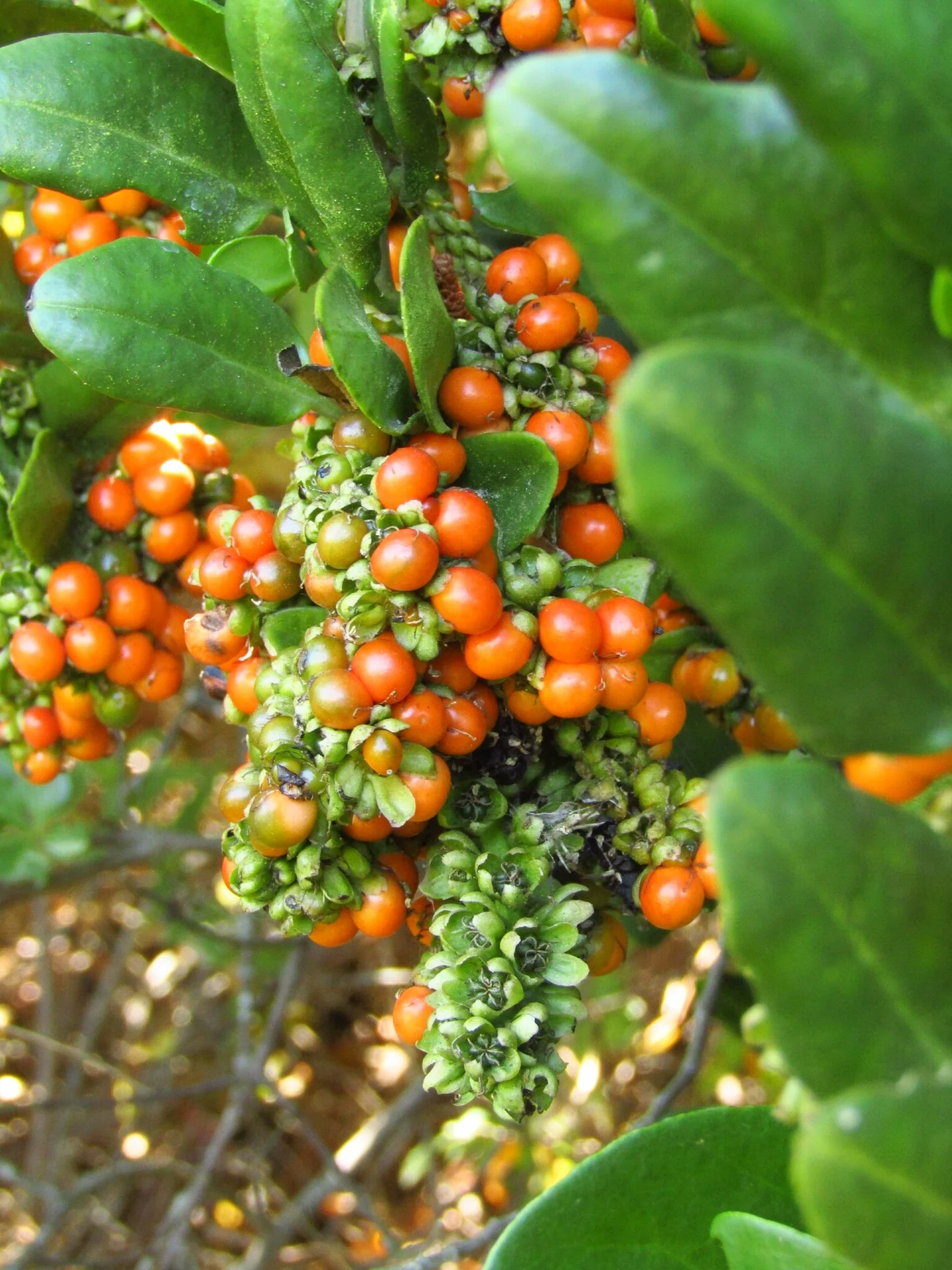
During the spring, the plants produce dense, fragrant, spike-like racemes. Each small flower features five green tepals with distinctive purpurine margins, surrounding six to ten protruding stamens. The subsequent fruits develop into eye-catching red to dark purple berries.
Flowering season
Spring
Jan
Feb
Mar
Apr
May
Jun
Jul
Aug
Sep
Oct
Name
Dec
Applications
While primarily growing in its wild South American habitat, Ercilla has found a niche in botanical gardens and specialist collections. It is utilized as an ornamental vine to cover walls, trellises, and large pergolas in regions with mild winters.
Interesting facts
The genus was named in honor of the famous Spanish soldier and poet Alonso de Ercilla y Zúñiga, who wrote the epic poem La Araucana. The type species was originally described under the name Ercilla volubilis before being recognized under its current taxonomy.