
Japanese Hop Weed Control: Proven Removal & Herbicide Treatment Guide
Tackle invasive Humulus japonicus effectively. Learn mechanical removal techniques, optimal herbicide selection, and timing strategies for permanent control.
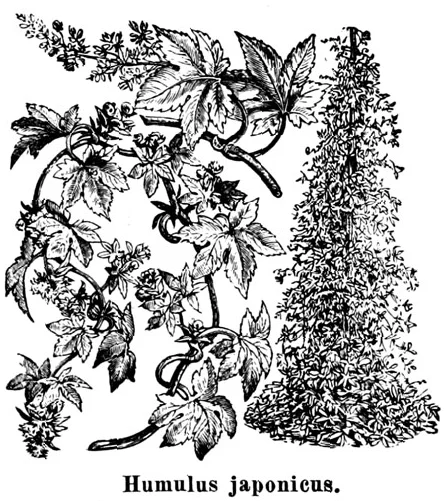
Clinging tightly to everything in its path with downward-pointing prickly hairs, the rapid-growing vines of Humulus japonicus can swiftly blanket entire floodplains and riparian zones. Native to the temperate regions of East Asia, this annual climbing herb in the Cannabaceae family is renowned for its remarkable vigor and resilience. While it shares a lineage with the familiar brewer's hop, the Japanese hop lacks the bitter resin glands sought after by brewers.
Introduced to North America and Europe in the 19th century as an ornamental foliage plant, the species has since escaped cultivation. Today, it forms dense, impenetrable mats that overshadow and outcompete native flora. Its aggressive growth habit has earned it a place on lists of concerning invasive species across multiple continents.
Humulus japonicus is a dioecious, annual herbaceous vine capable of climbing or trailing up to 6 meters in a single growing season. The ribbed stems and leaf petioles are armed with distinctive stout, downward-curved prickles. These sharp appendages enable the plant to easily scramble over other vegetation and structures.
The opposite leaves are palmate and deeply divided into 5 to 9 distinct lobes, characterized by toothed margins and a rough-hairy texture. The abaxial leaf surfaces are moderately pubescent, while the adaxial surfaces bear stiff, spinulose hairs. Unlike its brewing relative, this species lacks dense yellow lupulin glands on the foliage.
As a dioecious species, it produces separate male and female plants with distinct floral structures. Staminate inflorescences are loose, erect panicles measuring 15 to 25 centimeters, bearing small yellowish-green flowers. Pistillate inflorescences are short, pendulous, cone-like spikes extending 1.5 to 3 centimeters, enclosed by prominent, often purple-mottled bracts.
Humulus japonicus blooms in late summer to early autumn, with wind-pollinated flowers emerging from July through October, depending on the local climate.
Historically, Humulus japonicus was introduced to various regions outside its native range as a fast-growing ornamental vine. It was intended to quickly cover trellises, fences, or unsightly structures in landscaped gardens. However, due to its highly invasive nature, cultivation is now strongly discouraged or outright banned in many jurisdictions.
In traditional Chinese medicine, the herb, known locally as lü cao, has been utilized for its purported diuretic and heat-cooling properties. Additionally, the entire plant has seen use in regional medicinal applications across its native range. The oil extracted from its seeds has even been historically employed in the manufacturing of soap.
Unlike the related Humulus lupulus, the Japanese hop is completely devoid of functional lupulin glands. This means it lacks the bitter acids and essential oils necessary for flavoring beer. Consequently, it holds absolutely no commercial value in the modern brewing industry.
The biological success and impact of Humulus japonicus are tied to several intriguing ecological interactions and historical events. Its aggressive nature has fundamentally altered riparian habitats in its introduced range.
Tackle invasive Humulus japonicus effectively. Learn mechanical removal techniques, optimal herbicide selection, and timing strategies for permanent control.

Discover the powerful Humulus japonicus medicinal uses, from bone growth support to antioxidant benefits. Learn how to prepare extracts and supplements safely.

Expert guide to diagnosing hop downy mildew, hops latent viroid, American hop latent virus, Japanese beetle damage, and whether deer eat hops plants.

Discover whether the invasive Japanese hop vine is poisonous to humans, how its prickles cause severe skin rash, and effective Japanese hop allergy treatments.

Discover what is Japanese hop, how to identify aggressive Japanese wild hops in natural ecosystems, and explore key Japanese hop varieties and cultivars.

Master Japanese hops identification with our botanical comparison guide. Spot invasive Humulus japonicus versus harmless Virginia creeper before vines overrun your landscape.

Humulus lupulus
Humulus lupulus, commonly known as the common hop, is a perennial climbing plant famous for …

Humulus yunnanensis
Humulus yunnanensis is a remarkable wild hop vine endemic to the Yunnan province of China. …

Picrasma
A genus of deciduous trees and shrubs known for their extremely bitter bark and medicinal …

Araucaria humboldtensis
A small, critically endangered coniferous tree native strictly to the high-altitude mountain peaks of southern …