
Red spider lily
Lycoris radiata
Lycoris radiata, commonly known as the red spider lily, is a bulbous perennial famous for …
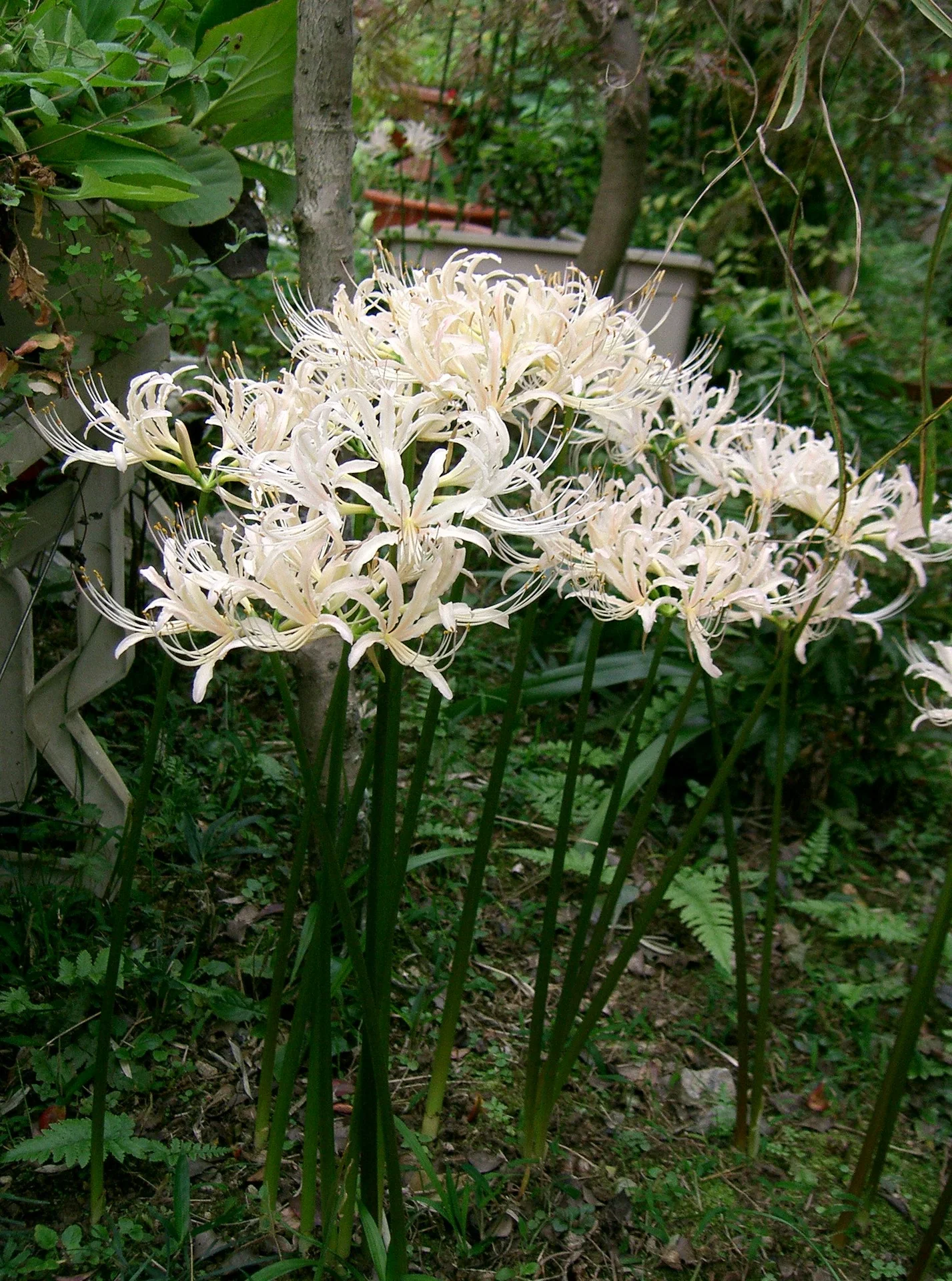
Boasting elegant, creamy white blossoms with delicately recurved petals, Lycoris albiflora stands as a highly regarded natural hybrid in the spider lily genus. Botanist Gen-Iti Koidzumi first described this taxon in 1924, recognizing its unique morphology that places it intermediate between its parent species.
This plant belongs to the family Amaryllidaceae and arises from a cross between Lycoris aurea and Lycoris radiata. Its striking white flowers emerge suddenly from the bare soil in late summer, earning it the common name of white-flower surprise lily.
The root system of this perennial consists of a tunicate bulb that remains dormant during the hot summer months. In late summer or early autumn, it sends up a stout, leafless scape that bears an umbel of 4 to 8 flowers.
Each flower displays narrow, wavy tepals that curve backward, showing prominent, long stamens and style that extend well beyond the floral envelope. The strap-like leaves appear only after the flowering period has ended, surviving through the winter before dying back in spring.
Late summer to early autumn
Cultivators value this hybrid for its striking aesthetic appeal in landscape designs, particularly in rock gardens and borders. Its sudden autumn bloom creates a dramatic focal point when other summer plants have faded.
As a sterile triploid hybrid, this lily relies entirely on bulb division for reproduction rather than seed production. Its parental legacy combines the brilliant yellow coloration of Lycoris aurea and the intense red of Lycoris radiata, resulting in its characteristic soft white to pale cream tepals.
Lycoris radiata
Lycoris radiata, commonly known as the red spider lily, is a bulbous perennial famous for …

Lycoris squamigera
Lycoris squamigera, also known as the resurrection lily or surprise lily, is a bulbous herbaceous …

Lycoris sanguinea
An orange-flowered deciduous perennial native to East Asia, famous for its toxic bulbs and synchronized …

Lycoris caldwellii
A rare sterile triploid perennial from China, prized for its pale yellow late-summer blooms.