
Red spider lily
Lycoris radiata
Lycoris radiata, commonly known as the red spider lily, is a bulbous perennial famous for …
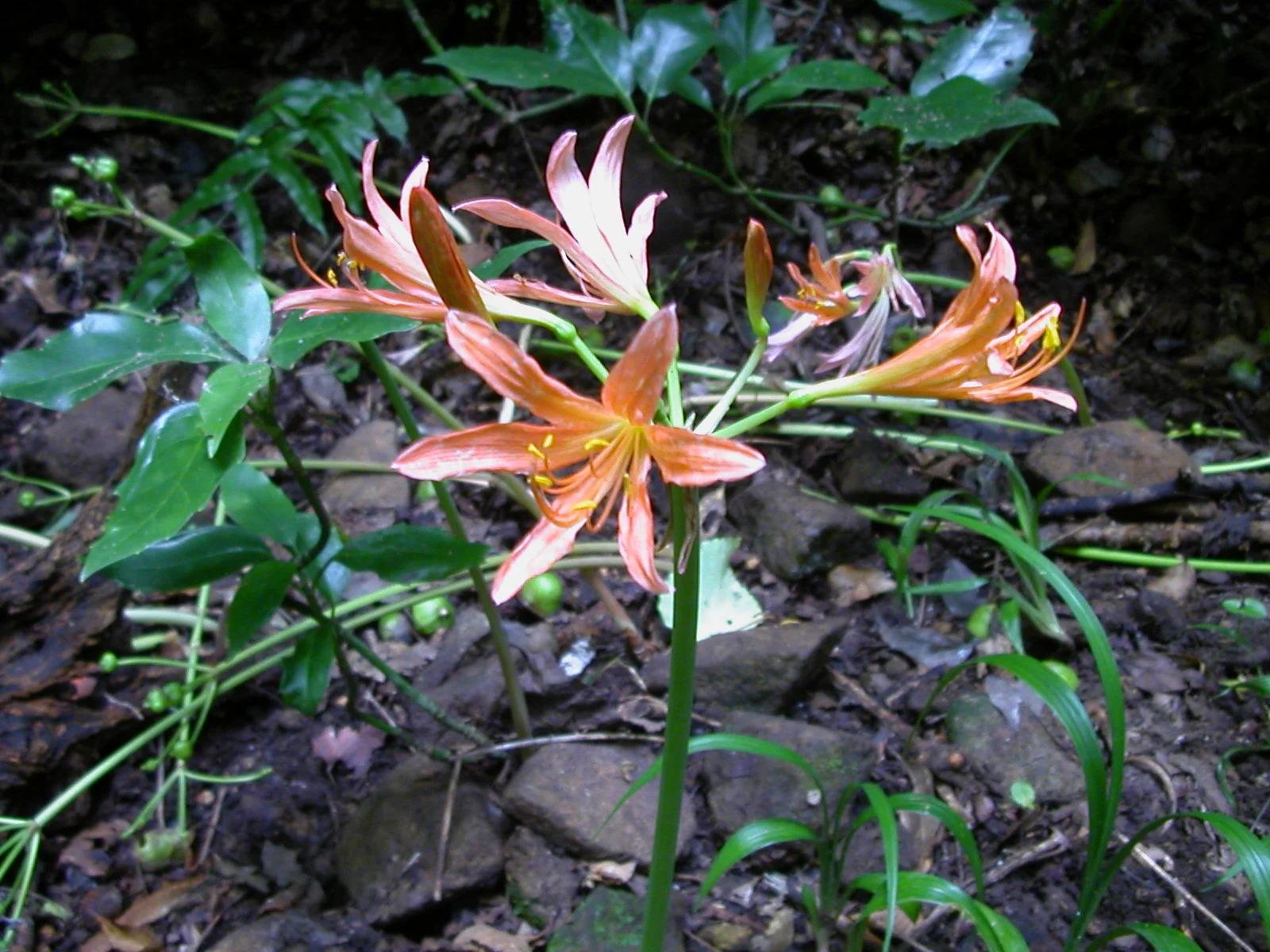
Amid the moist, shaded slopes and valley forests of the Korean Peninsula, a sudden burst of warm orange illuminates the late summer understory long after the green foliage has withered away. This striking botanical display belongs to Lycoris koreana, a unique bulbous perennial that coordinates its lifecycle in a remarkably dramatic fashion.
Locally celebrated in Korea as Baegyang-kkot, this plant is famously associated with the serene temple forests of Baegyangsa, where it blankets the forest floor in late August. Its unusual habit of flowering only after its leaves have completely died back has earned it a place of mystery and admiration in local folklore.
As a member of the Amaryllidaceae family, it showcases the classic characteristics of the genus Lycoris. Its ability to thrive in deciduous woodlands makes it a fascinating subject for both temperate botanists and native plant enthusiasts.
The subterranean structure of Lycoris koreana consists of a globose to ovoid bulb, which serves as a nutrient reservoir during its dormant periods. From this bulb, strap-like, dark green leaves emerge in early spring, capturing sunlight before the forest canopy fully closes. These leaves mature and completely senesce by early summer, leaving the ground seemingly bare.
In late summer, a stout, erect flowering scape rises rapidly to a height of 30 to 50 centimeters. This leafless stem terminates in a terminal umbel, which typically bears 4 to 8 funnel-shaped flowers. The tepals are bright orange to reddish-orange, spreading outwards with slightly reflexed tips and prominent stamens that extend beyond the floral envelope.
Late summer, typically during the month of August.
Due to its striking visual appearance, Lycoris koreana is occasionally utilized in naturalistic woodland gardens and shade borders in temperate regions. Its tolerance for seasonal shade and dry summer conditions makes it ideal for planting under deciduous trees. In traditional landscapes, it is often grouped in large drifts to maximize the visual impact of its late-season blooms.
While its bulbs contain bioactive alkaloids characteristic of the Amaryllidaceae family, these compounds make the plant toxic and unsuitable for culinary consumption. However, these same chemical properties have attracted scientific interest for pharmacological research, particularly regarding potential medicinal applications of its alkaloid components.
Lycoris radiata
Lycoris radiata, commonly known as the red spider lily, is a bulbous perennial famous for …

Lycoris squamigera
Lycoris squamigera, also known as the resurrection lily or surprise lily, is a bulbous herbaceous …

Lycoris sanguinea
An orange-flowered deciduous perennial native to East Asia, famous for its toxic bulbs and synchronized …

Lycoris caldwellii
A rare sterile triploid perennial from China, prized for its pale yellow late-summer blooms.