
Red spider lily
Lycoris radiata
Lycoris radiata, commonly known as the red spider lily, is a bulbous perennial famous for …
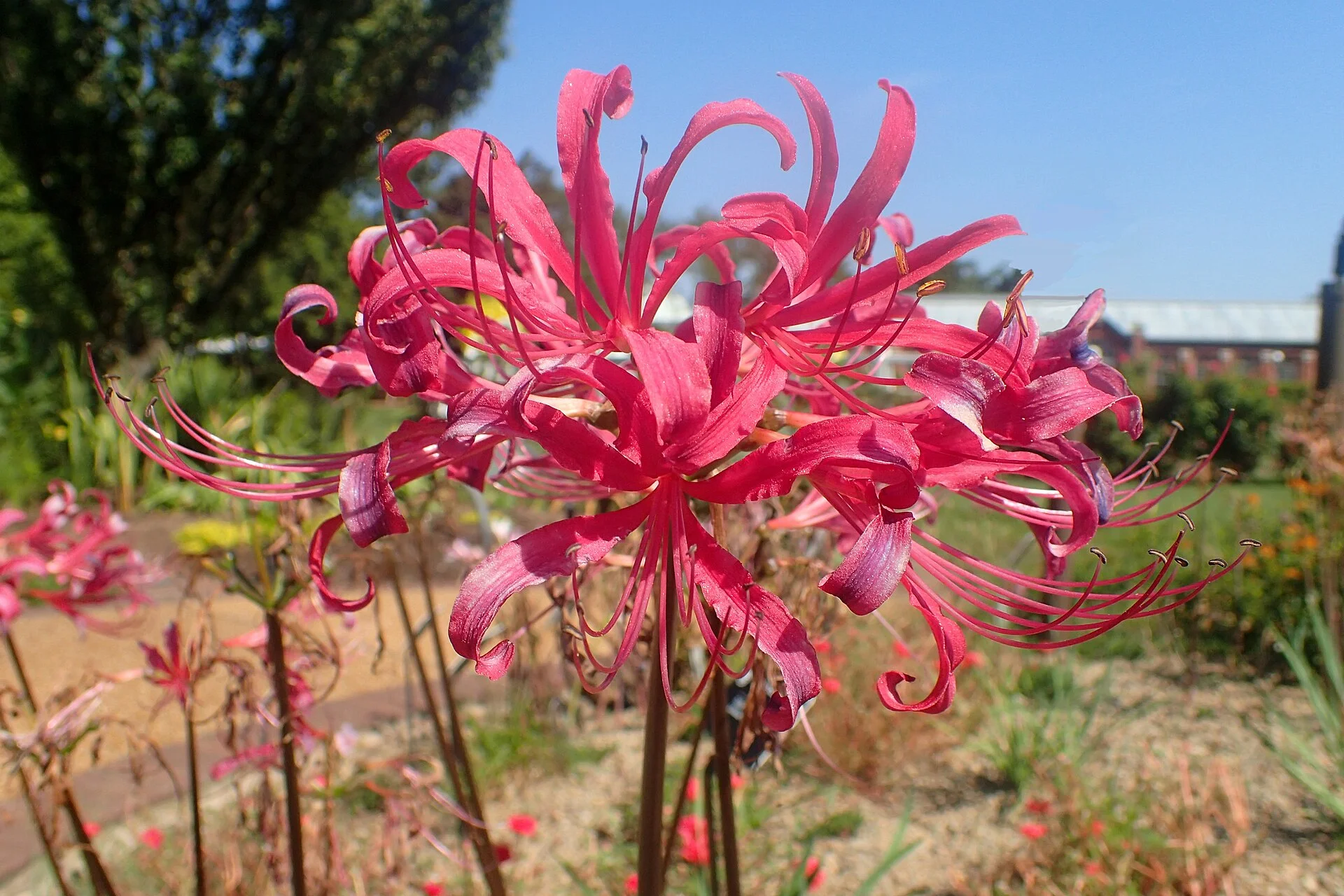
With its delicate rose-pink blossoms appearing in late summer, Lycoris rosea brings vibrant color to shady habitats. This bulbous perennial is highly valued for its striking appearance and specialized ecological niche.
Originating from eastern China, it thrives in moist, rocky crevices. The species remains a fascinating subject of botanical study due to its evolutionary relationships and distinct morphology.
The underground bulb of Lycoris rosea produces narrow, strap-like leaves that mature and die back before the flowering stem emerges. During the late summer months, the leafless flower stalk rises to bear an umbel of rose-colored flowers with slightly wavy tepals.
These elegant, recurved petals surround prominent, protruding stamens that facilitate pollination by insects. The root system consists of contractile roots that help pull the bulb to its optimal depth in the soil.
Late summer to early autumn
This species is primarily studied for its pharmaceutical potential, as members of the Amaryllidaceae family contain bioactive alkaloids. It also plays an ecological role in stabilizing soil on moist slopes and rocky outcrops within its native range.
Botanists and collectors value the plant for ex-situ conservation efforts and genetic research.
A fascinating aspect of Lycoris rosea is its suspected hybrid origin, possibly arising from natural crosses between other Lycoris species. In its native Chinese habitats, it is known as the rose spider lily due to the distinctive shape and color of its petals.
The plant exhibits a synchronized flowering pattern, with blossoms appearing rapidly after late summer rains. Like other spider lilies, it flowers on bare stems without any foliage present.
Lycoris radiata
Lycoris radiata, commonly known as the red spider lily, is a bulbous perennial famous for …

Lycoris squamigera
Lycoris squamigera, also known as the resurrection lily or surprise lily, is a bulbous herbaceous …

Lycoris sanguinea
An orange-flowered deciduous perennial native to East Asia, famous for its toxic bulbs and synchronized …

Lycoris caldwellii
A rare sterile triploid perennial from China, prized for its pale yellow late-summer blooms.