
Red spider lily
Lycoris radiata
Lycoris radiata, commonly known as the red spider lily, is a bulbous perennial famous for …
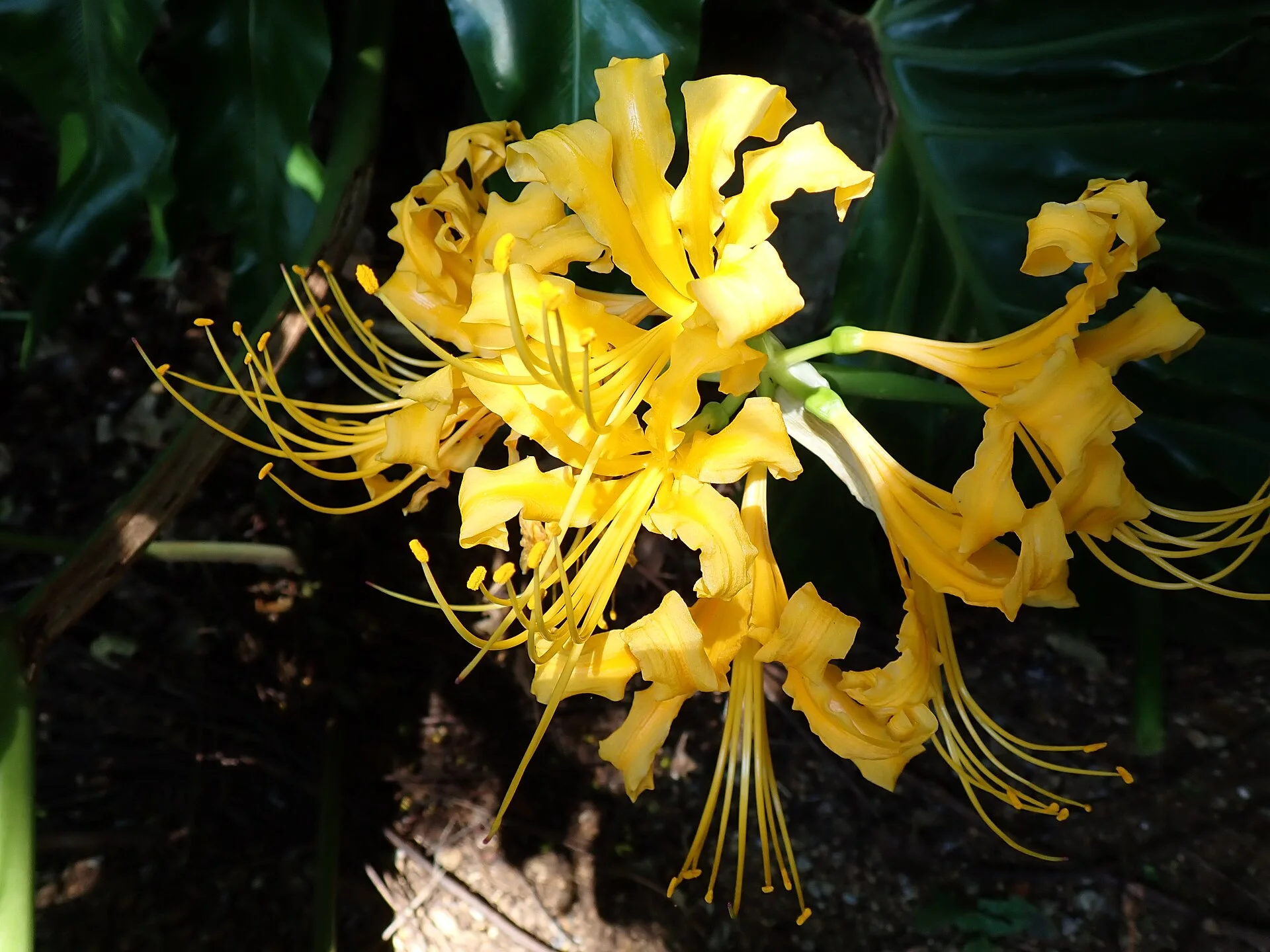
Clinging to the rugged limestone cliffs and shaded forest margins of the Ryukyu Islands, a sudden burst of vivid yellow illuminates the autumn landscape. This striking display belongs to Lycoris traubii, a resilient bulbous perennial that bursts into bloom when most other flora begins to fade.
Commonly known as the golden hurricane lily, this species is deeply rooted in East Asian landscapes, spanning from southern Japan to Taiwan. Its dramatic appearance is characterized by bare flower stalks that shoot up from the earth long before any foliage emerges.
The vegetative architecture of Lycoris traubii is defined by a stout bulb from which erect, leafless flower scapes rise to a height of 30 to 60 centimeters. At the apex, a terminal umbel bears 5 to 10 trumpet-shaped, golden-yellow flowers arranged in a striking whorl.
Each flower features six recurved tepals measuring approximately 7 centimeters in length, accompanied by six long, upward-curved stamens and a single style that extend far beyond the perianth. Unlike some of its sterile relatives, this species successfully produces viable, globose black seeds measuring about 7 millimeters in diameter.
Its thick, strap-like leaves, which emerge only after the flowering phase has concluded, measure 20 to 60 centimeters in length and 1.5 to 4 centimeters in width. These rich green leaves persist through the cooler months before entirely withering away prior to the subsequent autumn bloom.
Autumn, typically blooming from September to October.
Though highly toxic if ingested due to its alkaloid content, Lycoris traubii is widely appreciated as an ornamental plant. Its brilliant color and dramatic flowering habit make it a popular choice for rock gardens, public parks, and borders across East Asia, especially in regions with limestone-rich soils.
This captivating lily holds a unique position in regional folklore and botanical classification:
Lycoris radiata
Lycoris radiata, commonly known as the red spider lily, is a bulbous perennial famous for …

Lycoris squamigera
Lycoris squamigera, also known as the resurrection lily or surprise lily, is a bulbous herbaceous …

Lycoris sanguinea
An orange-flowered deciduous perennial native to East Asia, famous for its toxic bulbs and synchronized …

Lycoris caldwellii
A rare sterile triploid perennial from China, prized for its pale yellow late-summer blooms.