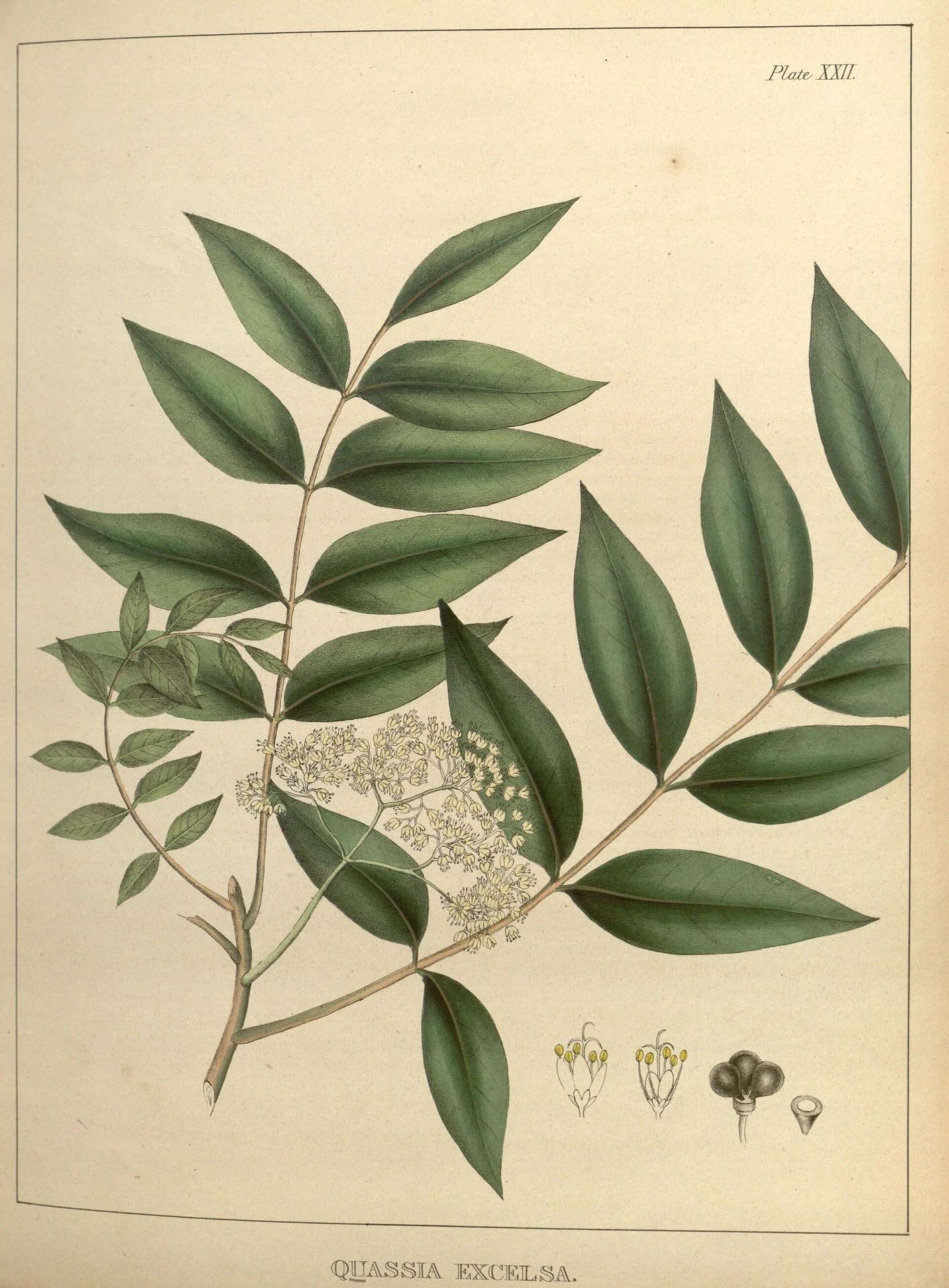
Bitterwood
(Picrasma excelsa)
Bitter ash
Bitter bark
Bitter wood
Gall tree
Jamaican Quassia
Raw dog
Bastard Bough
IUCN: Vulnerable
Clinging to the moist forest slopes of Jamaica and the Caribbean islands, a remarkably resilient tree holds one of the most intense sensory secrets in the plant kingdom. Its wood contains a compound so intensely bitter that even a tiny fragment can flavor gallons of water with its sharp, clean sting.
Historically valued by indigenous peoples and early European colonists alike, Picrasma excelsa became a cornerstone of traditional pharmacology under the name of Jamaican quassia. Its lumber was crafted into special bitter cups, which were filled with water overnight to create a therapeutic tonic by morning.
Today, this stately forest dweller faces growing challenges in the wild, earning it a vulnerable status as its natural woodland habitats continue to shrink across the Antilles. Conservation efforts are now critical to protecting the remaining wild populations in these fragile island ecosystems.
Technical Information
Taxon Synonyms:
Aeschrion medica, Picraena excelsa, Aeschrion excelsa, Picrasma antillana, Aeschrion excelsa var. microcarpa, Quassia pentandra, Quassia excelsa, Aeschrion antillana
External Databases:
GBIF, POWO, Tropicos