Five-stamened Quassia (Quassia pentandra)

Bitterwood Olivier Bois blanc
Silhouette: T. Michael Keesey / License

Quassia pentandra: Botanical Profile, Morphology, and Ecological Value

Growing across the diverse habitats of the Caribbean basin, Quassia pentandra features bitter wood and highly adaptive growth forms. This tree plays a significant role in local forest systems by providing canopy cover and supporting native fauna.

Its tissues contain high concentrations of bitter substances that deter herbivorous insects. These natural chemical defenses have earned the species a reputation in historical regional ethnobotany.

Taxonomy

  • царство Plantae
  • division Tracheophytes
  • subdivision Spermatophytes (Seed plants)
  • Angiosperms
  • mesangiosperms
  • eudicots
  • Superrosids
  • rosids
  • malvids
  • order Sapindales
  • family Simaroubaceae (Quassia family)
  • genus Quassia (Quassia Wood)
  • species Quassia pentandra (Five-stamened Quassia)

Living Pulse

Morphology

The physical structure of Quassia pentandra is adapted to tropical forest environments, showing distinct vegetative and reproductive traits:

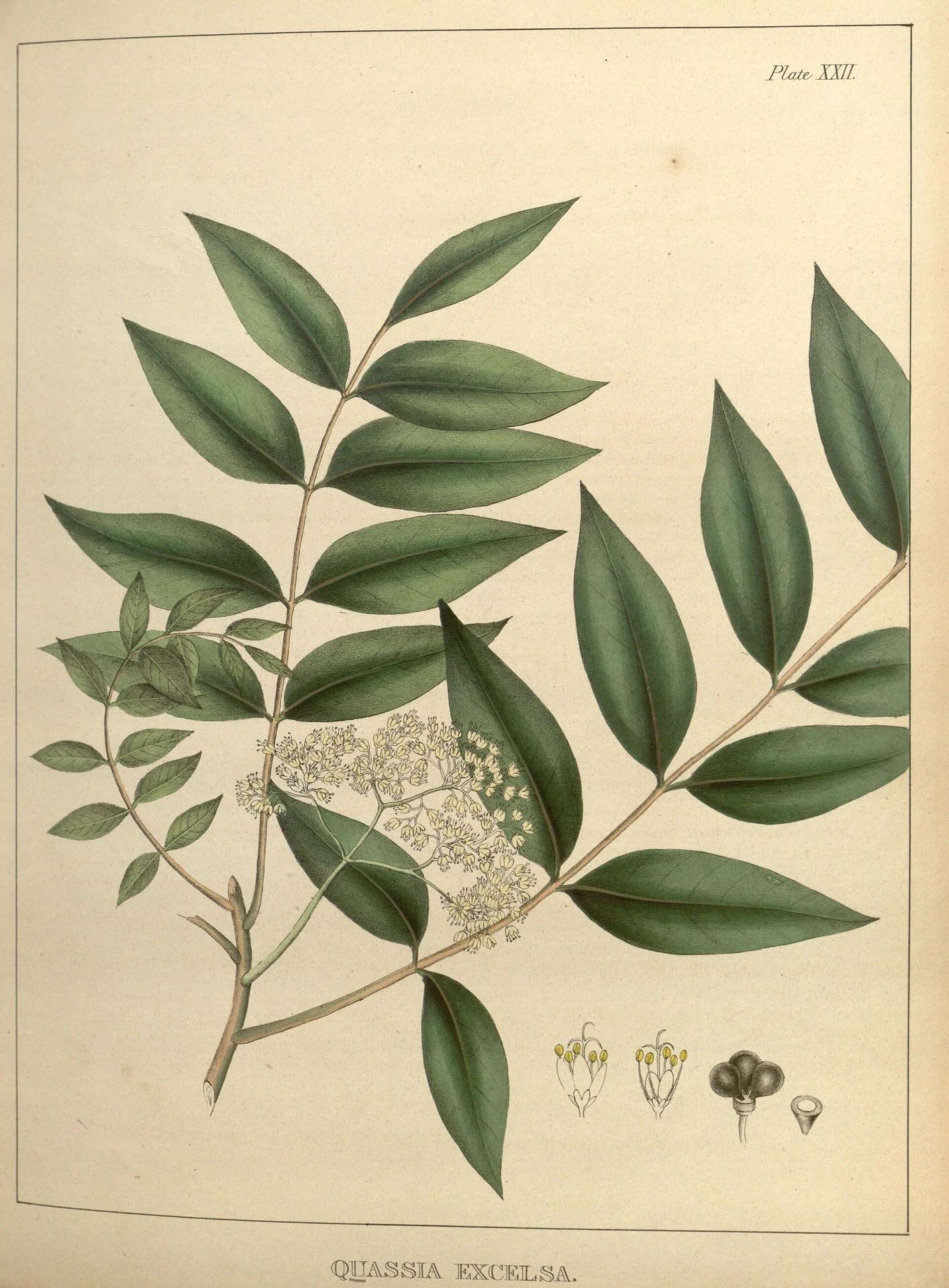
  • Leaves: The foliage consists of alternate, pinnately compound leaves with shiny leaflets that help reduce water loss.
  • Bark: A greyish-brown trunk surface that contains high amounts of bitter compounds, protecting the plant from wood-boring pests.
  • Flowers: Small, greenish-white blossoms arranged in panicles, attracting small pollinators.
  • Fruit: Small drupes that turn dark when fully ripe, assisting in seed dispersal by birds.

Applications

Human and ecological interactions with Quassia pentandra focus primarily on its chemical properties and wood structure:

  • Traditional Medicine: Historic preparations of the bark have been used to create bitter tonics for digestive issues.
  • Woodworking: The lightweight timber is sometimes employed for light construction and crafting small household items.
  • Pest Control: Extracts from the leaves serve as natural repellents in regional agricultural practices.

Interesting facts

The adaptation strategies of Quassia pentandra offer several fascinating points of study:

  • The intense bitterness of the wood is caused by complex organic compounds called quassinoids.
  • Many insects completely avoid feeding on its leaves due to the strong repellent properties of its sap.
  • Regional names like 'bitterwood' directly reflect the sensory experience of encountering its bark.

Geography of distribution

  • Cuba
  • Dominican Republic
  • Puerto Rico
  • Jamaica

Sources

  • POWO: Plants of the World Online database.
  • GBIF: Global Biodiversity Information Facility records.
  • Tropicos: Missouri Botanical Garden nomenclatural database.

Technical Information

External Databases: GBIF, POWO, Tropicos
Смотрите также

Indian Quassia

Indian Quassia

Quassia indica

An evergreen mangrove and riverbank tree of tropical Asia and Africa, valued for its medicinal …