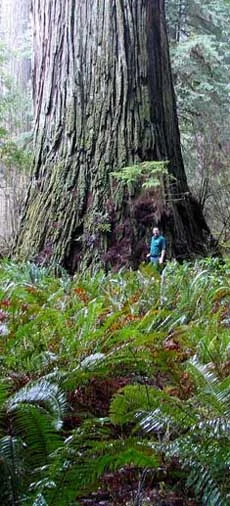
Sequoia (Redwood) – The Giant Conifers of the Pacific Coast
Enshrouded in the thick, cooling fogs of the Pacific Coast, the majestic groves of Sequoia create a cathedral-like atmosphere of damp earth and filtered emerald light. These ancient conifers can live for thousands of years, growing into the tallest living organisms on our planet.
Historically, the genus Sequoia once dominated vast regions of the Northern Hemisphere before geological cooling restricted its range. Currently, the coast redwood stands as the sole surviving member of this legendary evolutionary lineage.
The physical structure of Sequoia is defined by its massive proportions and specialized tissues designed to support immense weight. A thick, fibrous, reddish-brown bark covers the trunk, reaching thicknesses of up to 30 centimeters and offering natural protection against wildfire.
Key botanical features of the genus include:
Leaves: The foliage exhibits dimorphism, with flat, needle-like leaves on lower branches and small, scale-like needles near the upper crown.
Cones: The small, egg-shaped cones mature within nine months after late-winter pollination, releasing tiny winged seeds.
Root System: Lacking a deep taproot, the tree relies on a wide network of shallow, interlocking lateral roots for stability.
Genetics: The modern species is unique among gymnosperms as a natural hexaploid, carrying a massive genome.
Flowering season
Pollination occurs in late winter, with cones maturing over the following eight to nine months.
Jan
Feb
Mar
Apr
May
Jun
Jul
Aug
Sep
Oct
Name
Dec
Applications
The commercial and ecological value of Sequoia timber lies in its remarkable chemical composition and physical durability. High concentrations of natural tannins protect the wood against fungal decay, rot, and destructive wood-boring insects.
Primary uses include:
Construction Material: The lightweight yet strong lumber is widely utilized for structural framing, bridge supports, and outdoor decking.
Architectural Elements: Because of its fine texture and rich color, the wood is highly prized for interior paneling and premium furniture.
Natural Insulation: The fibrous bark is processed into thermal insulation materials, utilizing its natural open-pore structure.
Interesting facts
The evolutionary history and modern records of Sequoia continue to surprise botanists and historians alike. From ancient fossil records in Asia to the discovery of the world's tallest trees, this genus holds a unique scientific status.
Notable facts about these trees:
The Hyperion Giant: The tallest known living tree is a coast redwood named Hyperion, measuring over 115 meters in height.
Paleontological Relic: Fossil records indicate that ancestors of the genus existed during the Jurassic period, coexisting with dinosaurs.
Cherokee Etymology: The genus name is widely believed to honor Sequoyah, the Cherokee scholar who invented the Cherokee syllabary writing system.
Fire Resistance: The spongy bark contains air pockets and lacks flammable resins, acting as a natural heat shield during forest fires.
Albino Chimera: Rare individuals lack chlorophyll entirely, surviving as parasites by grafting their roots to healthy green neighbors.