Sequoiadendron: Giant Sequoias of the Sierra Nevada
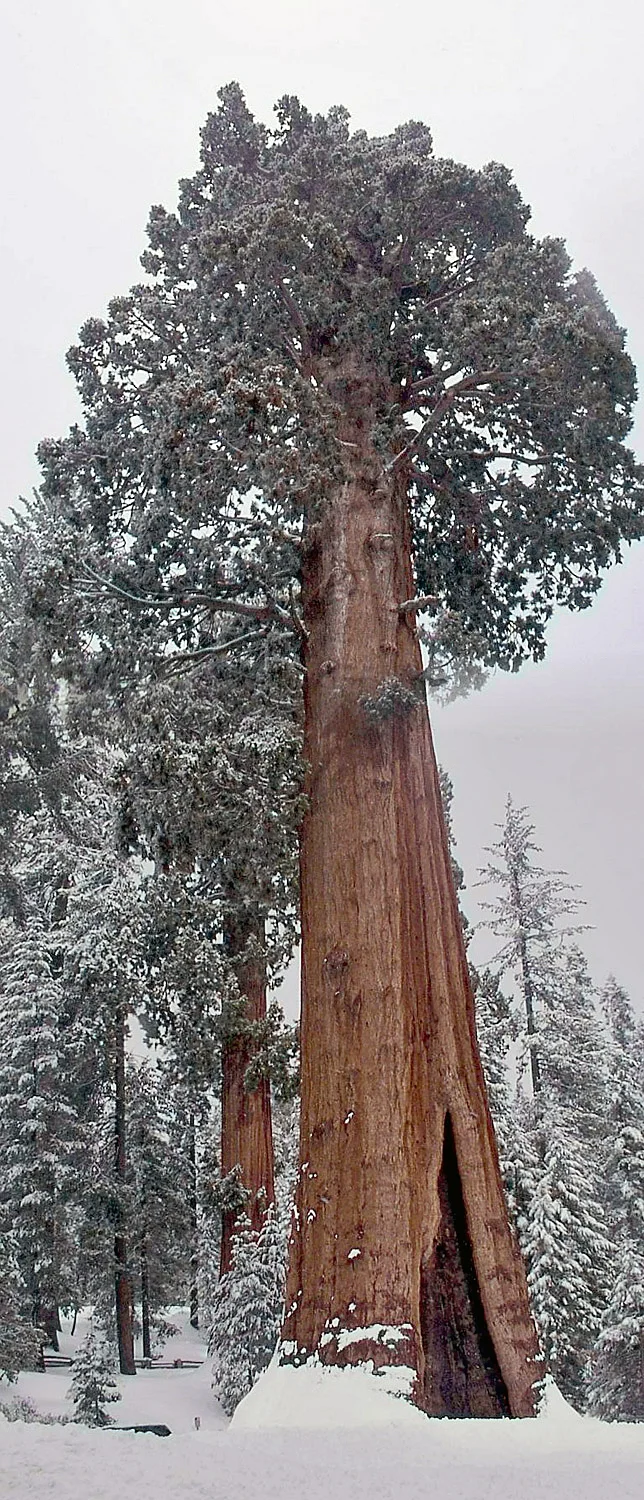
High in the mist-shrouded slopes of California's Sierra Nevada, ancient giants stand as living monuments to deep time. These colossal trees, known collectively as Sequoiadendron, have witnessed the rise and fall of civilizations over thousands of years.
Their massive trunks, wrapped in thick, spongy cinnamon-colored bark, resist the very forest fires that they depend on to release their seeds. Today, they remain a symbol of botanical grandeur and prehistoric resilience.
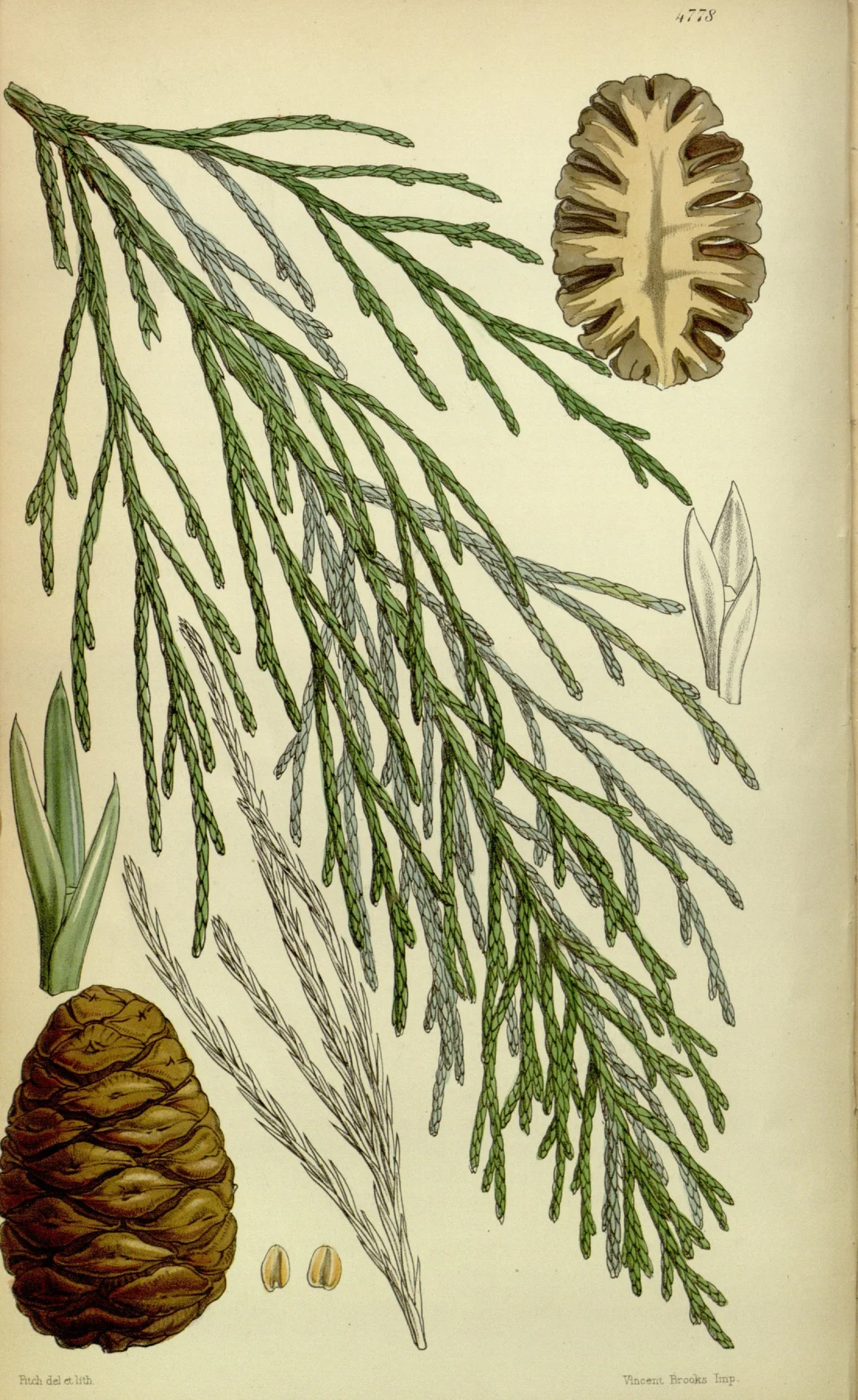
Botanical illustration
Фото: BioDivLibrary / Лицензия: Public Domain Mark
Morphology
Members of the Sequoiadendron genus are massive evergreen conifers characterized by their straight, column-like trunks that taper gradually upward. The bark is exceptionally thick, fibrous, and furrowed, reaching up to 60 centimeters in depth at the base, which provides critical thermal insulation against wildfires.
Their foliage consists of small, scale-like or awl-shaped leaves arranged spirally on the shoots, typically dark green to bluish-green in color. The reproductive structures include:
Seed cones: Ovoid, woody cones measuring 4 to 8 centimeters in length that can remain green and closed on the tree for up to 20 years.
Seeds: Small, winged seeds approximately 4 to 5 millimeters long, dispersed primarily when the cones dry out from fire heat or insect damage.
Pollen cones: Small, terminal structures that release wind-borne pollen in late winter or early spring.
Applications
Historically, the soft and fibrous wood of Sequoiadendron was harvested for commercial timber, though its brittle nature caused trunks to shatter upon impact when felled. This limited its structural use mainly to shingles, fence posts, and matchsticks.
In modern times, their primary application is in conservation forestry, ecological tourism, and landscape design. They are planted in botanical gardens and large parks worldwide as majestic ornamental features.
Interesting facts
The genus Sequoiadendron once enjoyed a much wider distribution across the Northern Hemisphere, with fossil records dating back to the Late Cretaceous in places as distant as Western Georgia in the Caucasus region.
Individual trees can live for over 3,000 years, with the oldest known specimen estimated to be approximately 3,266 years old. Some of the most famous giant trees are individually named, such as:
General Sherman: Located in Sequoia National Park, it is regarded as the largest single-stem tree by volume on Earth.
General Grant: Known for having one of the largest trunk diameters at breast height of any living tree.