
Giant Sequoia
Sequoiadendron giganteum
The giant sequoia (Sequoiadendron giganteum) is the world's most massive tree, native to the Sierra …
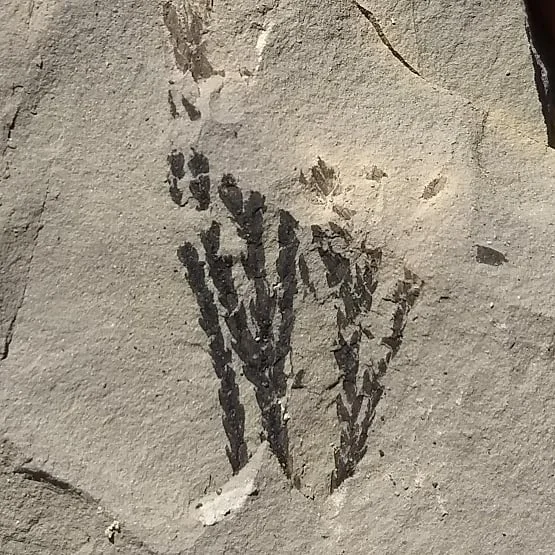
Miocene epoch fossil beds in Nevada and California preserve the earliest evolutionary history of the giant sequoia lineage through the species Sequoiadendron chaneyi. Paleobotanists widely accept this extinct conifer as the direct ancestor of today's majestic Sequoiadendron giganteum.
Its discovery provides crucial insights into how these massive trees migrated and adapted over millions of years. Fossils show that the ancient forests it inhabited shared many companion plant species with modern sequoia groves.
Fossilized specimens reveal that Sequoiadendron chaneyi was morphologically very similar to the modern giant sequoia. The foliage consisted of scale-like, spirally arranged leaves on slender twigs.
Its reproductive structures included distinct woody cones, which were critical in distinguishing it from other prehistoric conifers. Studies of these cones and branchlets helped resolve initial misidentifications of the fossil remains.
In 1964, Jack Wolfe initially misidentified fossils of this species from the Middlegate Basin as Glyptostrobus. It was not until 1985 that Daniel Axelrod correctly identified them as Sequoiadendron chaneyi after discovering fossilized cones in the same deposits.
Research shows the tree preferred different local climates depending on the topography. While it was rare in the dry, south-facing scrublands of the Middlegate Formation, it flourished in the wet, north-facing forested valleys of the Eastgate Formation.
Sequoiadendron giganteum
The giant sequoia (Sequoiadendron giganteum) is the world's most massive tree, native to the Sierra …

Picrasma
A genus of deciduous trees and shrubs known for their extremely bitter bark and medicinal …

Araucaria humboldtensis
A small, critically endangered coniferous tree native strictly to the high-altitude mountain peaks of southern …

Araucaria sect. Araucaria
Araucaria sect. Araucaria is a botanical section of evergreen conifers native to South America. It …