California redwood
Coastal redwood
Coastal sequoia
IUCN: В опасности
#EFEFF4
#2E3615
#5F6546
#414A25
#5A6457
Plant palette
Coast Redwood (Sequoia sempervirens) - The Tallest Tree
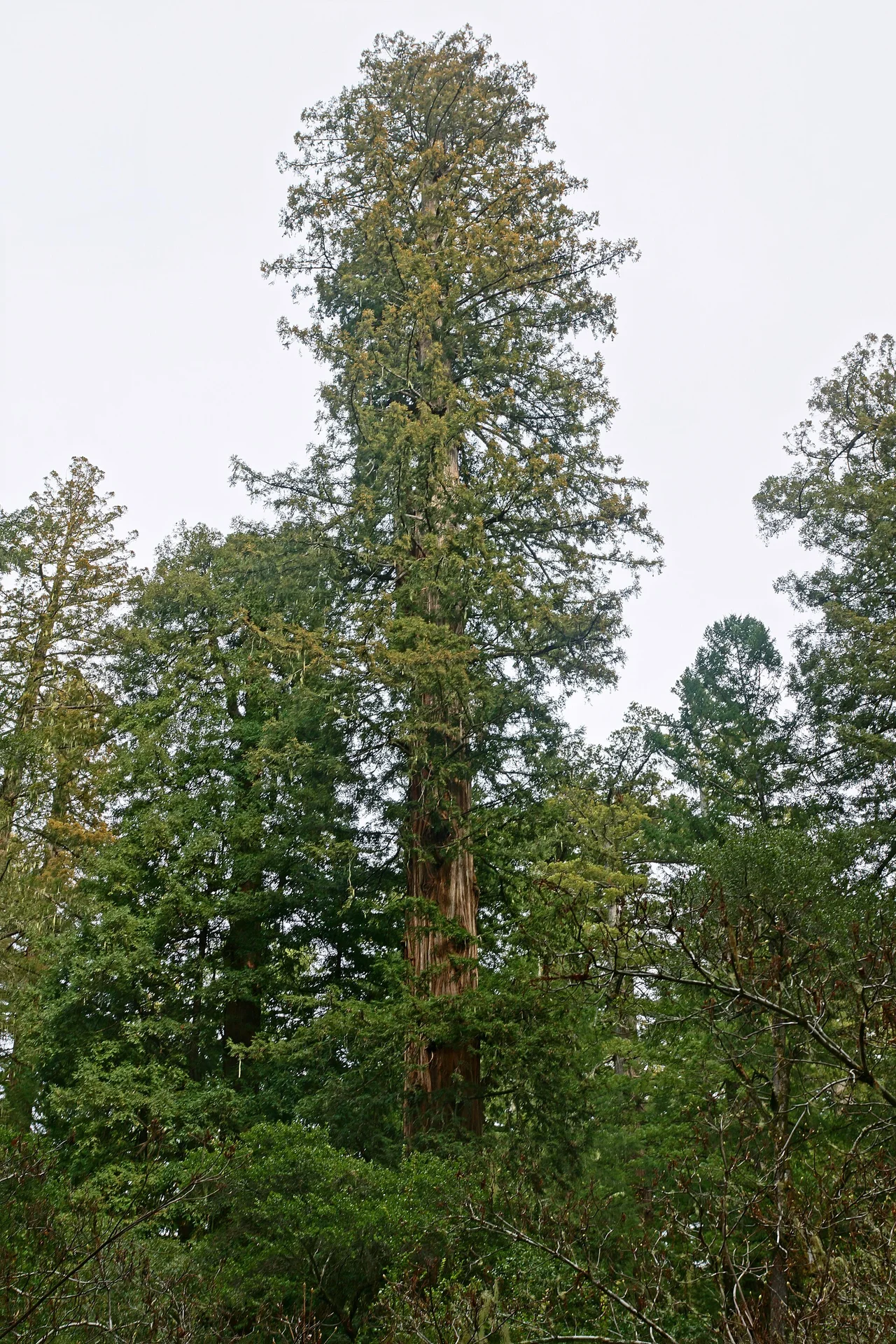
Cloaked in the cool, dense ocean fogs of the Pacific coast, the ancient forest giant known as the coast redwood stands as a silent sentinel of Earth's evolutionary history. These towering conifers thrive in a narrow coastal strip of California and Oregon, relying on maritime moisture to sustain their massive growth.
As the sole living species of the genus Sequoia, the iconic Sequoia sempervirens represents a lineage that has witnessed millions of years of ecological shifts. These long-lived trees can survive for over two millennia, shaping unique temperate rainforest ecosystems in their native range.
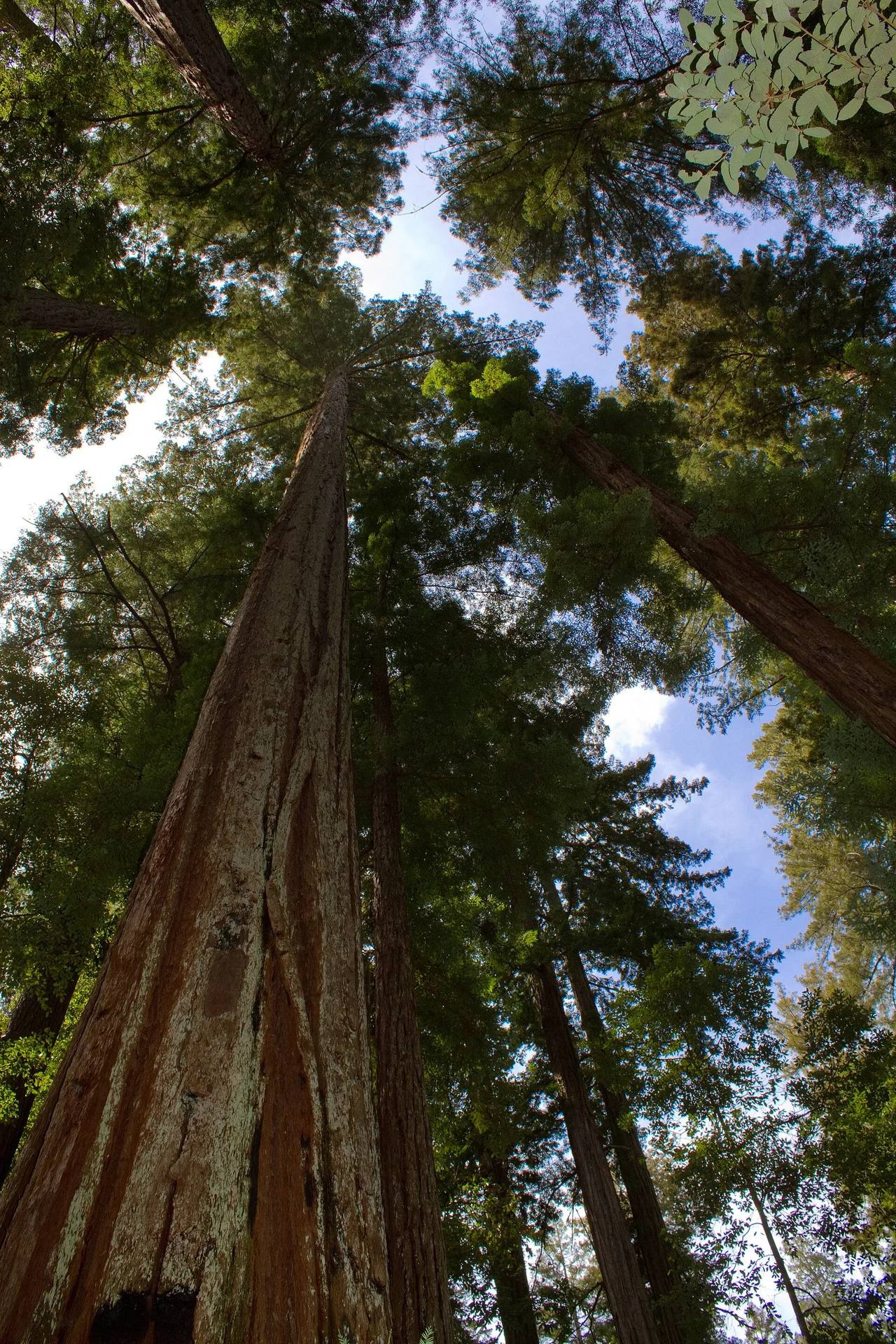
The structural design of Sequoia sempervirens is optimized for colossal height and long-term survival in flood-prone, fire-active zones. These giants develop a remarkably straight trunk supported by a root system that spreads widely rather than deeply.
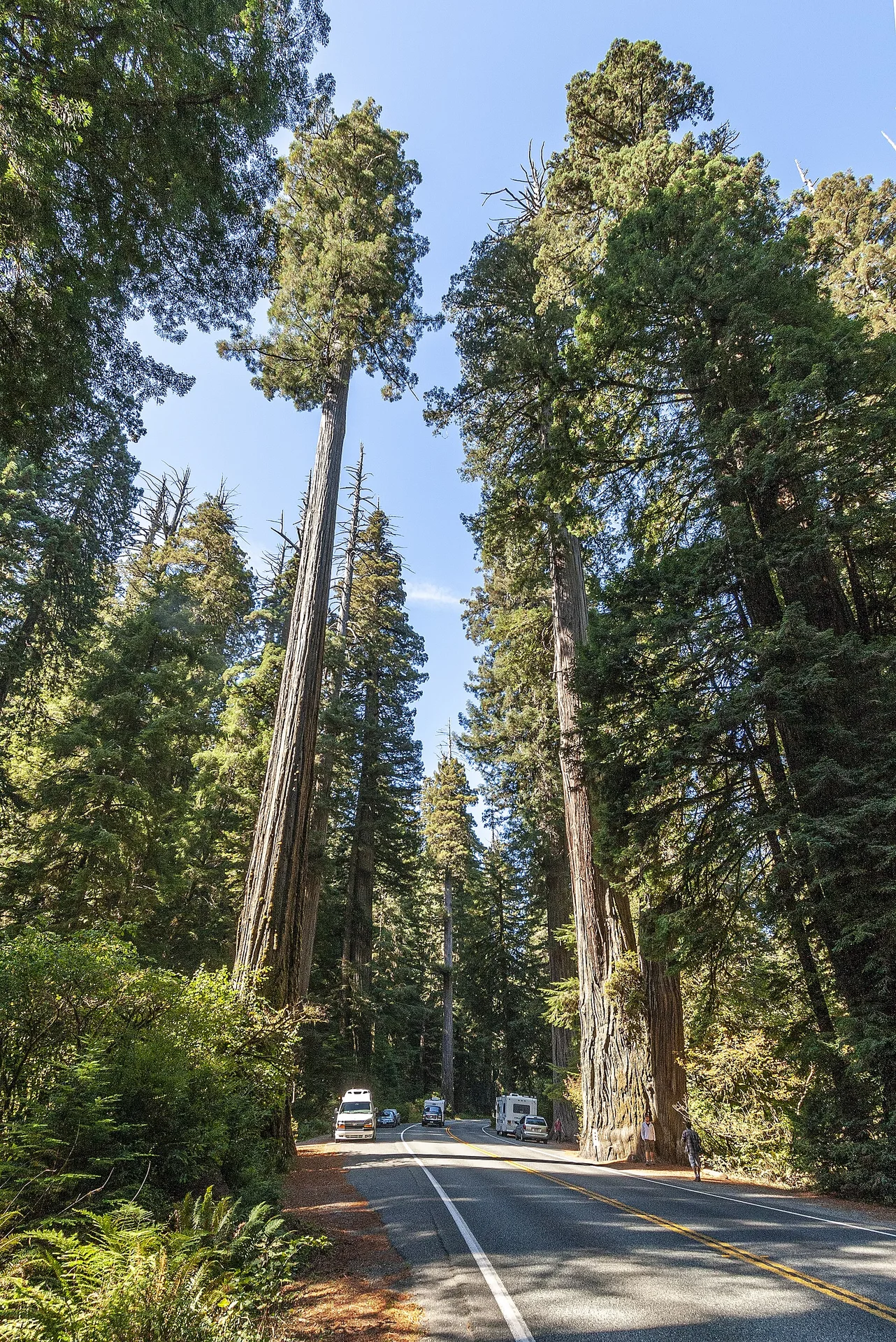
Colossal Dimensions: Trees commonly reach heights of 60 to 100 meters, with record-breaking specimens exceeding 115 meters. The trunk diameter at breast height can reach up to 9 meters.
Fibrous Bark: The bark is exceptionally thick, growing up to 35 centimeters. It is soft, fibrous, and saturated with protective tannins that provide excellent resistance against insects, rot, and wildfires.
Shallow Root Networks: Lacking a taproot, the tree relies on lateral roots that penetrate only 2 to 3 meters deep but spread up to 30 meters wide, intertwining with neighboring roots for stability.
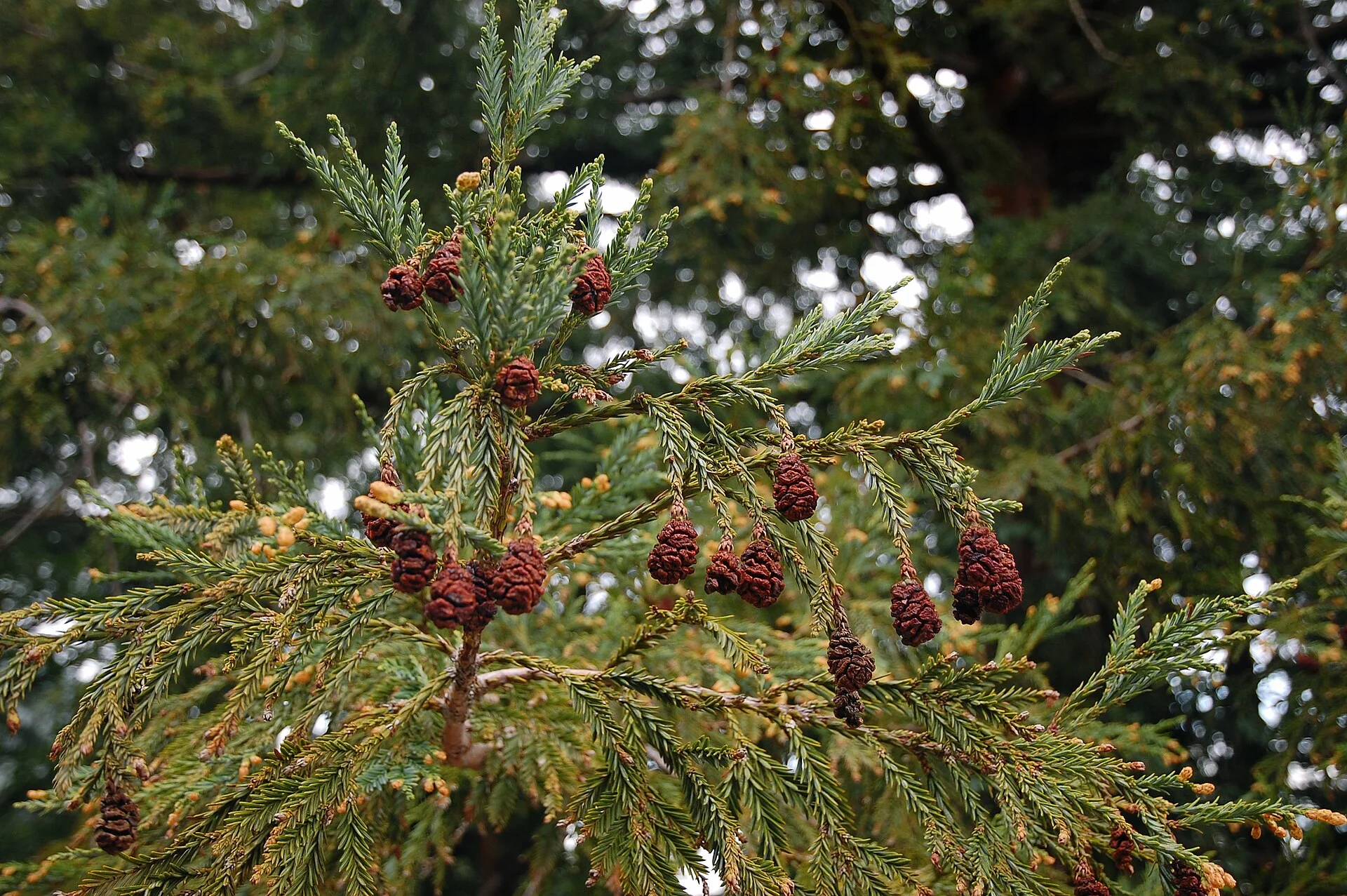
The foliage and reproductive structures exhibit notable adaptations to sunlight and seasonal cycles. The needles vary significantly depending on their position in the canopy and exposure to light.
Dimorphic Foliage: Lower shaded branches bear flat, needle-like leaves measuring 15 to 25 millimeters, while the sun-drenched upper canopy features smaller, scale-like leaves of 5 to 10 millimeters.
Cones and Seeds: This monoecious species bears small, ovoid seed cones measuring 15 to 32 millimeters in length. Each scale contains 3 to 7 small, winged seeds that are dispersed by the wind.
Unique Genetics: Unlike most conifers, this species is a hexaploid with a chromosome count of 2n = 66, possessing a massive genome that is paternally inherited.
Flowering season
Pollination occurs in late winter, typically from February to March, with cones maturing in the autumn.
Jan
Feb
Mar
Apr
May
Jun
Jul
Aug
Sep
Oct
Name
Dec
Applications
Due to its exceptional durability and aesthetic appeal, the wood of Sequoia sempervirens has been a highly prized material for centuries. Indigenous peoples and modern industries have utilized different parts of this tree for practical and cultural purposes.
Timber Industry: The lightweight, decay-resistant, and fire-resistant wood is widely used for building frames, exterior siding, outdoor furniture, and decking.
Historical Infrastructure: Because it resists rot without chemical treatments, it was extensively harvested for railroad ties, bridge trestles, and water pipes in early California history.
Artisanal Crafts: Highly figured wood from massive burls, known as Vavona, is used to manufacture premium furniture, table tops, and decorative veneers.
Landscape Architecture: It is cultivated worldwide as a majestic ornamental specimen in spacious parks and gardens, where it has received the prestigious Award of Garden Merit.
Interesting facts
The remarkable survival strategies and record-breaking statistics of the coast redwood have fascinated scientists and conservationists for generations. From treetop ecosystems to mutant phenotypes, these trees exhibit extraordinary natural phenomena.
World's Tallest Organism: The tallest known living tree is a specimen named Hyperion, discovered in 2006, measuring an astonishing 116.22 meters in height.
Albino Chimera Parasites: There are about 230 known albino redwoods that completely lack chlorophyll. They survive by grafting their roots to normal trees, acting as heavy metal accumulators that filter toxins from the forest soil.
High-Altitude Ecosystems: Decomposing organic matter on massive branches forms canopy soils up to 40 meters above the ground. This creates a suspended habitat where clouded salamanders live and breed.
Fairy Rings: When a redwood is felled or damaged, dormant buds in the root crown sprout into clones, forming a perfect circle of sister trees around the original trunk.
The Forest Protector: Activist Julia Butterfly Hill lived atop a redwood named Luna for 738 days to prevent it from being logged, successfully saving the ancient tree.