Siraitia Genus - Overview of Monk Fruit and Sweet-Fruited Vines
Comprising several species of perennial herbaceous climbers, the genus Siraitia holds a prominent place in both traditional Asian medicine and the modern sweetener industry. These dioecious vines are native to the forested mountainous regions of Southeast Asia, particularly southern China and Thailand. They are widely recognized for producing round, sweet fruits that have been harvested for centuries.
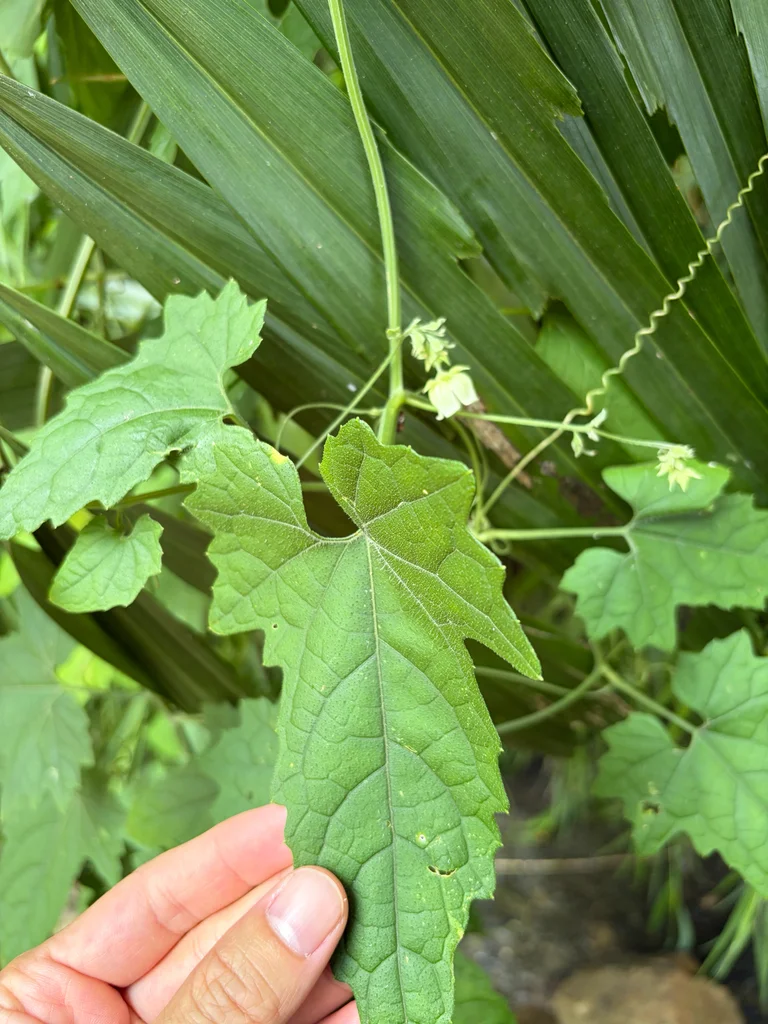
Members of this genus are characterized by climbing, angular stems that can reach lengths of up to seven meters. The root system includes large, globose tubers that store nutrients and moisture to support perennial growth. The leaves are typically ovate-cordate, with entire or sparsely dentate margins, and the abaxial surface is often densely pubescent with brownish or yellowish hairs.
Being dioecious, individual plants produce either male or female flowers, which are typically cream-colored to yellowish. The male flowers are arranged in racemes or panicles, while female flowers occur singly or in small clusters. The fruits are fleshy, globose or cylindrical berries that turn yellow or brown when ripe, containing flat, oval seeds.
Flowering season
June to August
Jan
Feb
Mar
Apr
May
Jun
Jul
Aug
Sep
Oct
Name
Dec
Applications
The primary application of this genus is centered on Siraitia grosvenorii, commonly known as monk fruit or luo han guo. The extract from this fruit contains mogrosides, which are up to 300 times sweeter than sucrose and are used globally as a natural, zero-calorie sweetener. In traditional medicine, the fruits are brewed into teas to treat coughs, sore throats, and gastrointestinal issues.
Interesting facts
The genus is named in honor of the Siraitia region or local collectors, and it belongs to a monotypic tribe. One of its species, Siraitia africana, represents a unique geographical outlier found in equatorial Africa, though it has not been recorded in the wild for decades. The sweet compounds in the fruit do not raise blood sugar levels, making it a highly valued sugar substitute for diabetic diets.