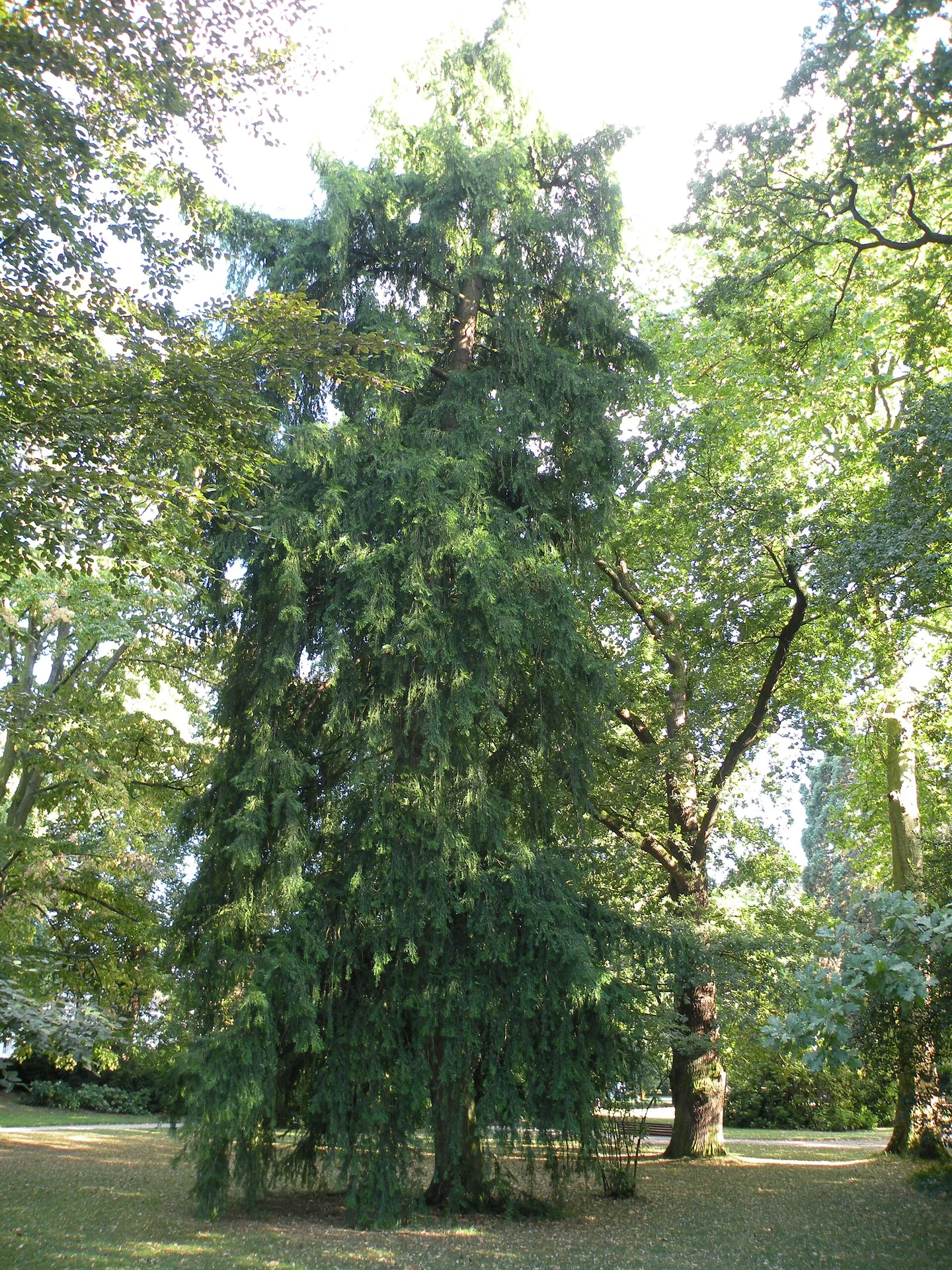
California torreya
California nutmeg tree
Stinking Cedar
Californian Nutmeg
IUCN: Vulnerable
#50634C
#626E49
#9EAB7F
#263825
#ECF0E0
Plant palette
California Nutmeg Tree (Torreya californica) Guide
Clinging to the shaded depths of misty canyons, the needles of Torreya californica release a sharp, resinous aroma resembling sage when crushed. This ancient conifer is a rare sentinel of the California mountain ranges, persisting as a relic from a distant botanical epoch.
Though its large seeds resemble those of the nutmeg tree, this species actually belongs to the yew family and is not related to true culinary nutmeg. It grows slowly under the canopy of towering giants like coast redwoods and Douglas firs.
Torreya californica is an evergreen conifer that typically reaches heights of 15 to 27 meters, featuring a conical crown and whorled, slightly drooping branches. The thin bark measures less than 1.5 centimeters in thickness and displays a gray-brown coloration with shallow fissures.
Its needle-like leaves are stiff and spine-tipped, measuring 3 to 8 centimeters in length. The needles are arranged spirally but twist at the base to form a flat plane, showing a glossy dark green upper surface and two whitish bands on the underside.
This species is dioecious, meaning individual trees are either male or female. The male pollen cones are small and whitish, while the female cones develop into drupe-like structures containing a single large seed enclosed in a green to purple-streaked fleshy aril.
Flowering season
Pollen cones release pollen from March to May, while seed cones mature over an 18-month period.
Jan
Feb
Mar
Apr
May
Jun
Jul
Aug
Sep
Oct
Name
Dec
Applications
Historically, the durable, fine-grained, yellow-brown wood of Torreya californica was utilized for crafting bows and fine furniture due to its strength and resistance to decay. It emits a pleasant scent similar to sandalwood when polished.
In traditional crafts, the roots were gathered by Indigenous peoples for intricate basket weaving. Additionally, the seeds were roasted and consumed as a valued food source, despite being inedible when raw.
Although commercial logging has ceased, this conifer is occasionally planted as an ornamental specimen in large botanical gardens and specialized landscaping projects for its unique foliage. It is especially valued in collections recreating Pacific Northwest or Californian mountain habitats.
Interesting facts
The aromatic wood of Torreya californica is sometimes used to craft boards for the traditional game of Go, serving as a substitute for the highly prized Japanese Kaya wood.
A historic giant of this species near Fort Bragg once measured over 40 meters tall and 4.5 meters in diameter before it was illegally cut down by timber thieves.
The seeds were once recognized in old pharmaceutical records under the Latin name nux moschata Californica.
Due to its dependence on gravity and local rodents for seed dispersal, the wild populations remain highly fragmented.
On harsh serpentine soils, the tree adapts by growing as a stunted shrub in coastal chaparral communities.