Torreya: The Ancient Nutmeg Yews of Shaded Ravines
Clinging to the damp, shaded ravines of North America and East Asia, the ancient Torreya conifers evoke a sense of prehistoric mystery with their sharp, glossy needles and unusual nutmeg-like seeds. Named after the pioneering American botanist John Torrey, this genus represents a fascinating relic of the Arcto-Tertiary Geoflora that once spanned the Northern Hemisphere.
The trees thrive as subcanopy plants, adapted to slow growth under moderate to dense forest shade. Their pungent foliage and wood release a distinctive, resinous aroma when bruised or crushed, earning some species the colloquial name of stinking cedar.
Members of the Torreya genus are evergreen trees or shrubs typically reaching heights of 5 to 20 meters, though exceptional specimens can grow taller. Their trunk is covered in fissured, brown to grayish-brown bark, which often displays subtle orange undertones beneath the weathered surface.
Key morphological features include:
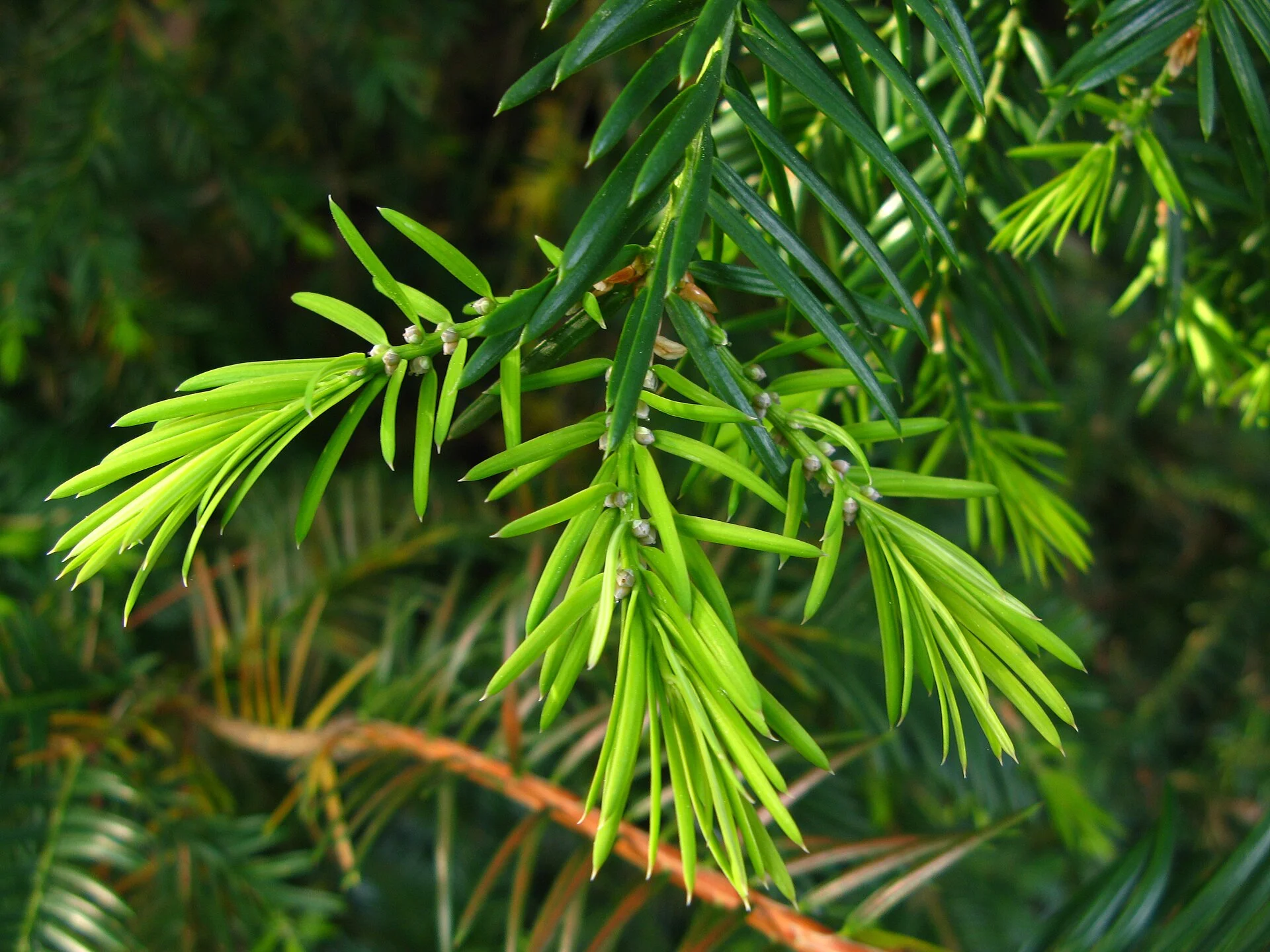
Foliage: The rigid, linear leaves measure 2 to 8 centimeters in length and are arranged spirally, twisting at the base to lie in two flat ranks. Each needle terminates in a sharp spine and features two stomatal bands on the underside.
Cones: The gymnosperms can be dioecious or monoecious. Male pollen cones are small and oblong, while female structures mature over 18 months.
Seeds: The mature seeds are nut-like, measuring 2 to 4 centimeters long, and are fully enclosed by a fleshy, green-to-purple aril.
Applications
The wood and seeds of Torreya plants serve several traditional and practical purposes:
Timber Production: The wood, particularly of Torreya nucifera, is highly valued for making Go boards due to its resonant qualities, fine texture, and pleasant scent.
Culinary Uses: The seeds of species like Torreya grandis are edible, sweet, and slightly resinous. They are eaten raw, roasted, or used in confectionery.
Oil Extraction: A high-quality cooking and medicinal oil is pressed from the seeds.
Horticulture: Some species are grown as ornamental plants for their dense, dark evergreen foliage.
Interesting facts
The history and ecology of the genus are rich with fascinating details:
Assisted Migration: The critically endangered Torreya taxifolia is a key subject of debates on assisted migration, where conservationists intentionally plant it outside its historical range to combat extinction.
Noah's Ark Legend: Local stories in Florida claim that the wood of Torreya taxifolia was the actual 'gopher wood' used to construct Noah's Ark.
Ancient Lineage: Fossil records of Torreya bilinica and other species indicate the genus was once widespread across Europe and North America during the Oligocene and Miocene epochs.